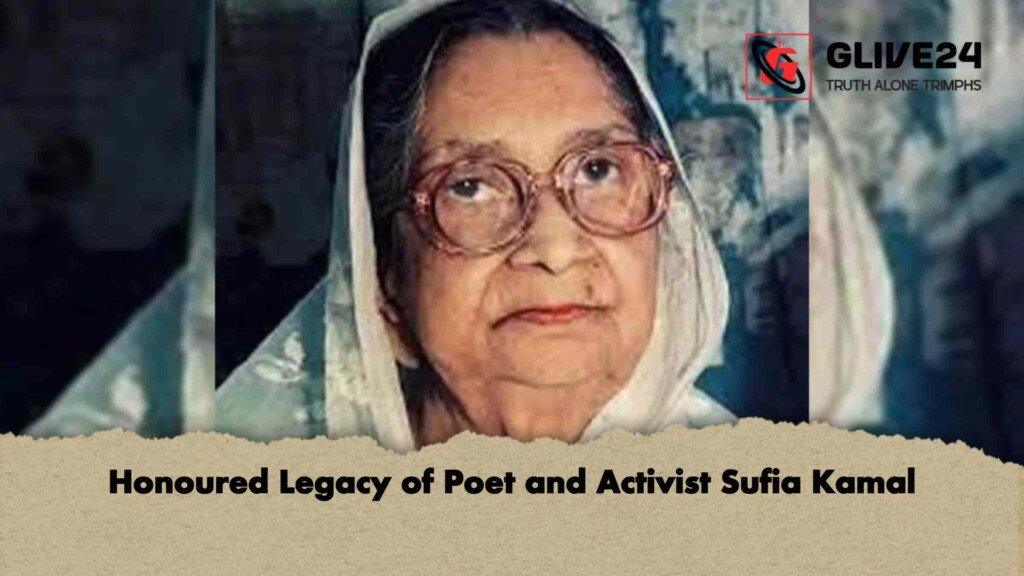
The history of Bengali literature, culture, and women’s liberation is fundamentally intertwined with the life and legacy of Begum Sufia Kamal. She was a prominent poet, literary figure, social worker, educator, humanist, and cultural organiser who consistently opposed injustice. Her poetic works consistently reflected themes of love, nature, humanity, patriotism, personal grief, and secularism. Whilst her literary style embodied gentleness, her social activism was defined by courage and protest against oppression.
Early Life and Overcoming Adversity
Born on 20 June 1911 into an aristocratic family in Shaistabad, Barisal, Sufia Kamal grew up during a period when educational opportunities and freedom of movement for Muslim women were severely restricted by the strict social custom of purdah. Despite lacking access to formal institutional education, she pursued self-learning, acquiring her primary literacy in the Bengali language from her mother, Sabera Khatun. Overcoming domestic restrictions, she dedicated herself to literary pursuits.
In 1924, at the age of thirteen, she married her cousin, Syed Nehal Hossein. Possessing progressive views, Hossein actively encouraged her literary interests and creative endeavours. This support enabled her to familiarise herself with the works of contemporary literary figures, including Rabindranath Tagore and Kazi Nazrul Islam, allowing her to establish her own path in the literary domain.
Literary Milestone and Social Activism
Sufia Kamal’s literary career officially commenced in 1926 with the publication of her first poem, Basanti, in the journal Saogat. She subsequently served as the inaugural editor of Begum, a progressive weekly magazine dedicated to women’s issues, which played a crucial role in developing the literary and intellectual expressions of Bengali Muslim women.
Following the partition of the subcontinent in 1947, she relocated with her family from Calcutta to Dhaka. During the Bengali Language Movement, she actively participated in street protests and mobilised women to join the struggle for their mother tongue. During the 1971 Bangladesh Liberation War, she maintained a steadfast stance against the atrocities committed by the Pakistani occupying forces and provided crucial support to those fighting for freedom.
Following national independence, she became a foundational figure in movements advocating for women’s rights, democracy, human rights, and a secular society. She was also the founding president of the Bangladesh Mahila Parishad (Bangladesh Women’s Council), leading campaigns against the oppression of women, communalism, autocracy, and social inequality.
Notable Literary Works and Honours
Sufia Kamal authored numerous poetry collections, short stories, and memoirs. She was a recipient of various national awards in recognition of her contributions to literature and society.
| Category | Publications and Achievements |
| Poetry Collections | Sanjher Maya, Maya Kajal, Mon O Jibon, Udatto Prithibi, Shanti O Prarthona |
| Short Stories & Travelogues | Keyar Kanta (Short Stories), Soviet Dinguli (Travelogue) |
| Historical Memoirs | Ekattorer Diary (A vital documentary account of the 1971 Liberation War) |
| Major National Awards | Bangla Academy Literary Award, Ekushey Padak, Begum Rokeya Padak, National Poetry Award, Independence Award |
Begum Sufia Kamal passed away on 20 November 1999. Throughout her lifetime, her work remained dedicated to addressing the fundamental societal question: why women should not be granted the divine right to conquer their own destinies. Her principles, courage, and literary contributions continue to influence generations striving for gender equality and progressive human values.