
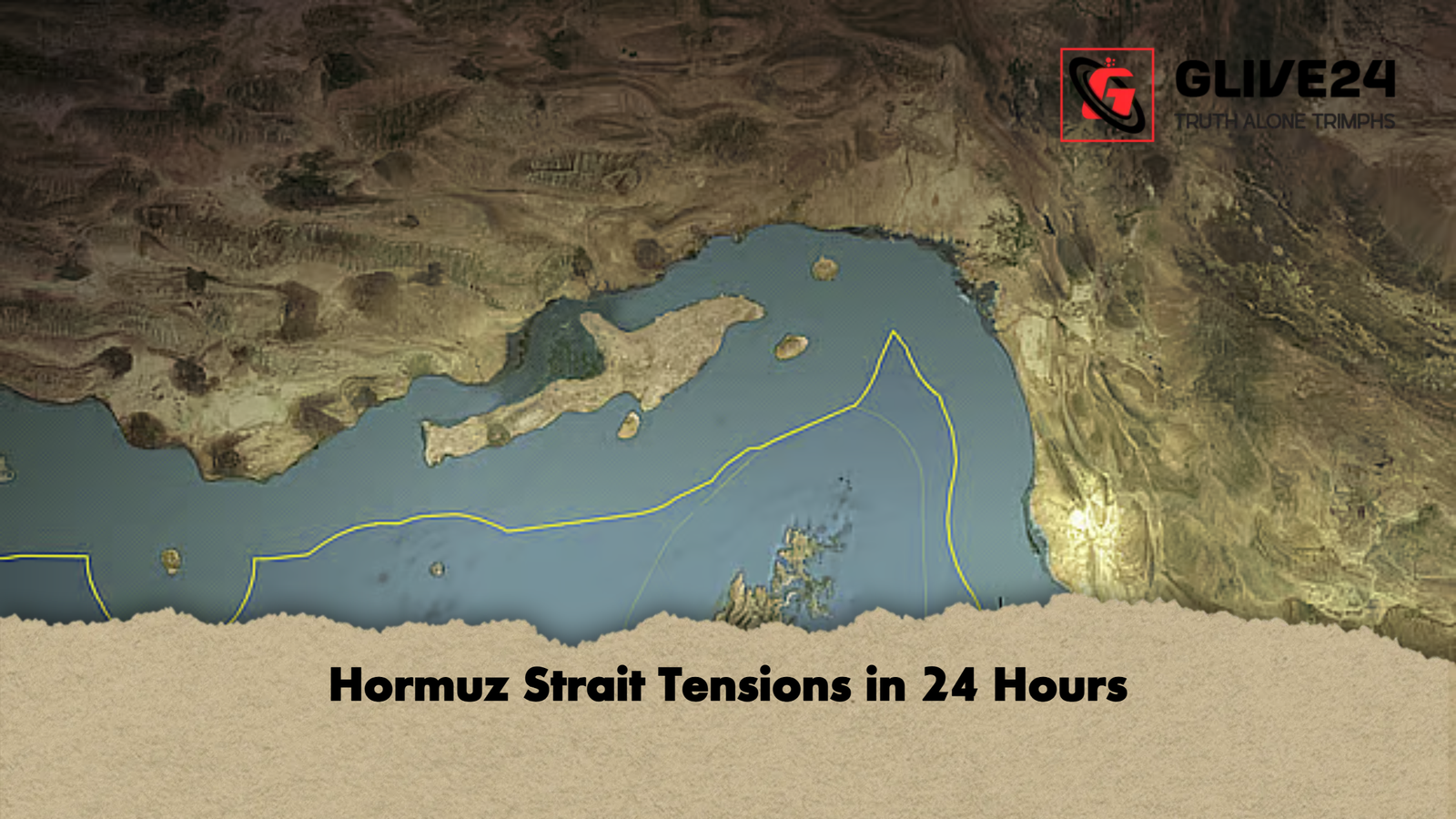
Over the course of 24 hours, developments surrounding the Strait of Hormuz have shifted rapidly amid ongoing tensions between the United States and Iran, affecting diplomatic signals, military postures, and energy market expectations.
On Friday, Iran announced that the Strait of Hormuz had been reopened. Following this, United States President Donald Trump, writing on his social media platform Truth Social, welcomed the announcement, stating: “Iran has just announced that the Strait of Hormuz is completely open and ready for full traffic. Thank you!”
Prior to this, Iran’s Foreign Minister Abbas Araghchi had posted on social media platform X that the Strait had been fully reopened. He also noted that although the passage was reopened, Iran would continue to coordinate shipping movements through the waterway.
Following Araghchi’s statement, global crude oil prices fell by approximately 10 per cent within a matter of hours. However, this market reaction was short-lived.
Subsequently, President Trump declared that United States naval restrictions on Iranian ports would remain fully in place until a peace agreement was reached. This statement altered the immediate diplomatic and operational context surrounding maritime activity in the region.
Within 24 hours of these developments, the Islamic Revolutionary Guard Corps (IRGC) announced that the Strait of Hormuz had been closed again, citing the continued United States blockade of Iranian ports as the reason. In its statement, the IRGC warned that any movement towards the Strait would be considered cooperation with hostile forces, adding that any vessel violating this directive could be targeted.
On Saturday, Iran’s military reiterated that commercial shipping through the Strait would face strict limitations if the United States blockade continued. This position was reinforced by an incident reported off the coast of Oman, approximately 20 miles from the shoreline, where two vessels came under fire. The captain of one of the affected tankers stated that the initial attack originated from an Iranian gunboat.
Separately, a statement issued in the name of Mojtaba Khamenei said that Iran’s naval forces were prepared to impose further consequences on adversaries. He has not been seen in public for over six weeks since assuming a senior position.
The situation is further complicated by ongoing disagreements between the two sides over several issues beyond maritime access, including the transfer and removal of highly enriched uranium and the continuation of Iran’s uranium enrichment programme.
Timeline of Key Developments
| Timeframe | Event |
|---|---|
| Friday | Iran announces reopening of the Strait of Hormuz |
| Friday | Foreign Minister Abbas Araghchi confirms reopening and shipping coordination |
| Friday | President Trump welcomes reopening on Truth Social |
| Hours later | Brent crude prices fall by around 10% |
| Shortly after | Trump states US naval blockade on Iranian ports remains in force |
| Within 24 hours | IRGC announces closure of the Strait of Hormuz |
| Saturday | Iranian military warns of strict limits on shipping under continued blockade |
| Saturday | Reported shooting incident involving two vessels near Oman coast |
With only three days remaining before the expiration of the current two-week ceasefire, uncertainty continues over its extension. President Trump stated that he could not yet confirm whether the ceasefire would be prolonged, adding that if it is not extended, existing measures would remain and military action could resume.
He stated on Friday: “Maybe I won’t extend the ceasefire, so the blockade will remain, and unfortunately we will have to start bombing again.”
Iranian military officials have also signalled a firm stance. Senior commander General Mohammad Naqdi stated that if conflict resumes, Iran is prepared to use missiles with production dates as recent as May 2026. He also stated that Iran had previously avoided halting oil production in order to prevent global instability.
Iranian sources have indicated to international media that a second round of talks is expected next week. However, with the ceasefire nearing its end, the United States has not yet publicly confirmed its position. The current ceasefire is scheduled to expire on 21 April (US time).
Despite the lack of formal announcement, indications suggest that behind-the-scenes discussions are continuing. On Saturday, senior United States officials, including the Defence Secretary Pete Hegseth, CIA Director John Ratcliffe, and the Chairman of the Joint Chiefs of Staff, were observed entering the White House, signalling ongoing high-level consultations.