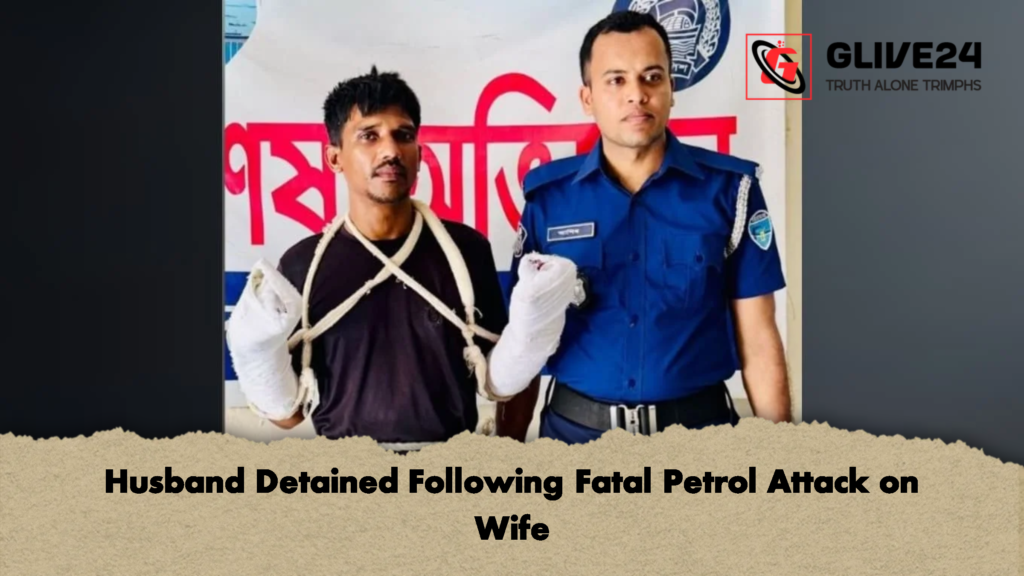
The tranquil village of Chapa Chou, situated within the Gunabati Union of Chouddagram, has been left profoundly unsettled following the arrest of a local man accused of the horrific murder of his wife. Law enforcement officials confirmed on Tuesday evening, 21 April 2026, that Jalil Ahmed Jabed, a 35-year-old microbus driver, had been taken into custody in connection with the death of Fatema Akter, aged 30.
The arrest follows a formal murder charge filed by the victim’s younger sister, Kulsuma Akter, on Monday night. The case has sent shockwaves through the Comilla district, particularly due to harrowing allegations that the suspect attempted to orchestrate a cynical cover-up by attributing the fatal injuries to a mundane domestic accident.
A Decade of Discord and a Final Confrontation
Fatema and Jabed had been married for approximately eleven years, a union that resulted in an eight-year-old daughter. However, according to the prosecution’s case and detailed statements from the victim’s family, the marriage was far from harmonious. Relatives allege that the household had been plagued by persistent domestic disputes and systemic physical abuse for several years, which local community members often viewed as a private family matter.
The situation reached a devastating climax on the evening of 13 April. It is alleged that a heated argument erupted, during which Jabed subjected Fatema to a torrent of verbal abuse. When Fatema attempted to defend herself and protest against her treatment, the suspect allegedly became incensed. The prosecution contends that Jabed then retrieved a supply of petrol—routinely stored for his work vehicle—and doused his wife in the accelerant before igniting the fluid.
The Alleged Deception and Hospitalisation
Following the incident, as Fatema suffered from catastrophic, life-threatening burns, Jabed reportedly disseminated a deceptive narrative, claiming that a gas cylinder explosion had occurred in the kitchen. This fabrication was initially used to explain the fire to neighbours and the emergency services who first arrived at the scene.
| Key Event | Date (2026) | Location / Action Taken |
| Initial Assault | 13 April | Fatema allegedly doused in petrol and ignited. |
| First Medical Aid | 13 April | Rushed to Feni Sadar Hospital in critical condition. |
| Specialist Transfer | 14 April | Admitted to Dhaka Medical College Hospital Burn Unit. |
| Fatema’s Death | 19 April | Victim succumbed to her extensive injuries. |
| Murder Case Filed | 20 April | Kulsuma Akter filed formal charges at Chouddagram. |
| Suspect Arrested | 21 April | Police detained Jabed and commenced formal inquiry. |
Investigation and Judicial Proceedings
Fatema’s harrowing struggle for life lasted nearly a week. After being initially stabilised at Feni Sadar Hospital, her condition deteriorated rapidly, necessitating an emergency transfer to the specialised Burn Unit of Dhaka Medical College Hospital (DMCH). Despite the exhaustive efforts of the medical staff, she succumbed to her injuries on 19 April.
The victim’s family remained suspicious of the “accident” narrative from the outset. Kulsuma Akter, the complainant, insisted that the specific patterns of the burns and the documented history of domestic violence pointed clearly towards a deliberate act of homicide rather than a mechanical failure of a kitchen appliance.
Muhammed Arif Hossain, the Officer-in-Charge (OC) of Chouddagram Model Police Station, provided an official update on the proceedings. “We received a formal complaint on Monday night and acted with immediate effect to apprehend the accused,” the OC stated. He further confirmed that after a preliminary interrogation, Jabed was presented before the court on Tuesday afternoon and has since been remanded to jail pending a comprehensive investigation.
Addressing Domestic Violence and Public Safety
Local activists and civil society members have seized upon this tragedy to highlight the ongoing dangers of domestic abuse in the region. The alleged use of petrol as a weapon—and the subsequent attempt to mask the crime as a kitchen mishap—has prompted urgent calls for more rigorous forensic inspections of domestic fire scenes.
As the legal process moves forward, the primary focus of investigators will be to determine the source of the accelerant and verify whether any gas equipment was, in fact, compromised. For the eight-year-old daughter left behind, the trauma is twofold: the loss of her mother and the incarceration of her father. The local administration is currently monitoring the welfare of the child as the community demands the maximum penalty for what they describe as a “premeditated and barbaric act” of violence.