Rangpur, Bangladesh – Rangpur City Corporation (RpCC) is poised to embark on a transformative journey towards sustainable urban living with the imminent launch of the Integrated Solid Waste Management Improvement Project (ISWMIP). This initiative, spearheaded by the Local Government Engineering Department (LGED) and financially backed by the Asian Infrastructure Investment Bank (AIIB), aims to revolutionise waste management practices in the city.
Project Overview
The ISWMIP is a comprehensive programme designed to address the multifaceted challenges of solid waste management in Rangpur. The project encompasses several key components:
- Waste Collection and Transportation: Enhancement of waste collection efficiency through the provision of modern collection containers, an upgraded fleet, and mechanical cleaning equipment.
- Waste Processing and Disposal Systems: Establishment of facilities for waste processing, including composting and controlled landfilling, to ensure environmentally sound disposal practices.
- Policy Support and Capacity Building: Strengthening institutional capacities and formulating policies to support sustainable waste management practices.
- Project Management and Supervision Support: Ensuring effective implementation through robust project management and supervision mechanisms.
The AIIB has approved a financing package of USD 200 million for the ISWMIP, marking its inaugural urban sector operation in Bangladesh.
Stakeholder Engagement and Community Impact
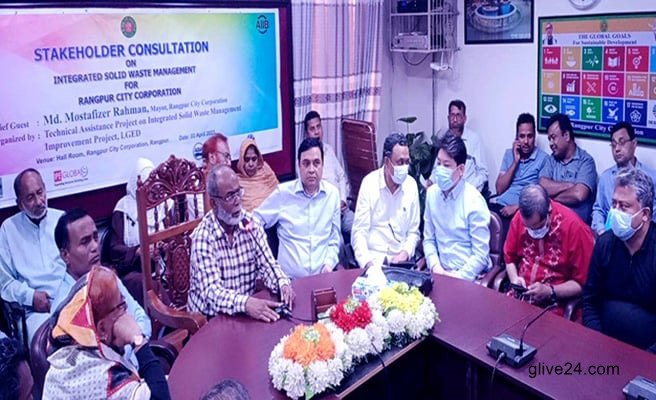
A stakeholder consultation meeting was convened at the RpCC hall room, with Mayor Md. Mostafizar Rahman Mostafa presiding as the chief guest. The event, organised by the LGED’s Technical Assistance Project, aimed to expedite preparatory activities for the ISWMIP. An eight-member delegation from the AIIB also participated, underscoring the project’s significance.
Mayor Mostafa emphasised that the project’s implementation would significantly improve public health and the quality of life by reducing exposure to pollutants and disease vectors associated with solid waste.
However, the project is expected to impact certain community members. According to the Livelihood Restoration Plan, the livelihoods of 12 waste pickers, two ‘vangari’ (scrap) shops, and four wholesale shops near the proposed landfill area will be affected. Additionally, five ponds located within 250 meters of the landfill site and several small businesses along connecting roads may experience temporary disruptions.
Environmental and Social Safeguards
To mitigate potential adverse effects, the project includes comprehensive environmental and social management plans.These plans outline measures such as:
- Environmental Monitoring: Regular monitoring of air and water quality to prevent pollution.
- Community Engagement: Continuous dialogue with affected communities to address concerns and ensure inclusive participation.
- Livelihood Restoration: Implementation of programmes to support those whose livelihoods are impacted, including skill development and alternative employment opportunities.
Rangpur: A City on the Rise
Rangpur, the seventh-largest city in Bangladesh and the largest in the Rangpur Division, is situated on the banks of the Ghaghat River. The city boasts a rich cultural heritage, with landmarks such as the British colonial-era Rangpur City Corporation building and the Mughal-era Tajhat Palace, now a museum.
Known for its educational institutions like Rangpur Medical College and Begum Rokeya University, the city is also a hub for agriculture, particularly renowned for its citrus fruits. Tourist attractions include the Rangpur Zoo and the Pairabondh archaeological site.
The implementation of the ISWMIP is expected to further enhance Rangpur’s appeal by promoting a cleaner, healthier, and more sustainable urban environment.