
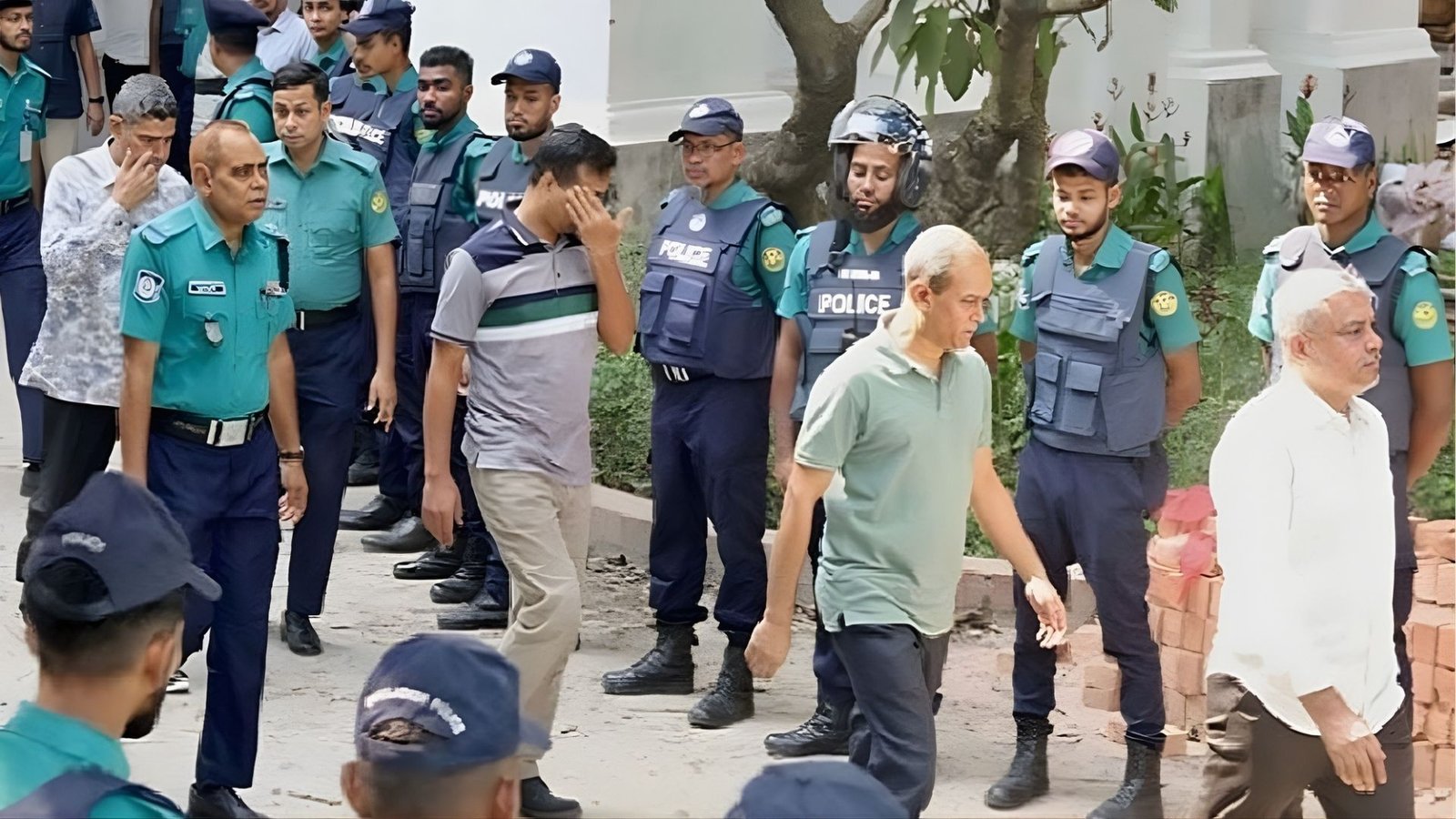
The International Crimes Tribunal-1 has ruled that ten arrested army officers accused in a high-profile crimes against humanity case must attend court proceedings in person, dismissing their request for virtual participation. The case centres on allegations of abduction, torture and other abuses committed within the Rapid Action Battalion’s TFI Cell during the Awami League government, and involves some of the most prominent former officials in the country.
The ruling came on Wednesday, 3 December, during a session led by Justice Golam Mortuza Mojumder. The tribunal was scheduled to hear arguments regarding the formulation of charges. Chief Prosecutor Mohammad Tajul Islam opened proceedings by reading the formal charge sheet, after which defence counsel Advocate Tabarak Hossain approached the bench with a petition seeking virtual court access for his clients.
The tribunal rejected the request outright, stating that the law does not provide for such an exception and insisting that all accused must appear physically unless exceptional circumstances are proven. The bench emphasised the importance of maintaining uniformity and transparency in proceedings of such gravity.
Earlier in the day, the authorities brought ten army officers to the tribunal under security escort. Later, during the hearing, Advocate Dr Tabarak Hossain represented seven of them as he argued the virtual-appearance petition. When questioned by the tribunal on whether he intended to pursue the application for discharge instead, the lawyer replied that he needed more time to prepare that submission and was present solely to argue the virtual-access issue.
The bench pressed the defence to justify why virtual presence was necessary. Advocate Tabarak claimed that the officers were subject to intense media scrutiny, amounting to a “media trial”, and that even if acquitted, the publicity might compromise their ability to return to service under army command. He argued that the officers had a strong chance of being proven innocent and that virtual attendance would mitigate the negative consequences of public exposure.
The tribunal firmly dismissed this reasoning. Justice Mojumder stated, “We are not trying them as military officers. They served in RAB at the time, which is a law-enforcement unit under the police. The tribunal maintains respect for the armed forces and the general public alike. High-ranking state officials—including ministers and senior judges—have attended court physically, and these proceedings are no exception.”
The prosecution supported the tribunal’s view, with Chief Prosecutor Tajul Islam noting that the governing statute of the tribunal contains no provision for virtual attendance of accused individuals. Advocate Tabarak responded that the tribunal had discretionary authority to allow such a request on grounds of practicality, but the bench proceeded to deny the petition.
The case includes seventeen accused, among them former Prime Minister Sheikh Hasina, former Home Minister Asaduzzaman Khan Kamal, and several other senior state and security officials. Ten currently arrested army officers form the primary focus of Wednesday’s hearing. The arrested officers are: Brigadier General Md Jahangir Alam, Brigadier General Tofayel Mustafa Sarwar, Brigadier General Md Kamrul Hasan, Brigadier General Md Mahbub Alam, Colonel KM Azad, Colonel Abdullah Al Momen, Colonel Anwar Latif Khan, Colonel Moshiur Rahman, Lieutenant Colonel Saiful Islam Sumon, and Lieutenant Colonel Sarwar Bin Kashem.
A number of other accused persons—among them Sheikh Hasina, Asaduzzaman Khan Kamal, retired Major General Tarique Ahmed Siddique, former IGP Benazir Ahmed, former RAB DG M Khurshid Hossain, Barrister Harun-ur-Rashid and retired Lieutenant Colonel Khairul Islam—remain absconding.
The tribunal has scheduled 14 December for the hearing of discharge petitions on behalf of the accused. Legal analysts expect the upcoming session to be pivotal in determining the future scope of the case, which has already garnered significant national and international attention.