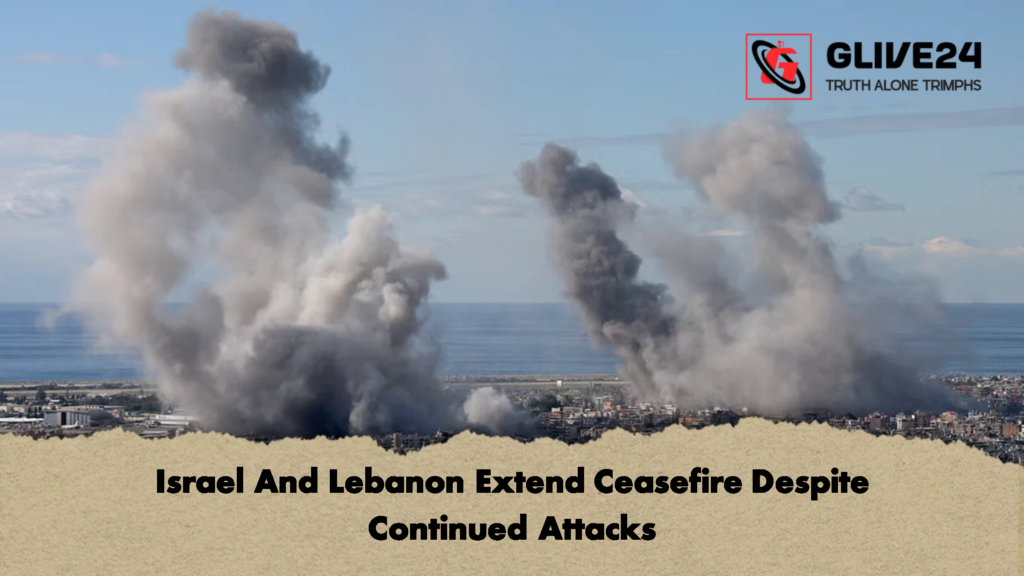
Following two days of intensive diplomatic negotiations in Washington, Israel and Lebanon have formally agreed to extend their existing ceasefire agreement for an additional 45 days. However, as documented by the BBC, while the operational mandate of the truce has been prolonged on paper, the physical realities observed on the ground remain entirely contradictory. Since the initial declaration of the ceasefire on 16 April, the Lebanese armed group Hezbollah has refrained from launching any cross-border military strikes. Conversely, the Israel Defense Forces (IDF) have persistently conducted targeted aerial bombardments and ground operations across Lebanese territory. This unilateral continuation of hostilities has resulted in a steadily rising death toll and the displacement of hundreds of thousands of civilians across Lebanon.
Demonstrating the precarious nature of the diplomatic agreement, Israeli aircraft executed a fresh strike targeting a civil defence facility in the southern Lebanese town of Harouf on Saturday, occurring merely hours after the formal announcement of the 45-day extension. Local emergency services confirmed that the raid resulted in the deaths of at least six individuals, a casualty figure that includes three emergency healthcare workers. This attack follows a previous high-casualty incident on Wednesday, in which Israeli bombardments claimed the lives of 22 Lebanese citizens, including eight children.
Escalating Casualties and Strategic Objectives
Statistical data verified and released by the Lebanese Ministry of Public Health indicates a severe humanitarian toll since the escalation of regional hostilities. According to official ministry registries, at least 2,896 Lebanese nationals have been killed by Israeli military actions since March. Crucially, the data reveals that 657 of these fatalities occurred after the formal implementation of the ceasefire framework on 16 April, highlighting a significant gap between diplomatic declarations and active combat operations.
The executive command of the Israeli military has continually defended its persistent operational activity within Lebanese sovereign territory. The IDF maintains that these pre-emptive maneuvers are structurally necessary to establish a permanent security buffer zone in southern Lebanon, an administrative measure they claim is vital to prevent future cross-border incursions by Hezbollah forces. Under the operational parameters of this doctrine, Israeli ground units have systematically demolished entire villages across southern Lebanon, drawing immediate structural comparisons from international observers to the comprehensive infrastructural destruction documented inside the Gaza Strip. International human rights organizations have formally condemned these unilateral operations, asserting that the continuation of heavy aerial bombardments within densely populated civilian zones whilst bound to a ceasefire pledge constitutes a flagrant violation of established international humanitarian law.
Diplomatic Repercussions and Internal Lebanese Divisions
Despite the ongoing violence on the ground, the official diplomatic process has proceeded under heavy international mediation. Commenting on the legislative success of the Washington summit, United States Department of State Spokesperson Tommy Pigott confirmed that both sovereign nations had successfully ratified the extension prior to the expiration of the primary truce deadline. The American administration expressed its official hope that the renewed timeframe would provide a stable foundation to restore permanent cross-border security and long-term peace.
The continuation of the Washington diplomatic framework was formally welcomed by the Israeli Ambassador to the United States, Yechiel Leiter, who framed the extension as a positive development for regional stability. However, the diplomatic proceedings faced severe internal friction within Lebanon. Hezbollah leadership had explicitly voiced its total opposition to the bilateral talks, objecting to any diplomatic engagement whilst Israeli operations continued.
Ultimately, the Lebanese coalition government, directed by Prime Minister Nawaf Salam, chose to override Hezbollah’s institutional objections. Prime Minister Salam’s administration proceeded with the high-level Washington negotiations, asserting that national security interests and the preservation of state sovereignty necessitated active diplomatic engagement to secure a formal extension of the truce.