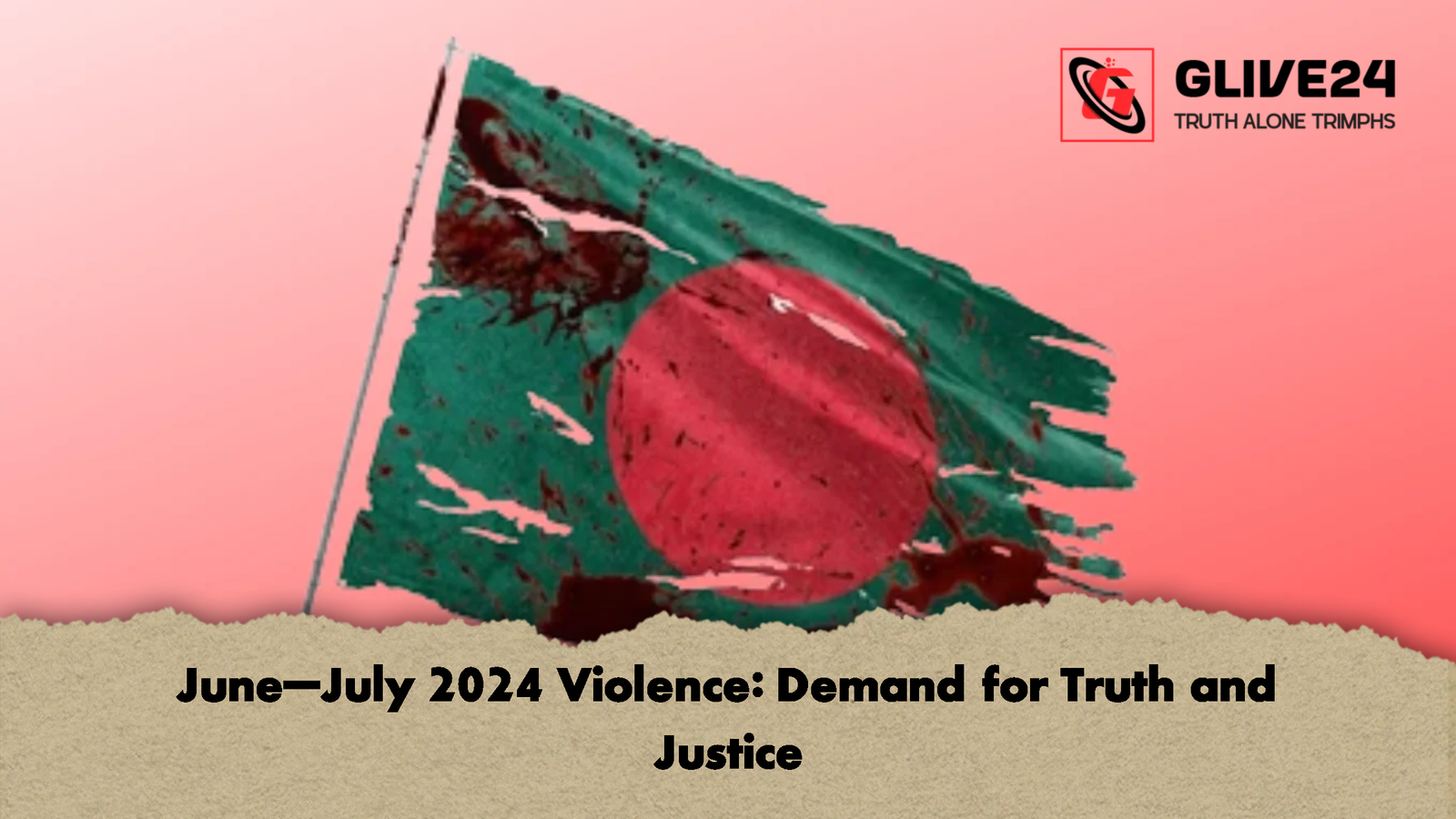
The violent unrest that shook Bangladesh in June and July 2024 has ignited widespread concern, sorrow, and pressing questions about law, order, and governance. History reminds us that no injustice—regardless of the power shielding it—remains hidden forever. Following the assassination of Bangabandhu Sheikh Mujibur Rahman, those responsible once boasted openly about their crimes, yet justice was ultimately served. This precedent underscores a critical lesson: justice may be delayed, but it is never denied.
The recent clashes inflicted severe human and institutional losses. Reports suggest that hundreds of civilians and law enforcement personnel were killed or injured, while uncertainty persists about the events’ causes and the identities of those responsible. These circumstances necessitate a transparent, impartial, and widely accepted investigation to uncover the truth.
State accountability and public trust are paramount. If evidence suggests a deliberate conspiracy, the government has both a constitutional and moral duty to act. Upholding the rule of law extends beyond punishing offenders; it involves systematically uncovering facts and restoring confidence in governance and legal institutions.
Statements circulating in the public domain have intensified the debate. Muhammad Yunus allegedly referred to killings executed through a “meticulous design” intended to destabilise the government. Likewise, the international portrayal of the identified militant Mahfuz as a ‘mastermind’ has stirred controversy. The accuracy of these claims requires careful verification, as rumours, partial truths, or political rhetoric cannot replace judicial processes.
Additionally, remarks attributed to Asif Mahmud Sajeeb Bhuiyan, hinting at possible armed mobilization if the government persisted beyond 5 August, demand scrutiny. If linked to the violent events, accountability can only be established through impartial investigation, evidence collection, and judicial analysis. Witness accounts from July’s unrest, often recounted with pride, reveal troubling actions that require meticulous legal review. Reports of corruption, unethical conduct, and administrative malpractice by multiple coordinators—including Dr. Yunus—during the 18 months preceding the election further emphasise the need for systematic examination.
A fundamental principle must guide the response: no one is above the law, and no one should be declared guilty without evidence. Bangladesh’s Constitution and judicial system guarantee equitable justice for all citizens.
Recommended Measures for Upholding Justice
| Aspect | Recommended Action |
|---|---|
| Investigation | Form an independent, impartial commission to examine all statements, evidence, and claims |
| Transparency | Provide the public with verified information to prevent misinformation and speculation |
| Accountability | Ensure genuine perpetrators face legal consequences under fair trial standards |
| Societal Objective | Prioritise truth, reconciliation, and the rule of law over revenge or political gain |
The pursuit of truth is the first step toward justice. Only with established justice can the nation collectively heal, progress, and restore public confidence. Upholding the law—not vengeance—must remain the guiding principle. A transparent and impartial approach will enable the incoming government to navigate disputes effectively and govern with legitimacy. Ultimately, the people’s expectation is clear: truth will prevail.
Author: ABM Zakirul Haque Titon, Editor & Publisher, G-Live 24