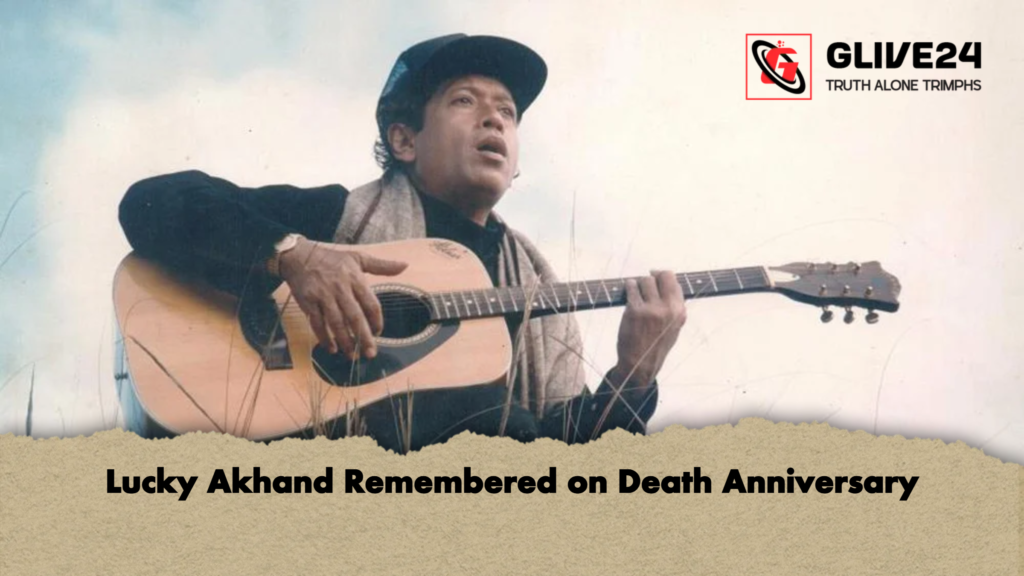
The ninth death anniversary of one of Bangladesh’s most iconic musical figures, Lucky Akhand, is being observed today. The celebrated singer, composer, lyricist and music director passed away in 2017 after a prolonged battle with cancer. Although nearly a decade has passed, his musical legacy continues to resonate deeply within the landscape of Bengali music, inspiring both listeners and emerging artists alike.
Born on 18 June 1956 in Dhaka, Lucky Akhand grew up in a culturally enriched environment that nurtured his artistic talents from an early age. He received his first lessons in music from his father, and by early childhood he had already begun appearing on radio and television as a child performer, captivating audiences with his natural flair and melodic sensitivity.
His extraordinary musical journey took shape remarkably early. At just 14, he began working with HMV Pakistan as a composer, an achievement that marked him as a prodigious talent. By the age of 16, he had already assumed the role of music director at HMV India—an exceptionally rare accomplishment for someone so young. He later served as a music director at Bangladesh Betar, further cementing his position in the country’s professional music scene.
In 1984, Akhand released his self-titled debut solo album, which became a milestone in the evolution of modern Bengali music. The album introduced a fresh, contemporary sound that blended lyrical depth with innovative composition, setting a new benchmark for future musicians. He was also associated with the band “Happy Touch”, contributing to the vibrant band culture that shaped the era. His elder brother, the late Happy Akhand, was also a respected figure in the Bangladeshi music industry, and together they left a lasting imprint on its development.
Over the course of his career, Lucky Akhand not only performed his own songs but also composed numerous timeless pieces for other leading artists. His compositions remain widely cherished across generations, reflecting emotional depth and musical sophistication.
Key milestones in Lucky Akhand’s life and career
| Period / Year | Milestone |
|---|---|
| 1956 | Born in Dhaka |
| Childhood | Began musical training under his father |
| Early years | Appeared as a child artist on radio and television |
| Age 14 | Worked as composer for HMV Pakistan |
| Age 16 | Became music director at HMV India |
| 1984 | Released debut solo album “Lucky Akhand” |
| Later career | Served as music director at Bangladesh Betar |
| 2017 | Passed away after battling cancer |
Among his most enduring songs as a singer are “Ei Neel Monihar”, “Abar Elo Je Shondha”, “Amay Dekona”, “Mamonia”, “Age Jodi Jantam”, and “Hridoy Amar”. These tracks continue to hold a special place in the hearts of listeners and are frequently revisited by new generations of music lovers.
Equally significant is his contribution as a composer for other artists. His collaborations include memorable works such as “Jekhane Shimanto Tomar” sung by Kumar Bishwajit, “Kobita Porar Prohor Esheche” by Samina Chowdhury, and “Ke Bashi Bajay Re” performed by Happy Akhand, among many others.
Lucky Akhand’s artistry, characterised by melodic richness and emotional resonance, remains a guiding influence in Bangladeshi modern music. His legacy endures not only through his recordings but also through the countless musicians he has inspired, ensuring his place as a timeless figure in the nation’s cultural history.