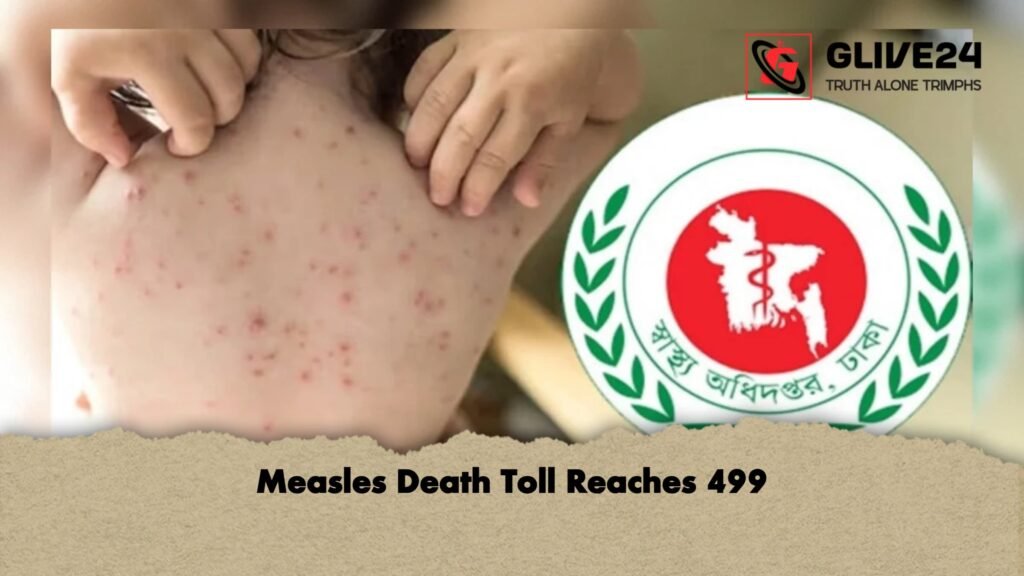
Child deaths linked to measles and measles-like symptoms continue to rise in Bangladesh, with health authorities reporting 11 additional deaths in the 24 hours leading up to Friday morning 8:00am. Five of the latest deaths were recorded in Sylhet division. The latest figures bring the total number of deaths attributed to measles and related complications to 499 over the past 68 days.
Although the government has announced a range of initiatives to contain the outbreak, public health experts say that measures beyond routine vaccination remain insufficient. Specialists have described the situation as alarming and called for the declaration of a public health emergency, state-led vaccine production, and completely free treatment for infected children.
Experts said that relying solely on immunisation campaigns would not be enough to control the outbreak. They stressed the need for enhanced surveillance in affected areas, rapid disease detection, dedicated hospital treatment units, and additional support for malnourished children. According to health analysts, shortcomings in routine immunisation programmes, vaccine supply shortages, and a lack of public awareness over recent years have increased the risk of widespread measles transmission. The growing number of child deaths is now reflecting the scale of that impact.
Dr Mushtaq Hossain, adviser to the Institute of Epidemiology, Disease Control and Research and former chief scientific officer, said measles infections had increased in many countries around the world, but Bangladesh currently had one of the highest mortality rates. He stated that approximately 0.8 per cent of infected patients were dying from the disease or its complications.
He further said that government efforts had so far been inadequate to reduce child mortality linked to measles. According to him, the outbreak should be treated as a national health crisis requiring coordinated action across ministries. He also called for investigations into possible irregularities in vaccine management and urged authorities to adopt long-term planning to prevent future crises.
Dr Hossain added that establishing new intensive care units alone would not be sufficient unless trained personnel were also recruited to operate them. He said the absence of comprehensive measures was hindering efforts to reduce complications associated with the disease. However, he expressed the view that coordinated national action could bring the situation under control within a week.
Measles Situation at a Glance
| Indicator | Number |
|---|---|
| Deaths in the last 24 hours | 11 |
| Total deaths in 68 days | 499 |
| Deaths with measles symptoms | 414 |
| Confirmed measles deaths | 85 |
| New symptomatic cases in 24 hours | 1,261 |
| Total symptomatic cases since 15 March | 60,540 |
| New confirmed measles cases in 24 hours | 54 |
| Total confirmed measles cases | 8,329 |
| Hospital admissions | 47,511 |
| Recovered and discharged | 43,411 |
In a statement issued by the Directorate General of Health Services, officials said that nine of the 11 children who died in the past 24 hours had shown measles-like symptoms, while two had confirmed measles infections. Of the 499 total deaths recorded so far, 414 involved measles symptoms and 85 were confirmed measles cases.
The health authority also reported that another 1,261 children had developed measles-like symptoms during the latest 24-hour reporting period. Since 15 March, symptoms have been identified in 60,540 children nationwide.
According to official data, 54 new measles infections were confirmed during the same period, raising the total number of confirmed cases to 8,329. Since mid-March, 47,511 children have been admitted to hospitals with measles-related symptoms, while 43,411 have recovered and been discharged.
Health officials and campaigners said that at least 18 per cent of children remained outside the regular immunisation programme. They believe the absence of a nationwide special measles campaign over the past four years, along with the suspension of the Vitamin A programme last year, contributed to the worsening situation.
At a protest rally organised by the Public Health Struggle Council in front of the National Press Club in Dhaka, campaigners demanded an official inquiry into child deaths, the declaration of a health emergency, and state-sponsored vaccine production. They also called for the publication of a white paper on alleged corruption in vaccine procurement during the Covid-19 pandemic.
The organisation’s convenor, Faizul Hakim, said measles had spread widely across the country during March and April this year. He claimed that authorities failed to respond adequately after reports emerged in January about a child diagnosed with measles in the Rohingya camps in Cox’s Bazar.
Public health expert and vaccine specialist Dr Tajul Islam A. Bari said a single measles patient could infect up to 18 other people. He noted that infected children often suffer weakened immunity, making them vulnerable to complications such as pneumonia and diarrhoea. According to him, many of the children who died had also been suffering from additional illnesses, and delayed treatment significantly reduced their chances of survival.
Health Minister Sardar Sakhawat Hossain Bokul said the government had responded quickly after measles cases were identified and launched emergency vaccination drives within days. He stated that more children than initially targeted had already been brought under vaccination coverage and that another special immunisation campaign would begin after Eid. However, he acknowledged that many children had missed measles vaccines in 2024 and 2025 because supplies had not reached the country, contributing to the present crisis.