
Khabor Wala Desk
Published: 9th May 2026, 5:17 PM
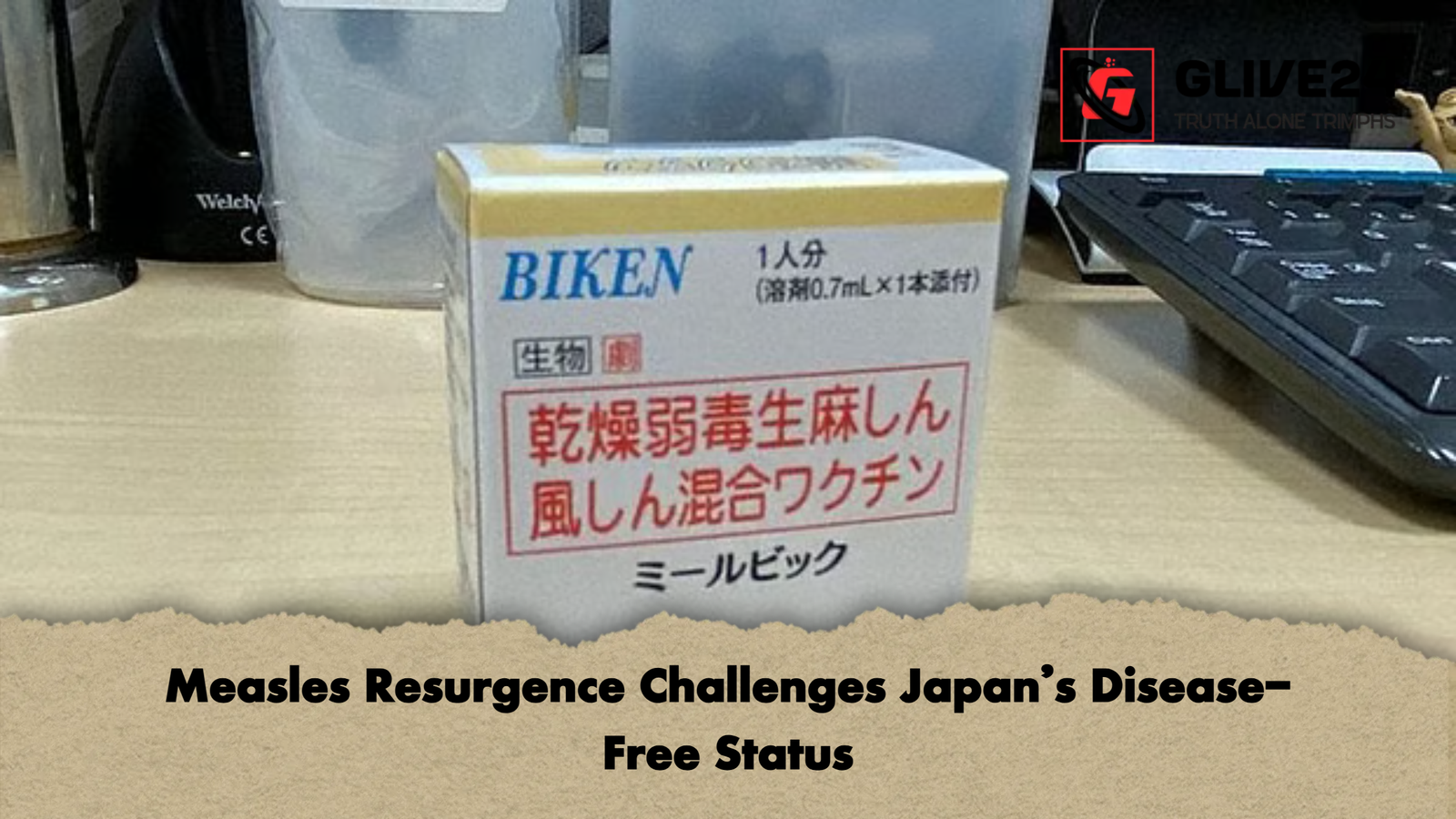
While measles remains a significant public health concern in developing nations like Bangladesh, it has emerged as an unexpected challenge for Japan, a country renowned for its world-class healthcare infrastructure. Despite being declared “measles-free” a decade ago, Japan is currently navigating a notable resurgence in infections.
Table of Contents
According to reports from the national broadcaster NHK, citing data from the National Institute of Infectious Diseases, confirmed measles cases have surpassed 400 this year. Specifically, 436 cases were recorded in the first half of the year alone, marking the second-highest infection rate in the last decade. The highest peak occurred in 2019, when 744 cases were identified. Fortunately, no fatalities related to measles have been reported in Japan during the current calendar year.
The geographic concentration of the virus is most prominent in Tokyo and its three neighbouring prefectures. This metropolitan region accounts for 183 confirmed cases, representing nearly half of the national total. Additionally, several other prefectures have reported localized cluster infections.
Epidemiological investigations suggest that the virus was reintroduced to Japan via international travel, either by returning residents or foreign tourists. While initial cases were linked to travellers arriving from New Zealand and Indonesia, the list of origin countries has since expanded.
As reported by the Mainichi Shimbun, while the primary entry point is cross-border transmission, a decline in domestic vaccination rates has facilitated the internal spread. Unlike the situation in Bangladesh, where children are the most vulnerable, Japanese health authorities are particularly concerned about the elderly and those with waning immunity.
Japan’s routine measles vaccination programme involves a two-dose regimen. The first dose is administered at one year of age, and the second is given in the year prior to entering primary school. This two-dose system was established in 2006; prior to this, only a single dose was mandatory.
The effectiveness of the vaccine is well-documented:
One Dose: Provides significant but incomplete protection.
Two Doses: Offers a 97% to 99% protection rate against the virus.
To maintain “herd immunity” and prevent outbreaks, the World Health Organization (WHO) specifies that a minimum of 95% of the population must be vaccinated. Japan achieved this threshold in the past, leading to its 2015 certification as a measles-free country. However, data from the Ministry of Health, Labour and Welfare indicates that since the COVID-19 pandemic, the uptake of the second dose has fallen below the 95% mark and continues to decline annually.
The following table illustrates the factors contributing to the current resurgence in Japan:
| Factor | Description | Impact on Public Health |
| Pandemic Disruption | COVID-19 interrupted routine immunisation schedules. | Lowered overall vaccination coverage. |
| Waning Immunity | Vaccine-induced protection can diminish over time. | Increased vulnerability in older age groups. |
| Herd Immunity Gap | Lack of natural exposure to the virus in recent years. | Reduced community-wide biological resistance. |
| Economic Barriers | Non-routine vaccinations require out-of-pocket payment. | Potential deterrent for low-income individuals. |
The recent spike in cases has led to an increase in voluntary vaccinations. However, while routine childhood vaccinations are free, adults or those outside the scheduled window must pay for the procedure themselves. In a climate of global inflation, experts fear these costs may discourage preventative measures. Consequently, health professionals are advocating for the government to provide measles vaccines free of charge—similar to the COVID-19 vaccination drive—to effectively curb the current outbreak.




Comments