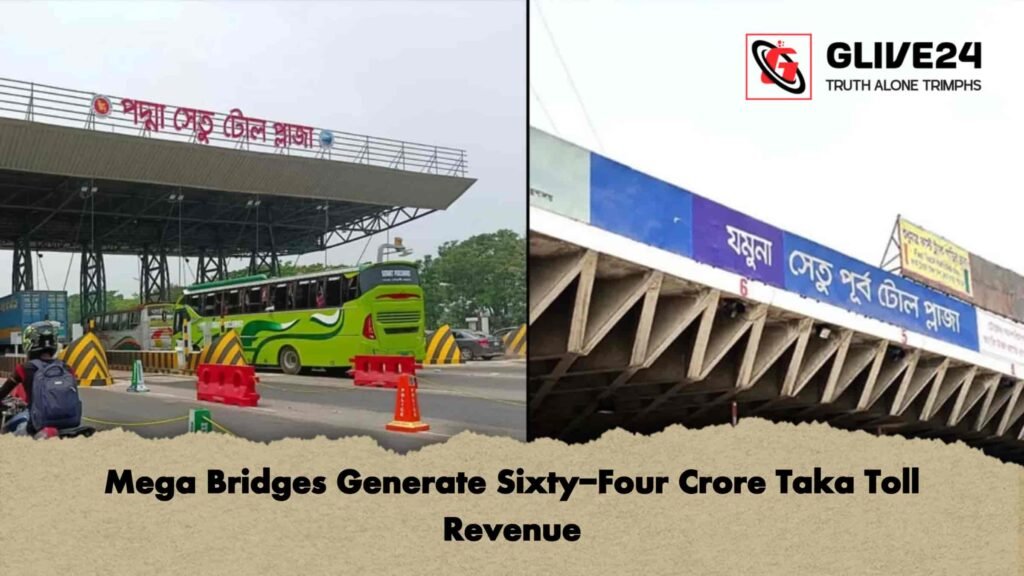
The Bangladesh Bridge Authority (BBA) accumulated a total toll revenue of nearly 64 crore Taka (Tk 640 million) from the Padma and Jamuna bridges over a consecutive 10-day period spanning from 21 May to 30 May 2026. This surge in traffic and subsequent revenue generation was driven by the massive exodus of holidaymakers travelling across the country for the annual Eid al-Adha festival.
Table of Contents
Performance and Revenue Metrics of the Infrastructure
According to a formal press release distributed by the state infrastructure regulator, a total of 679,997 vehicles transited the two major river crossings during this seasonal peak. The revenue and transit breakdowns for each individual mega-structure are detailed below:
The Padma Bridge: A total of 318,515 vehicles crossed the structure, generating a gross toll revenue of Tk 36,11,95,900.
The Jamuna Bridge (Bangabandhu Bridge): A total of 361,482 vehicles utilized the crossing, resulting in a total toll accumulation of Tk 27,68,54,900.
The BBA official report underscored that the implementation of enhanced traffic control measures and streamlined electronic toll collections facilitated a safe, smooth, and largely unhindered transit experience for passengers navigating the national highway networks.
Statistical Analysis of Holiday Vehicle Transit
The operational efficiency and revenue outcomes recorded between 21 May and 30 May 2026 demonstrate the capability of the automated toll systems to handle hyper-dense seasonal traffic without creating long bottlenecks.
Toll Revenue and Traffic Volume Breakdown
| Mega-Structure Asset | Total Transiting Vehicles | Cumulative Toll Revenue (BDT) |
| Padma Bridge | 318,515 | Tk 36,11,95,900 |
| Jamuna Bridge | 361,482 | Tk 27,68,54,900 |
| Combined Operational Metrics | 679,997 | Tk 63,80,50,800 |
Institutional Oversight and Executive Performance
In an official executive briefing, Mohammad Abdur Rouf, the Secretary of the Bridges Division and concurrently the Executive Director of the Bangladesh Bridge Authority, affirmed that strategic administrative directives were central to preventing structural congestion. He observed that the Prime Minister maintains a continuous policy focus on ensuring the domestic transit network remains secure and efficient during major national holidays.
Secretary Rouf further clarified that the senior leadership of the Ministry of Road Transport and Bridges maintained 24-hour monitoring protocols over the arterial pathways throughout the holiday rush. The coordinated deployments of highway police, structural site engineers, and additional toll booth personnel collectively ensured that the heavy volume of outbound and inbound commuters experienced a well-disciplined and comfortable journey.