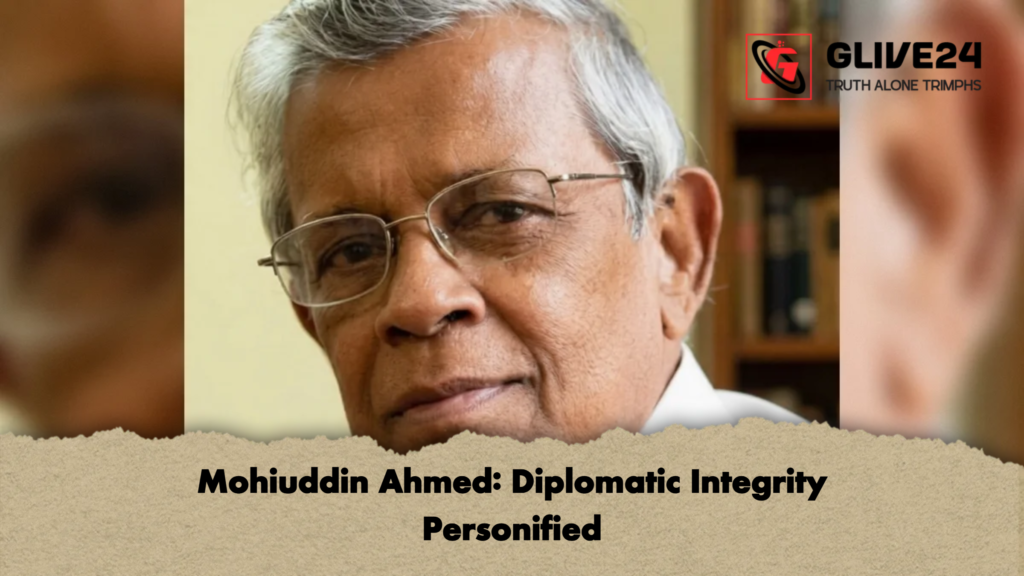
Mohiuddin Ahmed occupies a distinguished place in Bangladesh’s diplomatic history, remembered for his unwavering integrity, moral courage, and steadfast patriotism. His professional journey and personal convictions reflected a rare consistency of principle, particularly during periods of political transition in the country. Over the decades, his career was shaped not only by administrative responsibilities but also by the shifting dynamics of national politics.
Throughout his service, Ahmed held significant diplomatic and bureaucratic positions, contributing to the formulation and execution of state policy in the post-independence era. However, his career trajectory was not without turbulence. During the tenure of the Bangladesh Nationalist Party (BNP) government, he was dismissed from his official post—a decision widely regarded as a major setback in his professional life. This interruption marked a critical turning point, reflecting the often complex interplay between governance and politics in Bangladesh’s civil administration.
Following the return of a government led by Sheikh Hasina, Ahmed was reinstated into state service. This restoration allowed him to continue his work in public administration and diplomacy with renewed purpose. He ultimately retired from the position of Secretary in January 2001, concluding a long and eventful career in public service that spanned several decades of national transformation.
Beyond his administrative contributions, Mohiuddin Ahmed was widely respected as a thoughtful writer and influential columnist. His intellectual engagement extended to key issues such as the Liberation War of 1971, economic development, foreign policy, democratic governance, human rights, and poverty alleviation. Writing fluently in both Bangla and English, his essays and opinion pieces were published in various national and international newspapers. In particular, his regular column titled “At the Fountain of ’71” earned significant readership and acclaim for its reflective and analytical depth.
Ahmed’s worldview was deeply rooted in the principles of justice, humanitarian values, and national interest. He consistently argued that diplomacy should not be reduced to mere inter-state negotiation, but must instead serve as a moral instrument for upholding truth, justice, and the ideals of the Liberation War. This philosophical stance guided both his public service and his literary contributions.
He passed away on 20 June 2022 in Uttara, Dhaka, marking the end of a life devoted to principled service and intellectual engagement. His death created a noticeable void in Bangladesh’s diplomatic and intellectual landscape.
Key Milestones in the Life of Mohiuddin Ahmed
| Period / Date | Event |
|---|---|
| Post-Liberation War era | Active involvement in diplomatic and administrative responsibilities |
| BNP government tenure | Dismissal from government service |
| Subsequent Sheikh Hasina-led government | Reinstatement into service |
| January 2001 | Retirement as Secretary |
| Throughout career | Active columnist and writer on national and global issues |
| 20 June 2022 | Passed away in Dhaka |
Mohiuddin Ahmed’s legacy endures as a model of ethical leadership and intellectual depth. His life story continues to inspire future generations of diplomats, writers, and policymakers in Bangladesh, symbolising a rare blend of conviction, scholarship, and patriotic dedication.