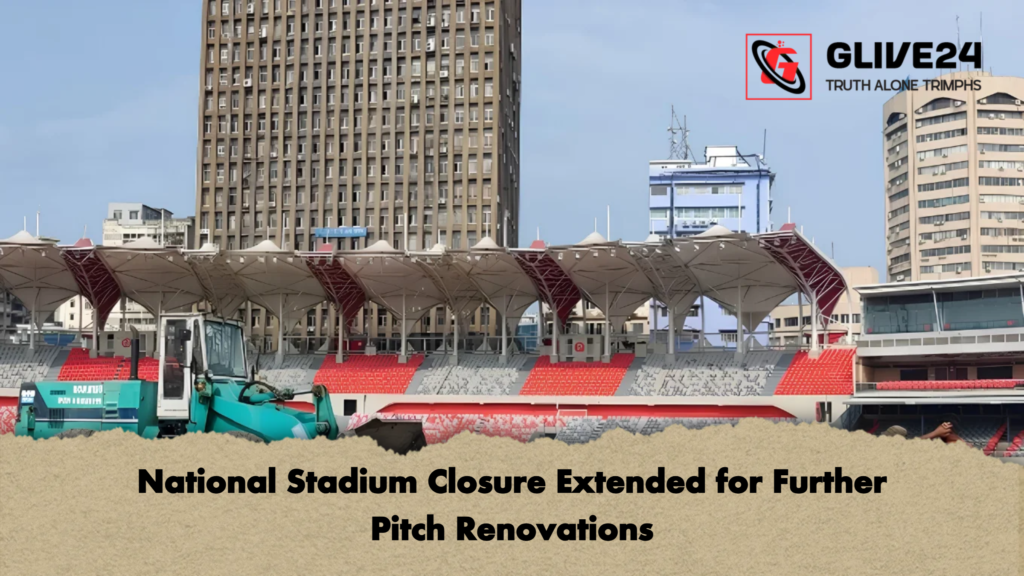
The Bangabandhu National Stadium in Dhaka is set to remain unavailable for football activities for at least another three months, further prolonging a renovation period that has already spanned half a decade. Despite the conclusion of major structural work, the pitch remains off-limits to domestic clubs, forcing professional league matches to be held at peripheral venues across the country.
Table of Contents
A Five-Year Impasse for Domestic Football
The comprehensive renovation of the National Stadium commenced in 2020, coinciding with the onset of the global pandemic. While five years have passed since the project’s inception, the venue has remained largely inaccessible to the Bangladesh Premier League. Although the stadium has occasionally hosted international fixtures—most recently a match between Bangladesh and Hong Kong—domestic clubs have been consistently denied access.
This prolonged displacement has placed a significant financial burden on major clubs such as Mohammedan SC and Abahani Limited. Despite facing fiscal constraints, these teams have been required to travel to regional venues for their home fixtures. The Bangladesh Football Federation (BFF) has maintained that the stadium must remain closed to domestic league matches to facilitate ongoing pitch improvements.
Formation of the New Grounds Committee
Following the BFF elections held in October 2024, there was a nineteen-month delay before the official announcement of the new Grounds Committee. The committee is headed by Iqbal Hossain and includes high-profile figures within the federation.
| Name | Role / Designation |
| Iqbal Hossain | Chairman (BFF Member) |
| Tabith Awal | BFF President |
| Mahid Uddin Ahmed Selim | BFF Member |
| Manjurul Alam Dulal | BFF Member |
| Hannan Miah Hannu | BFF Member (Gazipur) |
| Mobarak Hossain | BFF Member |
| Anwar Hossain Anu | BFF Member |
| Motahar Hossain | BFF Member |
| Hafsa Rahman Mourie | BFF Member |
Technical Challenges and Rescheduling
During a recent inspection of the facility, Chairman Iqbal Hossain, accompanied by select committee members, met with the contracting firms to assess the progress. Following the site visit, it was confirmed that the pitch will not be ready for use until at least 20 August.
The current phase of work involves “layer casting” and soil enrichment. According to Mr Hossain, urea fertiliser is being utilised to enhance soil fertility. Furthermore, two specific species of grass are currently under evaluation. A 25-day testing period is underway in a nursery area adjacent to the pitch to determine which variety is most resilient and suitable for high-performance sports.
Drainage and Maintenance Upgrades
One of the primary objectives of this renovation is the modernisation of the drainage system. Previously, it took approximately 20 to 25 minutes for rainwater to recede from the playing surface; the upgraded infrastructure is expected to reduce this duration to between 10 and 12 minutes.
The committee also highlighted the importance of biological maintenance. Efforts are being made to prevent external grass seeds from blowing onto the main pitch, as a mixture of different grass types could compromise the integrity of the playing surface. While the exact total cost of these renovations remains unconfirmed by the chairman, the BFF has yet to provide a definitive guarantee that domestic league matches will return to the stadium immediately upon completion of the work. Nevertheless, domestic clubs are reportedly becoming increasingly proactive in lobbying for a return to the capital’s central sporting hub.