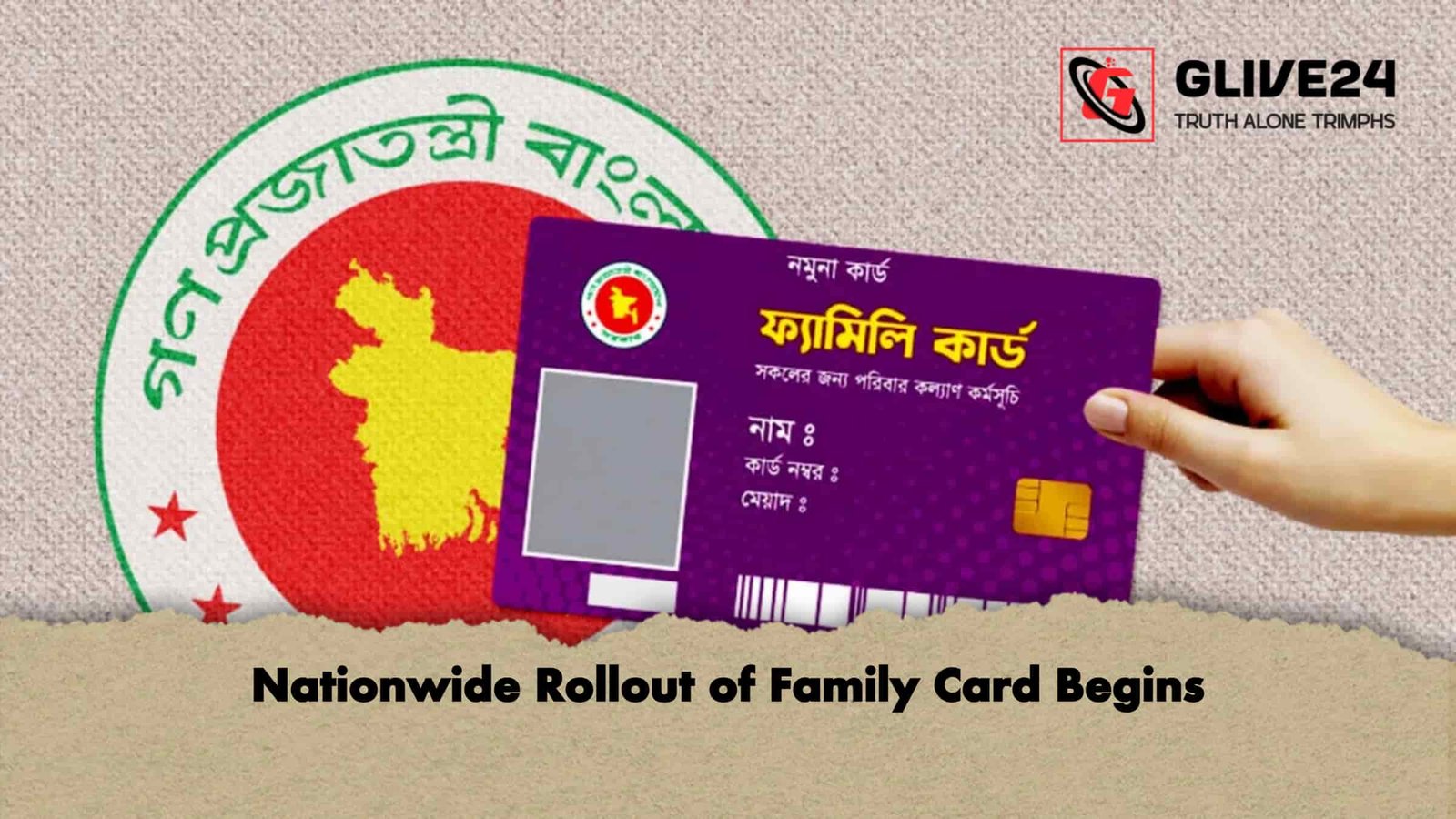
The government has unveiled an ambitious new social protection initiative titled the “Family Card” scheme, marking one of the principal commitments fulfilled following the Thirteenth National Parliament election. Approved under the direction of the Prime Minister, the programme is set to commence on a pilot basis nationwide from 10 March, with authorities describing it as a transformative step in strengthening the country’s social safety framework.
The decision was ratified at a Cabinet meeting held at the Secretariat on Tuesday. In its initial phase, the scheme will operate across 14 wards situated within 14 unions and 14 upazilas. The Prime Minister is expected to formally inaugurate the programme in a selected upazila, symbolically launching what officials anticipate will become a cornerstone of targeted welfare delivery.
Table of Contents
Pilot Structure and Eligibility
According to the Minister for Social Welfare, A Z M Zahid Hossain, beneficiaries are being identified through direct, door-to-door data collection in the designated pilot areas. Rather than relying exclusively on pre-existing administrative records, trained field officers are conducting physical verification visits to ensure that support reaches households genuinely experiencing hardship.
A distinctive feature of the scheme is that each Family Card will be issued in the name of the mother or female head of household. Policymakers maintain that placing financial responsibility in women’s hands enhances household spending on nutrition, children’s schooling, and healthcare needs. Each card will cover up to five family members. In households exceeding five members, additional cards will be allocated proportionately, with one card granted for every five individuals.
The principal elements of the pilot phase are summarised below:
| Category | Description |
|---|---|
| Programme Launch Date | 10 March |
| Pilot Coverage | 14 upazilas, 14 unions, 14 wards |
| Card Holder | Mother or female household head |
| Maximum Members per Card | 5 |
| Target Group | Extremely poor and low-income families |
| Monthly Assistance | 2,500 taka per family |
Financial Assistance and Disbursement
Each enrolled family will receive a monthly allowance of 2,500 taka. To enhance transparency and reduce the risk of misappropriation, funds will be transferred directly to beneficiaries through bank accounts or recognised mobile financial service platforms. This digital payment model is intended to replace traditional cash distribution, thereby limiting irregularities and administrative delays.
An initial block allocation has already been secured from the Ministry of Finance to underwrite the pilot phase. Officials have confirmed that a dedicated budgetary provision will be incorporated into the forthcoming national budget in June, ensuring that the programme can be sustainably expanded.
Oversight and Digital Integration
To maintain accountability, a two-tier monitoring framework has been established. At the upazila level, implementation will be supervised by a committee chaired by the Executive Officer. At ward level, data verification will be undertaken by government officials, with a First Class gazetted officer assigned as an independent observer in each ward.
Furthermore, a centralised digital database linked to the national identity system is under development. This integration aims to prevent duplication of benefits and to ensure that no individual unlawfully receives assistance more than once.
Application and Expansion
While door-to-door data collection is ongoing, formal applications will shortly be accepted using a prescribed form. Eligible applicants may submit their documents through Union Parishads and municipal offices. Required documentation includes a national identity card, a recent colour photograph, and details of an active bank or mobile financial account.
Following evaluation of the pilot phase, the government intends to extend the Family Card scheme to all upazilas within four months. Policymakers have expressed confidence that the initiative will not only provide immediate financial relief to vulnerable families but also establish a more resilient and equitable social protection system for the future.