
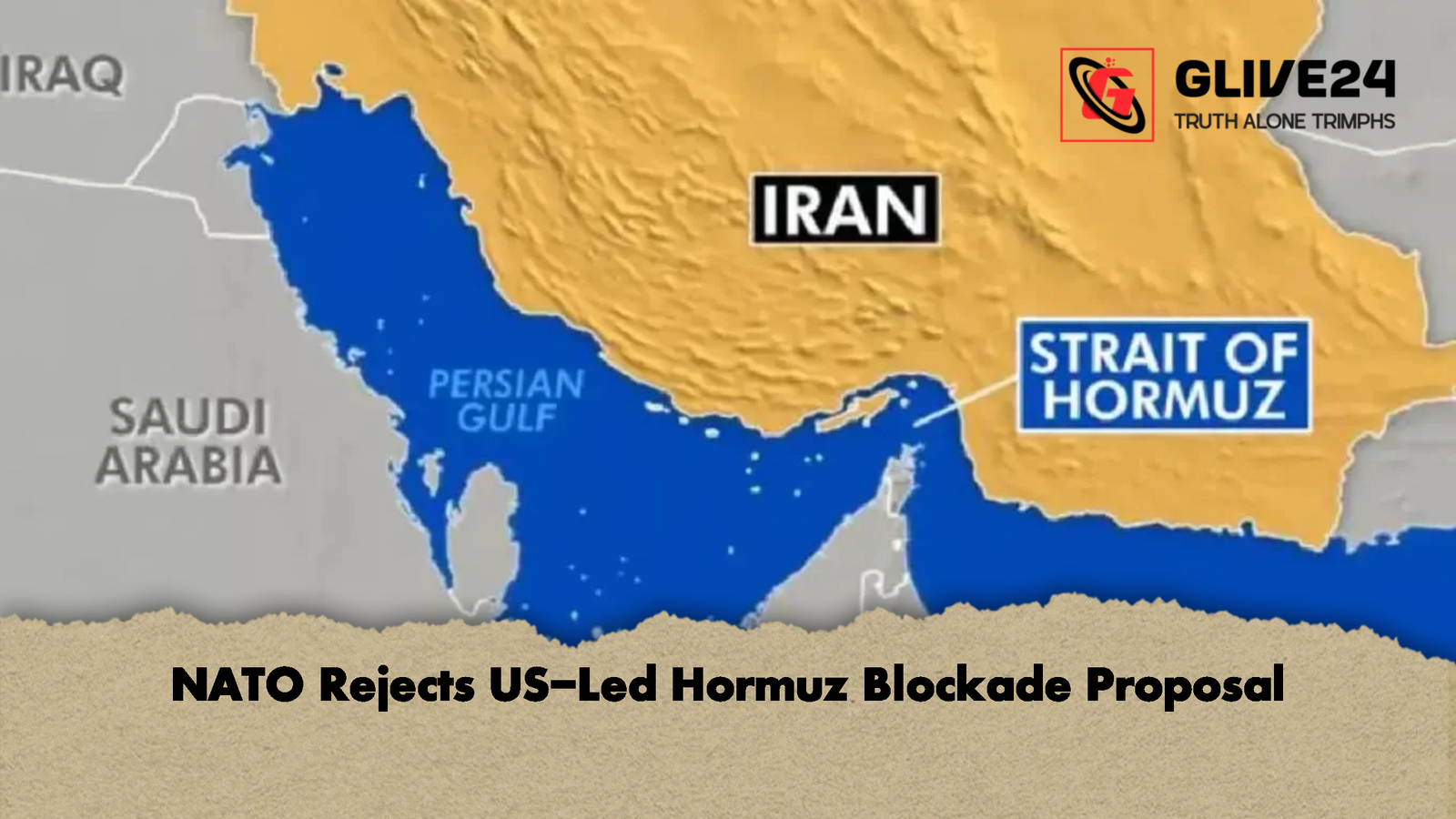
The North Atlantic Treaty Organisation (NATO) has reportedly ruled out participation in any United States-led initiative to impose a blockade on the strategically vital Strait of Hormuz, highlighting a growing policy rift between Washington and its European allies amid escalating geopolitical tensions in the Middle East.
According to statements issued on Monday (13 April), NATO members made clear that the alliance will not engage in military operations aimed at restricting or disrupting maritime traffic through the strait while regional hostilities persist. The decision underscores widening divisions within the Western security bloc over the use of force in one of the world’s most sensitive and economically significant maritime corridors.
The Strait of Hormuz is a critical global energy artery, through which a substantial share of the world’s crude oil and liquefied natural gas shipments transit daily. Any interruption to navigation in the waterway is widely expected to trigger immediate shocks across global energy markets, disrupt supply chains, and heighten inflationary pressures internationally.
Table of Contents
Diverging Transatlantic Positions
The reported US proposal for coordinated allied involvement in a blockade strategy has already generated diplomatic unease within NATO. Former US President Donald Trump had previously suggested that allied nations would stand alongside Washington in applying pressure in the region. However, several European governments have now explicitly distanced themselves from such an approach.
British Prime Minister Keir Starmer told the BBC that the United Kingdom would not take part in any blockade operation. “Our position is absolutely clear,” he said. “We will not become directly involved in this conflict, regardless of the pressure applied.”
Alongside the UK, several key NATO members—including Germany, Spain, Italy, Poland, and Greece—have also rejected the prospect of direct military participation in enforcing restrictions on maritime traffic through the strait.
NATO Member Positions
| Country | Position |
|---|---|
| United Kingdom (Keir Starmer) | Rejects military involvement |
| Germany | Opposes participation in blockade |
| Spain | Rejects military action |
| Italy | Opposes involvement |
| Poland | Rejects intervention |
| Greece | Opposes blockade support |
| France (Emmanuel Macron) | Supports diplomatic maritime mission |
France Advocates Diplomatic Maritime Mission
French President Emmanuel Macron has adopted a more flexible position, indicating that Paris is open to discussions with allies, including the United Kingdom, on the creation of an international maritime protection mission. Such a framework, he suggested, would aim to safeguard commercial shipping lanes and uphold freedom of navigation in the Strait of Hormuz.
However, Macron stressed that any such initiative would depend on an improvement in regional security conditions and should not be interpreted as an immediate escalation towards military confrontation.
Strategic and Geopolitical Implications
The divergence within NATO highlights growing caution among European allies regarding deeper military entanglement in Middle Eastern conflicts. While Washington has been advocating a more assertive collective posture, European capitals appear increasingly reluctant to endorse measures that could risk widening the conflict or destabilising global energy markets.
Analysts warn that the rejection of a blockade strategy could intensify strains in transatlantic relations, particularly if tensions in the Gulf continue to escalate. Given the Strait of Hormuz’s central role in global energy transport, any disruption would carry profound economic and geopolitical consequences.
Outlook
As diplomatic and military calculations evolve, attention is likely to focus on whether alternative security frameworks can be developed to ensure maritime stability without direct confrontation. For now, NATO’s refusal to support a US-led blockade marks a significant moment of strategic divergence within the Western alliance, with potential long-term implications for both regional security architecture and global energy stability.