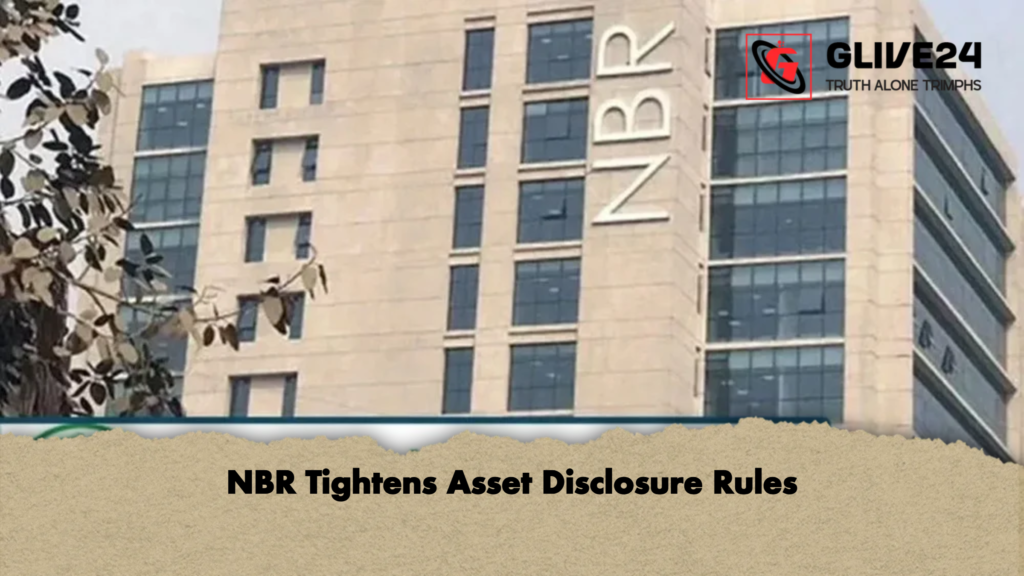
The National Board of Revenue (NBR) is set to introduce stricter measures aimed at curbing tax avoidance by wealthy taxpayers through enhanced disclosure requirements for inherited and gifted assets. From the next fiscal year, taxpayers will be required to declare the monetary value of all assets received through inheritance or as gifts when submitting their income tax returns.
According to NBR sources, a long-standing practice among some affluent taxpayers has been to report inherited properties, landholdings, gold and other valuable assets as having an “unknown value” in their tax returns. In many cases, these assets are worth millions of taka, yet their financial value has not been reflected in tax records.
As a result, although individuals may possess substantial wealth, the actual value of these assets is often excluded from calculations that determine tax-related obligations. The NBR believes this practice has limited the government’s ability to assess taxpayers’ overall wealth accurately. The new initiative is intended to address that gap by requiring the inclusion of the financial value of inherited and gifted assets in tax files at the time of return submission.
Bangladesh does not impose a direct wealth tax. However, individuals whose net assets exceed Tk 40 million are subject to a surcharge on their annual income tax. Officials believe that once the valuation of previously undisclosed inherited and gifted assets is completed, a significant number of taxpayers may cross this threshold and become liable for surcharge payments.
To facilitate accurate asset valuation, the NBR is expected to collect historical mouza valuation data from land offices across the country, covering approximately the past four decades. The information will be integrated into the online tax return system to assist taxpayers in determining the value of land and property holdings.
The move is expected to reduce the opportunity for taxpayers to classify the value of land, flats or gold ornaments as “unknown” when filing returns. Officials anticipate that the enhanced valuation process will improve transparency and strengthen compliance within the tax system.
Expected Impact of the New Measure
| Item | Details |
|---|---|
| Effective period | From the next fiscal year |
| Assets covered | Inherited and gifted land, property, gold and other assets |
| Current issue | Assets often reported with “unknown value” |
| Surcharge threshold | Net assets above Tk 40 million |
| Expected new surcharge taxpayers | Approximately 2,000 individuals |
| Additional taxpayers potentially affected | Around 4,000 taxpayers expected to come under or be impacted by surcharge calculations |
| Supporting data source | Historical mouza values from land offices |
| Integration method | Online income tax return system |
| Estimated additional revenue | Around Tk 10 billion in FY2027–28 |
NBR officials expect that the revised valuation framework will bring approximately 2,000 additional individuals above the Tk 40 million asset threshold. At the same time, taxpayers who already exceed that threshold are likely to report higher asset values following the reassessment process.
According to an NBR official, the government could generate an additional Tk 10 billion in revenue during the 2027–28 fiscal year as a result of the new valuation and disclosure requirements.
The tax authority is also preparing an income tax circular, expected to be issued by July, which will provide detailed guidance on how inherited and gifted assets should be valued and reported. The circular is expected to clarify the methodology taxpayers must follow when determining the value of land, apartments, jewellery and other inherited assets for inclusion in their tax returns.
The initiative forms part of the NBR’s broader efforts to improve transparency in asset reporting, strengthen tax compliance and ensure that taxpayers’ declared wealth more accurately reflects their actual holdings.