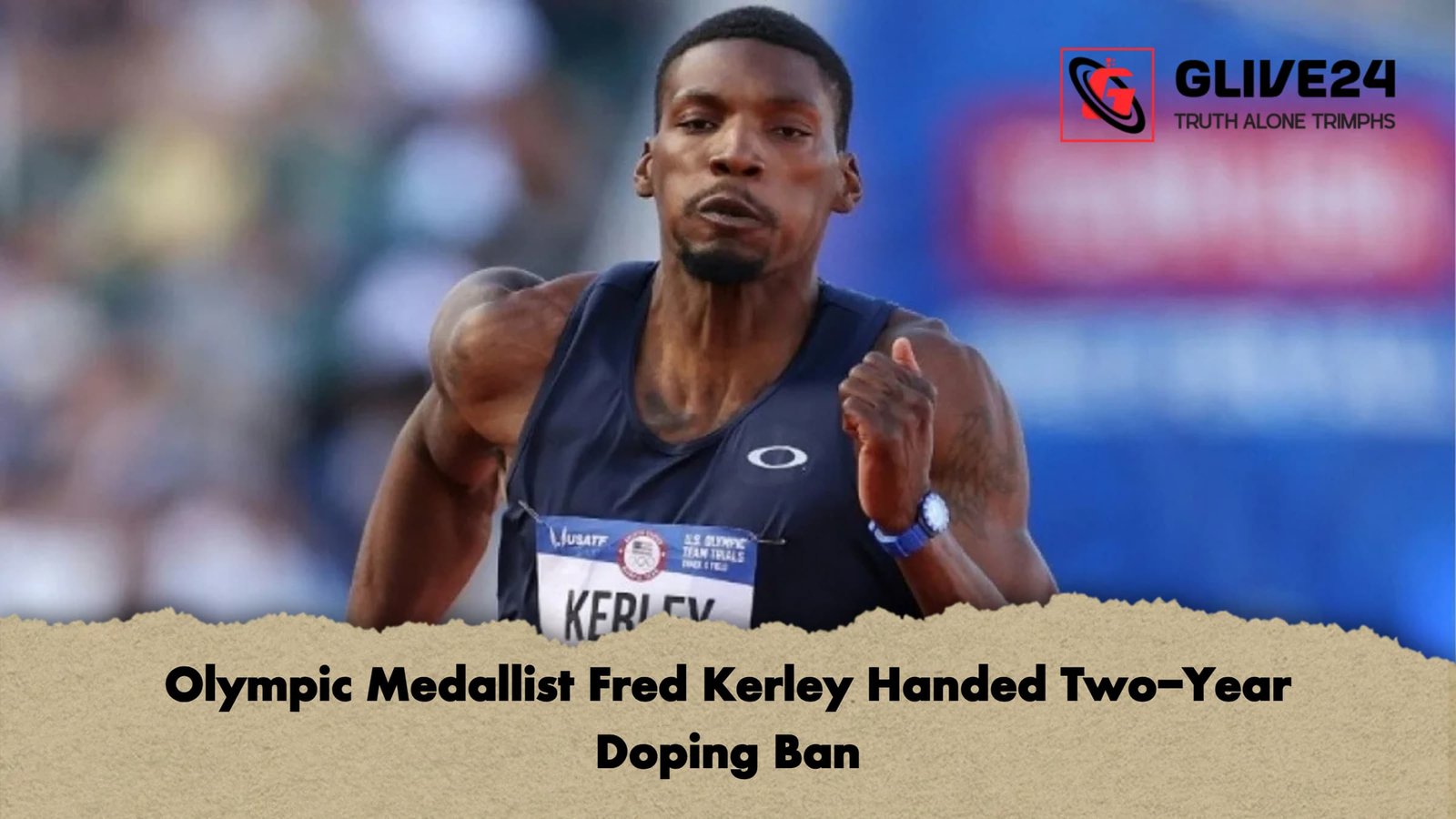
In a staggering blow to the world of international athletics, American sprinting star Fred Kerley has been slapped with a two-year suspension from all professional competition. The ruling follows a series of missed drug tests, a violation of the stringent “whereabouts” rules governed by international anti-doping authorities.
The Breach of Protocol
The Athletics Integrity Unit (AIU) confirmed the sanction yesterday, revealing that the 30-year-old sprinter failed to present himself for testing on three separate occasions within a single calendar year. Under the World Anti-Doping Code, athletes are required to provide precise details of their daily locations to allow for out-of-competition testing. Kerley’s failure to update this information and his subsequent absence during testing windows constitutes a significant breach of the code of conduct.
While a missed test is not an admission of using performance-enhancing drugs, the AIU treats three “whereabouts” failures as equivalent to a positive doping result. Consequently, Kerley has received the maximum penalty for such an infraction.
A Career Interrupted
The suspension marks a dramatic fall from grace for one of the most versatile and successful sprinters in modern history. Kerley, who famously transitioned from the 400m to the shorter sprints, has been a consistent podium finisher at the highest level of the sport.
| Competition | Event | Medal |
| 2020 Tokyo Olympics | 100 Metres | Silver |
| 2022 World Championships | 100 Metres | Gold |
| 2024 Paris Olympics | 100 Metres | Bronze |
| 2023 World Championships | 4×100 Metres Relay | Gold |
Impact on the Athletics Landscape
Kerley’s absence will be felt deeply by the United States track and field team. At 30 years old, a two-year hiatus is particularly perilous; by the time he is eligible to return in 2028, he will be approaching the twilight of a traditional sprinter’s career. This ban effectively rules him out of the upcoming World Athletics Championships and significantly complicates his prospects for the next Olympic cycle.
The AIU’s decision serves as a stark reminder to elite athletes regarding the non-negotiable nature of the “whereabouts” system. Even in the absence of a positive chemical sample, the integrity of the sport relies on the constant availability of its stars for random scrutiny.