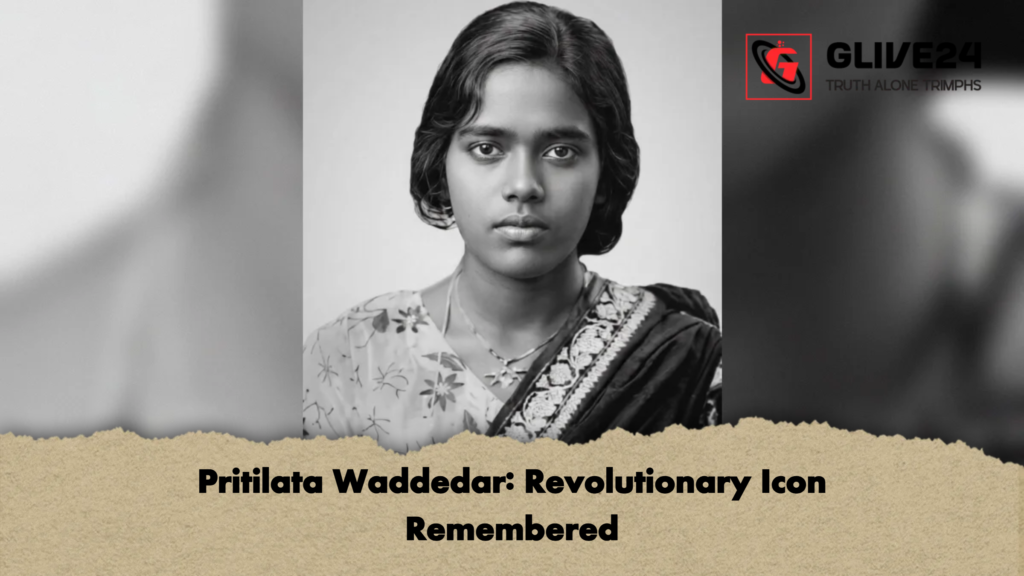
Pritilata Waddedar remains one of the most remarkable figures in the history of the Indian independence movement, celebrated for her courage, intellectual brilliance, and ultimate sacrifice. A pioneering revolutionary of the “Agni Yuga” or “Era of Fire,” she is widely regarded as a symbol of defiance, resilience, and the uncompromising struggle for freedom in colonial Bengal.
Born on 5 May 1911 in a middle-class family in Chattogram, Pritilata was the daughter of Jagabandhu Waddedar, who served as a head clerk at the Chattogram Municipality. From an early age, she demonstrated exceptional academic ability and determination. She completed her matriculation from Khastagir Girls’ School in 1927 with first division results. She then excelled at Eden College in Dhaka, securing the top position in the Intermediate examinations under the Dhaka Board. Later, she graduated in Philosophy with distinction from Bethune College in Kolkata.
Her student years coincided with growing political awareness and anti-colonial sentiment across Bengal. Influenced by progressive women activists such as Leela Nag and Kalyani Das, she became involved in organised revolutionary activities. This engagement marked the beginning of her transformation from an outstanding student into a committed revolutionary. Eventually, she joined the armed resistance group led by Surya Sen in Chattogram, becoming one of the earliest women participants in its operations.
Pritilata was not merely a supporter but an active operative in several revolutionary actions. She participated in targeted attacks on telegraph and telephone offices, the raid on the reserve police lines, and was associated with the broader resistance activities culminating in the Jalalabad conflict. Her involvement earned her respect and trust within the revolutionary network, where she was recognised for her discipline and leadership qualities.
The most defining moment of her life came on 23 September 1932, when she led an armed assault on the European Club at Pahartali in Chattogram. The club displayed a sign reading “Dogs and Indians not allowed,” a stark symbol of racial discrimination under British rule. Disguised as a man, she led her team with precision and determination. The mission was partially successful, but during the retreat she sustained injuries from gunfire.
Faced with imminent capture, Pritilata chose death over arrest. She consumed potassium cyanide, ending her life at the age of 21. Her decision was widely seen as an act of final resistance against colonial humiliation.
Key Details of Pritilata Waddedar
| Aspect | Information |
|---|---|
| Full Name | Pritilata Waddedar |
| Date of Birth | 5 May 1911 |
| Place of Birth | Chattogram, Bengal Presidency |
| Education | Khastagir Girls’ School, Eden College, Bethune College |
| Field of Study | Philosophy |
| Revolutionary Group | Surya Sen-led armed resistance |
| Major Action | Attack on Pahartali European Club |
| Date of Death | 23 September 1932 |
| Age at Death | 21 years |
| Cause of Death | Suicide by potassium cyanide |
Her martyrdom became a defining moment in the revolutionary history of Bengal. It inspired contemporaries such as Kalpana Dutta and countless young men and women to continue the struggle for independence with renewed determination.
Pritilata Waddedar’s legacy endures as a powerful reminder of courage in the face of oppression. She is remembered not only for her sacrifice but also for her intellectual strength and unwavering commitment to freedom, which continue to inspire generations.