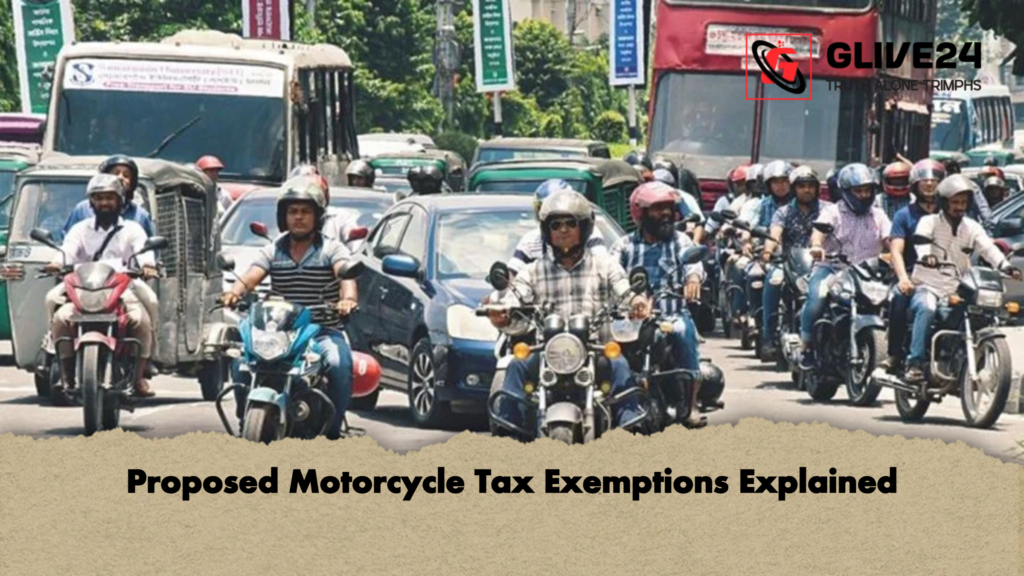
The National Board of Revenue is reportedly considering a new framework for introducing Advance Income Tax (AIT) on motorcycles, which may be incorporated into the upcoming 2026–27 national budget. Under the proposal, taxation would be structured according to engine capacity (cc), with smaller motorcycles potentially receiving full exemptions.
According to sources familiar with the plan, motorcycles up to 110cc would remain exempt from any AIT. Vehicles exceeding this threshold would be subject to progressively higher annual tax rates based on engine size. The initiative is aimed at broadening the tax base while aligning vehicle taxation with usage and capacity.
At present, motorcycle owners in Bangladesh do not pay advance income tax on ownership. Instead, they are required to pay a one-time registration fee and periodic road tax. The proposed change would introduce an additional annual fiscal obligation for higher-capacity motorcycles.
Proposed AIT Structure for Motorcycles
| Engine Capacity (cc) | Proposed Annual AIT | Tax Status |
|---|---|---|
| Up to 110cc | 0 | Fully exempt |
| 111cc – 125cc | 2,000 BDT | Low-tier tax |
| 126cc – 165cc | 5,000 BDT | Mid-tier tax |
| Above 165cc | 10,000 BDT | High-tier tax |
In addition to the proposed tax structure, existing costs remain applicable. Currently, registration fees vary depending on engine size. For motorcycles between 50cc and 125cc, the total registration fee stands at approximately 9,291 Bangladeshi Taka, followed by staggered road tax payments every two years. For motorcycles above 125cc, the registration fee rises to around 11,764 Taka, with higher periodic road tax instalments.
The Bangladesh Road Transport Authority (BRTA), which maintains national vehicle registration data, reports that Bangladesh currently has approximately 4.87 million registered motorcycles. This significant volume highlights the importance of motorcycles as a primary mode of transport across urban and rural areas.
Transport policy analysts have noted that motorcycles are widely used not only for private mobility but also for commercial purposes such as ride-sharing and small-scale deliveries. As a result, policymakers view them as a potentially important segment for expanding tax collection efficiency.
Experts suggest that the proposed AIT could also have a redistributive effect, easing pressure on existing taxpayers while formalising revenue collection from a rapidly growing vehicle segment. Under current income tax regulations, owners of battery-operated rickshaws and motorcycles are permitted to adjust advance taxes against their annual tax returns, ensuring partial offset mechanisms remain in place.
If implemented, the policy would mark a significant shift in vehicle taxation in Bangladesh, particularly for mid- and high-capacity motorcycle owners, while preserving affordability for lower-capacity users.