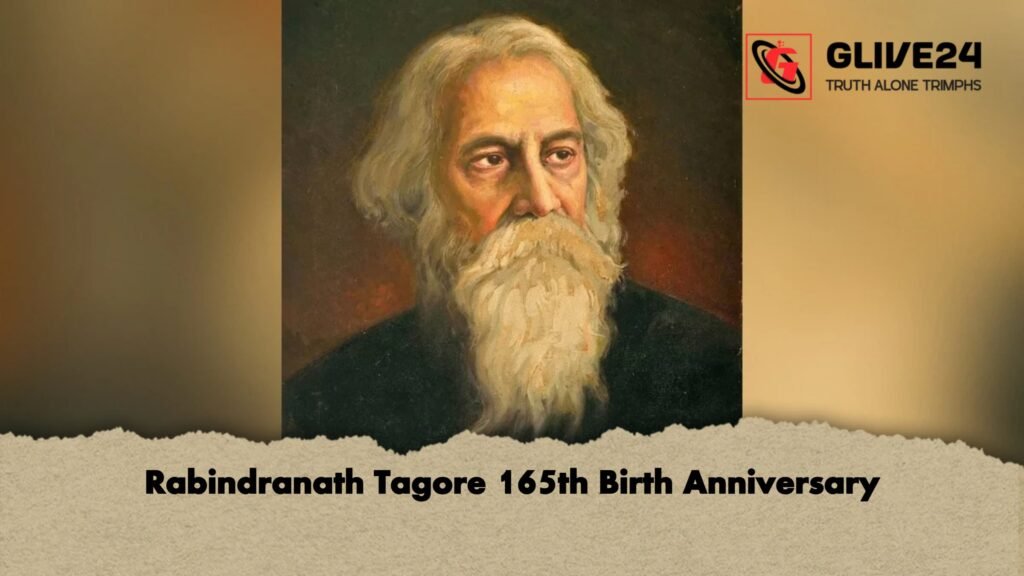
25 Baishakh marks the 165th birth anniversary of Rabindranath Tagore, a towering figure in Bengali literature, music, art and philosophy. The day is being observed across Bangladesh and among Bengali communities worldwide, with cultural programmes held at locations associated with his life and work, including Jorasanko, Shilaidaha, Shahzadpur and Patisar.
Rabindranath Tagore was born on 25 Baishakh 1268 (1861 CE) in the Jorasanko mansion in Kolkata, British India, into the distinguished Tagore family. He was the fourteenth child of Maharshi Debendranath Tagore and Sarada Sundari Devi. In 1913, he became the first non-European Nobel laureate in literature for his collection Gitanjali, which brought Bengali literature to global prominence. His composition “Amar Sonar Bangla” is the national anthem of Bangladesh.
Tagore’s contribution spans multiple disciplines. He was a poet, novelist, playwright, essayist, composer, educationist, linguist, painter and philosopher. His literary and musical output is extensive and remains a significant part of Bengali cultural heritage.
Key literary output
| Category | Output |
|---|---|
| Poetry collections | 52 |
| Plays | 38 |
| Novels | 13 |
| Essay collections | 36 |
| Songs | Over 2,000 |
| Short stories & letters | Numerous |
His works reflect themes of humanism, nature, love, devotion, social thought and philosophical inquiry. His songs and writings have been widely associated with emotional expression, including joy, sorrow, patriotism and universal humanity. During the Bangladesh Liberation War, his songs served as a source of inspiration.
Tagore played a crucial role in shaping modern Bengali language and literature, expanding its expressive capacity and intellectual depth. His influence is widely recognised in both literary and educational spheres.
He is regarded as a central figure of the Bengali Renaissance, with works that combine aesthetic beauty with philosophical exploration. His writings continue to be studied and performed widely, reflecting their sustained relevance.
National observance and programmes
The Ministry of Cultural Affairs has organised national-level programmes in Dhaka and at key Tagore-associated sites. These include discussion sessions, cultural performances, Rabindra Sangeet, dance and poetry recitations.
The main national event is being held at the historic Shilaidaha Rabindra Kuthibari in Kushtia over three days (8–10 May), featuring cultural performances, discussions, music and dance presentations.
At the Bangladesh Shilpakala Academy in Dhaka, a four-day programme (8–11 May) titled “Rabindranath, Poet of Peace and Humanity” includes Rabindra Sangeet, dance, recitation, theatre performances and discussion sessions at the National Theatre Hall.
Selected programme overview
| Venue | Duration | Key Activities |
|---|---|---|
| Shilaidaha Rabindra Kuthibari | 8–10 May | Cultural shows, music, dance, discussions |
| Bangladesh Shilpakala Academy | 8–11 May | Music, dance, theatre, recitation, seminars |
| Various educational institutions | 8–11 May | Competitions in essay writing, music, dance and recitation |
| Liberation War Museum (Agargaon) | Two-day festival | National Rabindra Sangeet Festival |
| Bangla Academy | 11 May (28 Baishakh) | Rabindra Award 2026 presentation |
Across districts, cultural programmes, fairs and discussions are being held in places associated with Tagore, including Shahzadpur, Patisar and others. Educational institutions, including the University of Dhaka, are also hosting competitions and cultural events.
The Bangladesh Rabindra Sangeet Shilpi Sangstha has organised a two-day National Rabindra Sangeet Festival at the Liberation War Museum auditorium, with morning and evening sessions. Cultural organisation Chhayanaut is also observing the occasion through dedicated programmes.
The observance of Tagore’s birth anniversary continues to function as a major cultural event in Bangladesh, reflecting his enduring contribution to literature, music and intellectual life.