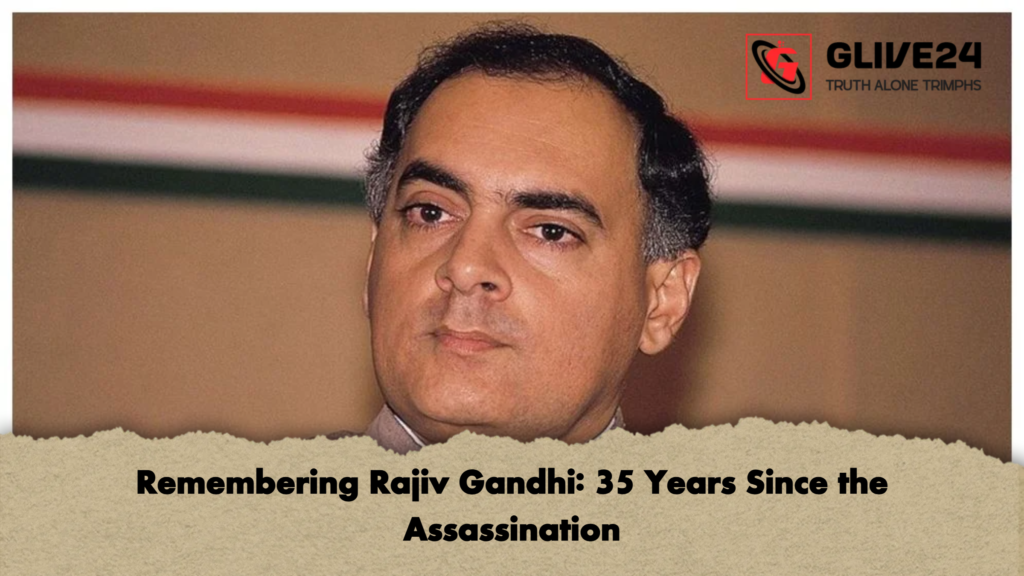
The assassination of former Indian Prime Minister Rajiv Gandhi remains one of the most discussed and mysterious events in South Asian political history. Even after more than three decades, the core question lingers: was the LTTE solely behind this act, or were invisible forces pulling strings from behind the curtain?
Table of Contents
Theories Beyond the LTTE
While the Liberation Tigers of Tamil Eelam (LTTE) were legally held responsible, several alternative theories have surfaced over the years:
-
Intelligence Suspicions: Former Indian intelligence officials have occasionally hinted at the potential involvement of Pakistan’s ISI.
-
Domestic Rivalries: Some believe the Bofors scandal created deep rifts between Rajiv Gandhi and powerful Indian power brokers. This has led to speculation that political opponents or specific “beneficiaries” might have played a role.
The CIA’s Preemptive Warning
A startling revelation in this history is that the CIA had anticipated such an assassination nearly five years before it occurred.
-
The 1986 Report: The CIA prepared a 23-page secret report titled “Rajiv’s India: The Post-Rajiv Era.”
-
The Prediction: The report suggested that Rajiv Gandhi could face an assassination attempt before his term ended in 1989.
-
Identified Threats: At that time, the CIA identified Sikh extremists and Kashmiri Muslim separatists as the primary threats. It remains unclear if the redacted portions of the report contained warnings regarding the LTTE.
Why Was Rajiv Targeted?
During his tenure as Prime Minister (1984–1989), Rajiv Gandhi’s intervention in the Sri Lankan Civil War became a turning point.
-
IPKF Deployment: He sent the Indian Peace Keeping Force (IPKF) to Sri Lanka to disarm Tamil rebels.
-
Strategic Conflict: This move turned the LTTE into a bitter enemy of the Indian state.
-
The Final Trigger: After his 1989 electoral defeat, Rajiv Gandhi publicly declared that if he returned to power, he would again send troops to Sri Lanka to suppress the Tamil insurgency.
LTTE chief Velupillai Prabhakaran viewed this declaration as an existential threat to his organization, allegedly triggering the order for the assassination.
That Fatal Night: May 21, 1991
On the night of May 21, 1991, during an election rally in Sriperumbudur, Tamil Nadu, the plan was executed:
-
The Attack: A woman (Dhanu) approached Rajiv Gandhi under the guise of paying respect. As she bent down to touch his feet, she detonated an improvised explosive device strapped to her body.
-
The Casualties: Rajiv Gandhi and 17 others were killed instantly in the suicide blast.
-
The Verdict: Investigations identified the attacker as an LTTE member. Out of 21 people convicted, four (Nalini, Murugan, Santhan, and Robert Payas) were initially sentenced to death, though their sentences were later commuted to life imprisonment.
An Unfinished Chapter of History
Despite the court’s verdict, many still wonder: could a separatist organization execute such a high-profile international assassination entirely on its own? Or was it a piece in a larger geopolitical game?
The complete answer may forever remain a secret of history.
Rajiv Gandhi
Born: August 20, 1944
Died: May 21, 1991
Tributes and Remembrance.