“Ek Pardesi Mera Dil Le Gaya…”
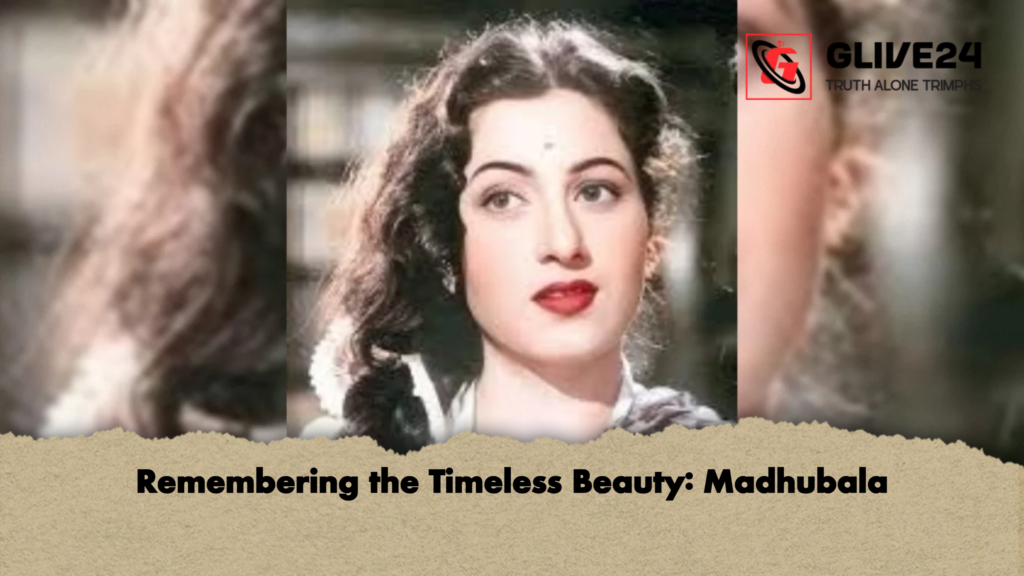
With the gentle waves of melody comes a face—immortal, ethereal, and unforgettable. Madhubala, the goddess of beauty, continues to live on—not just in the silver light of cinema, but in the sighs of countless admirers and in the eternal imagination of lovers everywhere. Her life, a blend of splendour and tragedy, reads like a poetic epic that captivated millions.
Table of Contents
Early Life and Childhood Shadows
Born on 14 February 1933 in Delhi to a humble family, Madhubala was originally named Mumtaz Jehan Dehlavi. Her father, Ataullah Khan, lost his job and moved the family to Bombay (now Mumbai) seeking better opportunities. Childhood hardships marked her early years: she lost several siblings at a tender age, and in 1944, the Bombay dock explosion destroyed their home. Amidst this adversity, little Mumtaz became the family’s beacon of hope.
At the age of nine, she entered the world of cinema as a child artist. Her natural charm and acting talent quickly impressed producers. Legendary actress Devika Rani, recognising her brilliance, bestowed upon her the name that would become iconic: Madhubala.
Rise to Stardom
Madhubala debuted as a lead actress in Neel Kamal (1947), alongside Raj Kapoor. This marked her last appearance under her birth name. Her breakthrough came in 1949 with Mahal, a gothic mystery that instantly made her a sensation. She mesmerised audiences with her presence, and subsequent films like Dulari, Tarana, Basant, and Badal solidified her reputation as one of Indian cinema’s brightest stars.
In 1952, the American magazine Theatre Arts featured her in a special report, and legendary Hollywood director Frank Capra invited her to work in the United States. Family opposition prevented her from pursuing this international opportunity.
| Year | Film | Significance |
|---|---|---|
| 1947 | Neel Kamal | Lead actress debut, co-starred Raj Kapoor |
| 1949 | Mahal | Breakthrough role; gothic mystery film |
| 1952 | International Recognition | Featured in Theatre Arts magazine; Hollywood invitation |
| 1960 | Mughal-e-Azam | Portrayed Anarkali; iconic performance in Indian cinema |
Love, Heartbreak, and Marriage
On the set of Tarana, Madhubala met actor Dilip Kumar. Their romance blossomed through heartfelt Urdu notes and red roses. Despite mutual devotion, family pressure and production disputes created insurmountable obstacles. Legal complications surrounding the film Naya Daur ultimately ended their relationship, with Madhubala choosing familial duty over love. She later married legendary singer Kishore Kumar, though their marital life was marked by struggles, and her first love remained an indelible part of her heart.
Legendary Performance: Mughal-e-Azam
In 1960, Madhubala immortalised herself as Anarkali in the historical epic Mughal-e-Azam. Despite battling a congenital heart defect, her dedication to her craft was extraordinary, leaving a lasting imprint on Indian cinematic history.
Illness and Farewell
Madhubala suffered from a hole in the heart from childhood, keeping her illness secret for fear of losing work. Her condition gradually worsened, and after nine years of declining health, she passed away on 23 February 1969 at the age of 36.
Madhubala was more than an actress—she was an emotion, a fairytale, and a symbol of unfulfilled love. Though she departed the world too soon, her smile, her eyes, and her presence remain eternal. Flowers may wither and seasons change—but Madhubala never truly fades. She returns, every spring evening, in every lover’s sigh.