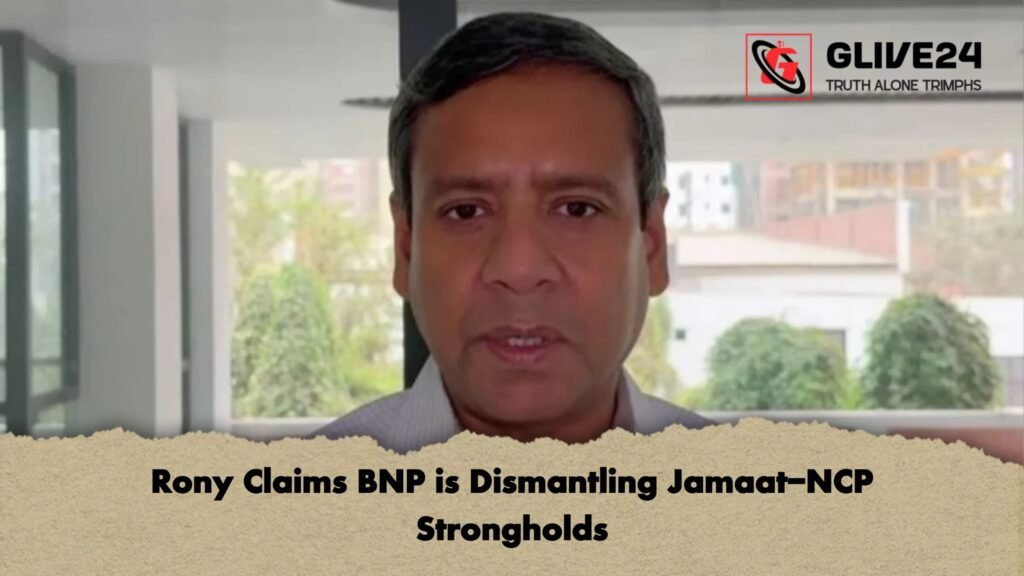
The political landscape of Bangladesh is undergoing a seismic shift as the newly formed BNP government moves with “storm-like speed” to consolidate power and dismantle the entrenched influence of rival factions. This assessment comes from Golam Maula Rony, a former Member of Parliament and prominent political commentator, who suggests that the administration is acting decisively to reclaim state institutions.
A Rapid Transition of Power
Speaking on his YouTube channel on Wednesday, Rony noted that the BNP, under the leadership of Tarek Rahman, has initiated a series of “surprising” strategic moves within days of taking office. According to Rony, the government is visibly proactive in fulfilling its manifesto promises, with ministers working tirelessly to overcome the administrative stagnation that characterised the previous 17-month interim period and the preceding Awami League era.
The focal point of this transition, however, is the systematic removal of figures associated with the Bangladesh Jamaat-e-Islami and the National Citizen Party (NCP). Rony observed that during the political vacuum of the last year and a half, these groups had successfully established “fortresses” within the civil service and law enforcement—strongholds that are now being “demolished” by the current administration.
Dismantling the “Fortresses”
The commentator highlighted that a significant portion of officials perceived to be loyal to Jamaat or the NCP have already been ousted. “A vast number have been swept away,” Rony remarked, noting that while many were formally removed, others chose to resign voluntarily as the political tide turned.
The scale of this administrative reshuffle is particularly evident in two critical sectors: the police force and the city corporations. These entities, which allegedly saw a surge in Jamaat-NCP influence recently, have seen their internal power structures “shattered” over the last 48 hours.
Summary of Administrative Reshuffle
| Sector | Nature of Change | Impact Level |
| Civil Administration | Removal of political appointees from the previous 17 months | High |
| Police Force | Systemic dismantling of Jamaat-NCP dominance | Critical |
| City Corporations | Reshuffle of leadership and influential cadres | High |
| Ministries | Elimination of bureaucratic inertia and backlog | Moderate |
The “Tarek Rahman Factor”
Rony credited the speed of these changes to Tarek Rahman’s direct oversight. He argued that the current leadership is determined to ensure that the “dual-administration” or “shadow influence” of non-BNP religious and conservative factions does not impede the party’s governance.
By aggressively targeting these perceived “fortresses,” the BNP aims to create a streamlined bureaucracy loyal to its own vision. However, Rony’s analysis suggests that this rapid “cleansing” of the administration is not merely about efficiency but is a calculated move to ensure total political hegemony in the post-Awami League landscape.
As the government enters its second week, the question remains whether this rapid consolidation will lead to stability or provoke a new wave of political friction with its erstwhile allies.