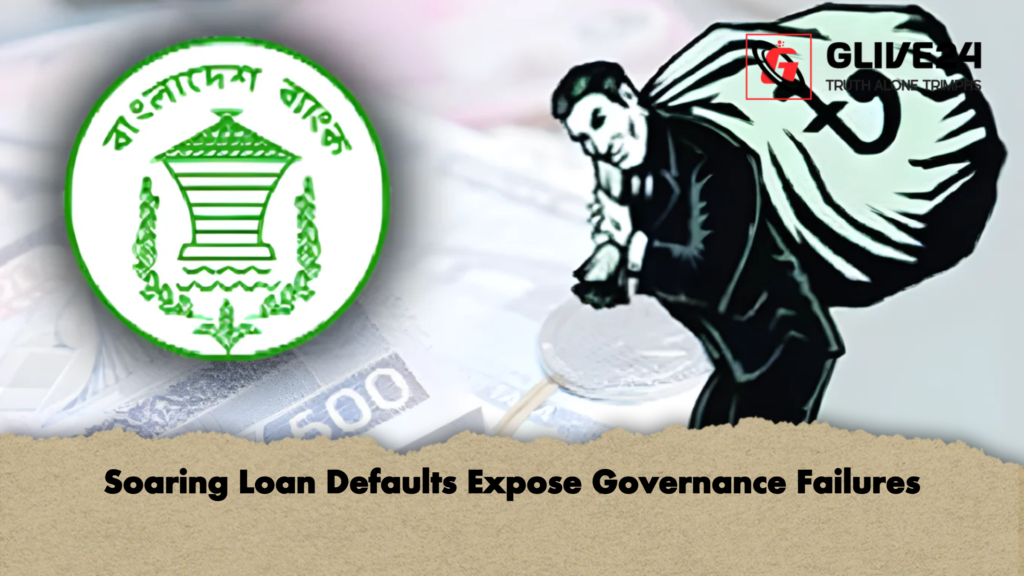
As non-performing loans reach historic highs, Bangladesh Bank has initiated a bold restructuring plan aimed at rescuing some of the country’s most troubled financial institutions. The focus has fallen particularly on Shariah-based banks, several of which are struggling to survive under the weight of overwhelming loan defaults.
By the end of September, nearly 36 per cent of all loans in the banking sector had become non-performing, reflecting a dramatic collapse in credit discipline. The rapid escalation of bad loans is widely attributed to years of lax regulation, politically influenced lending decisions, and repeated policy concessions that masked the true health of bank balance sheets.
According to central bank data, defaulted loans have surged from Tk 2,84,977 crore a year earlier to Tk 6,44,515 crore. This explosive growth has exposed the fragility of banks that were previously portrayed as stable through repeated loan rescheduling and regulatory forbearance.
Shariah-based banks have been among the worst affected. Institutions such as First Security Islami Bank, Global Islami Bank, Union Bank, and EXIM Bank have reported default ratios ranging from over 50 per cent to well above 90 per cent. These figures have undermined public confidence in Islamic banking and raised fears of contagion across the wider financial system.
In response, Bangladesh Bank has announced plans to merge five struggling Islamic banks into a single entity tentatively named the “Combined Islami Bank”. The banks identified for consolidation include EXIM Bank, First Security Islami Bank, Social Islami Bank, Global Islami Bank, and Union Bank. The objective is to stabilise operations, reduce duplication, and strengthen capital adequacy through consolidation.
However, economists caution that mergers should not be viewed as a cure-all. M Helal Ahmed Jony argues that unless institutional capacity is reinforced and political interference eliminated, such reforms may only offer temporary relief. He emphasises the need for strong supervisory mechanisms, independent boards, and transparent loan approval processes.
The broader implications of the default crisis are profound. High levels of non-performing loans restrict banks’ ability to extend new credit, discourage private investment, and increase reliance on government support. In the absence of decisive reform, the burden of bank failures may ultimately fall on taxpayers.
As Bangladesh confronts one of the most severe banking crises in its history, the coming months will be critical. Whether the sector can regain stability will depend not only on structural reforms, but also on the political will to enforce accountability and restore financial discipline across the system.