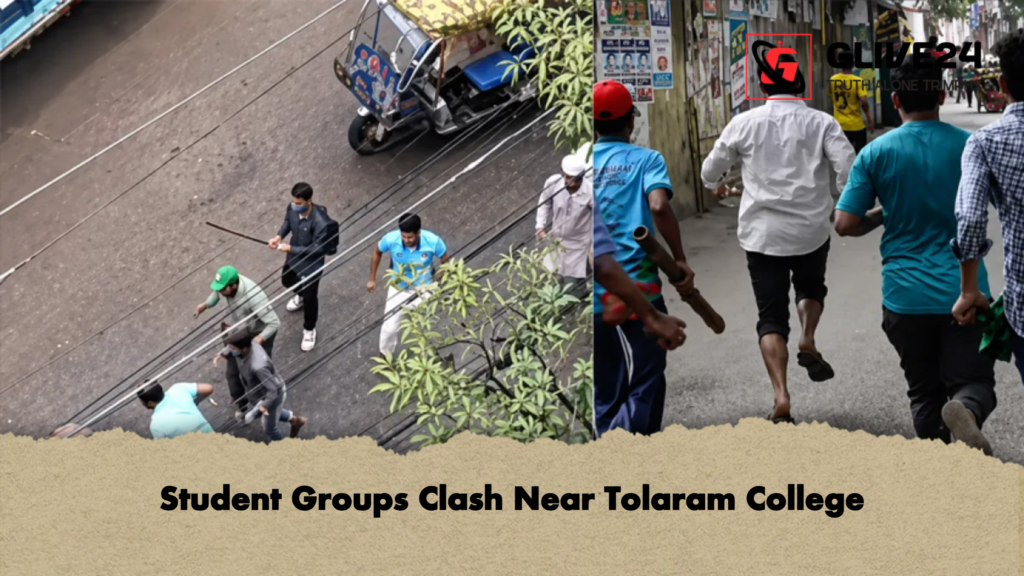
Tensions flared in Narayanganj on Wednesday after members of the Bangladesh Jatiyatabadi Chhatra Dal (JCD) and Islami Chhatra Shibir became involved in a violent confrontation near Government Tolaram College, adding to growing concerns over student political unrest at educational institutions across the country.
The clash took place around midday at the Dakbangla intersection adjacent to the college campus. The incident comes only days after separate confrontations involving student groups at Jagannath University and Dhaka College, raising fresh questions about campus security and the increasing frequency of politically motivated disputes in higher education.
According to eyewitnesses and local residents, the incident began with a verbal altercation between activists from the two organisations in the vicinity of the college. What initially appeared to be a heated exchange quickly escalated into a physical confrontation, with both groups chasing one another and engaging in hand-to-hand fighting. The violence caused panic among students, local shopkeepers and passers-by, many of whom hurried to safer locations as the situation deteriorated.
Local sources reported that at least two members of Chhatra Dal were among those injured, while several individuals from both sides also sustained injuries during the clash. Some of the injured reportedly received primary medical treatment near the scene. However, the identities of those injured and the exact number of casualties could not be officially confirmed immediately after the incident.
The unrest temporarily disrupted normal movement around the college area. Businesses in the vicinity became cautious, and pedestrian traffic slowed as people attempted to avoid the affected location. Witnesses described an atmosphere of fear and uncertainty until members of the law enforcement agencies arrived and secured the area.
Police responded shortly after receiving reports of the violence. Officers were deployed to the scene to prevent the confrontation from escalating further and to restore public order. Security was strengthened around the college and surrounding neighbourhood to minimise the risk of renewed violence.
Mahbub, Officer-in-Charge of Fatullah Police Station, said police had acted promptly after being informed of the incident. He stated that authorities were investigating the circumstances surrounding the clash and examining how the confrontation began. According to him, the situation had been brought under control and calm had largely returned to the area, although law enforcement personnel remained on alert to prevent any further disturbances.
Despite widespread discussion over the possible motives behind the confrontation, no organisation involved had issued an official explanation at the time of reporting. Neither Bangladesh Jatiyatabadi Chhatra Dal nor Islami Chhatra Shibir released a formal statement clarifying the events or identifying the factors that triggered the violence. Likewise, the administration of Government Tolaram College had not issued any written or official response immediately following the incident.
Investigators are expected to collect statements from eyewitnesses and examine available evidence as part of the inquiry. Police said they were gathering information to identify everyone involved in the confrontation. Any subsequent legal action, officials added, would depend on the findings of the investigation.
The latest incident has renewed concern over the impact of political rivalry within educational institutions. Observers believe repeated clashes between student organisations not only threaten the safety of students and staff but also disrupt academic activities and undermine the learning environment. They argue that a swift, impartial investigation is essential to establish responsibility and ensure accountability under the law.
Education analysts and civic observers have also stressed the importance of coordinated efforts by college authorities, law enforcement agencies and student leaders to maintain peaceful campuses. They contend that preventing further violence will require both effective enforcement of institutional discipline and constructive dialogue among stakeholders to reduce tensions before they escalate into physical confrontations.