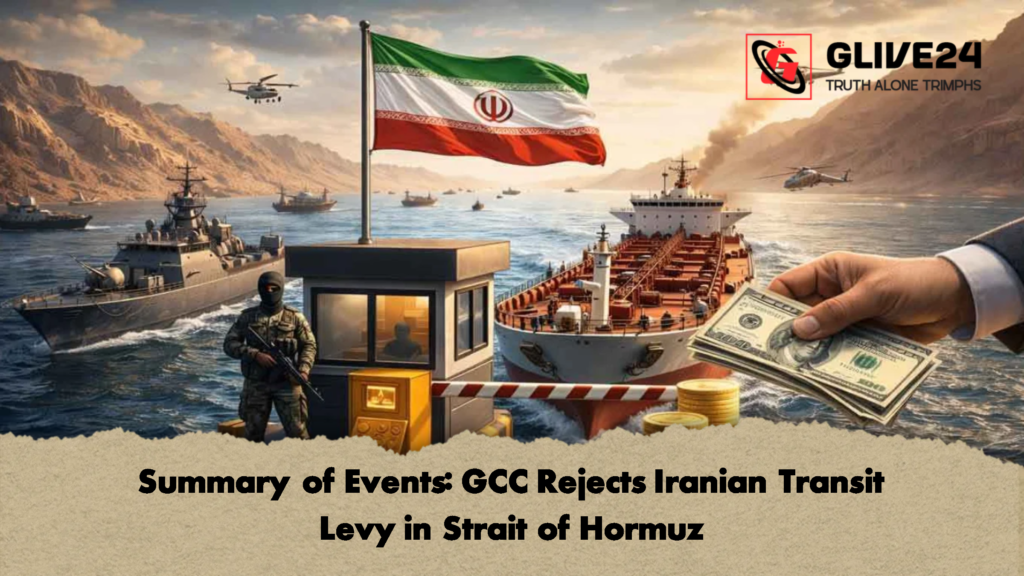
In a decisive move at a high-level ministerial summit in Jeddah, the Gulf Cooperation Council (GCC) has formally declined Iran’s proposal to impose a transit fee on vessels navigating the Strait of Hormuz. The 28 April 2026 decision marks a sharp escalation in the diplomatic standoff over control of one of the world’s most critical energy corridors.
Table of Contents
Key Components of the Dispute
| Feature | Details |
| Proposing Authority | Islamic Republic of Iran |
| Opposing Body | GCC (Saudi Arabia, UAE, Kuwait, Qatar, Bahrain, Oman) |
| Proposed Toll | $1.00 USD per barrel of oil |
| Security Condition | Mandatory clearance from the Islamic Revolutionary Guard Corps (IRGC) |
| Legal Status | GCC categorises the toll as “illegal” under international maritime law |
Context: The Iranian Mandate
The friction stems from a regional security crisis involving Iran, the US, and Israel. After a temporary closure of the Strait on 28 February 2026, Tehran shifted from military threats to economic and administrative demands. Iran asserted that commercial vessels must now pay a per-barrel levy and submit to IRGC vetting to ensure safe passage.
GCC Grounds for Rejection
GCC Secretary-General Jasem Mohamed Albudaiwi grounded the Council’s refusal in established international norms:
-
Violation of UNCLOS: Under the United Nations Convention on the Law of the Sea, the Strait is an international waterway where transit passage is a sovereign right, not a paid service.
-
Sovereignty Risks: Requiring IRGC authorisation is viewed as an unacceptable security overreach, granting the Iranian military oversight of sovereign Gulf trade.
-
Market Stability: Accepting a unilateral toll would create a precedent for arbitrary fees, further destabilising global energy pricing.
Global Strategic Implications
The Strait of Hormuz facilitates the passage of approximately 20% of the world’s daily oil consumption. The GCC’s firm stance in Jeddah signals a refusal to allow the “monetisation” of global commons. However, this rejection places the onus back on Tehran.
Should Iran attempt to physically enforce these tolls or intercept non-compliant tankers, the risk of a military confrontation increases significantly. Such an outcome would likely trigger a sharp spike in global crude prices, impacting major energy-importing economies across Europe and Asia and fundamentally altering the security architecture of the Middle East.