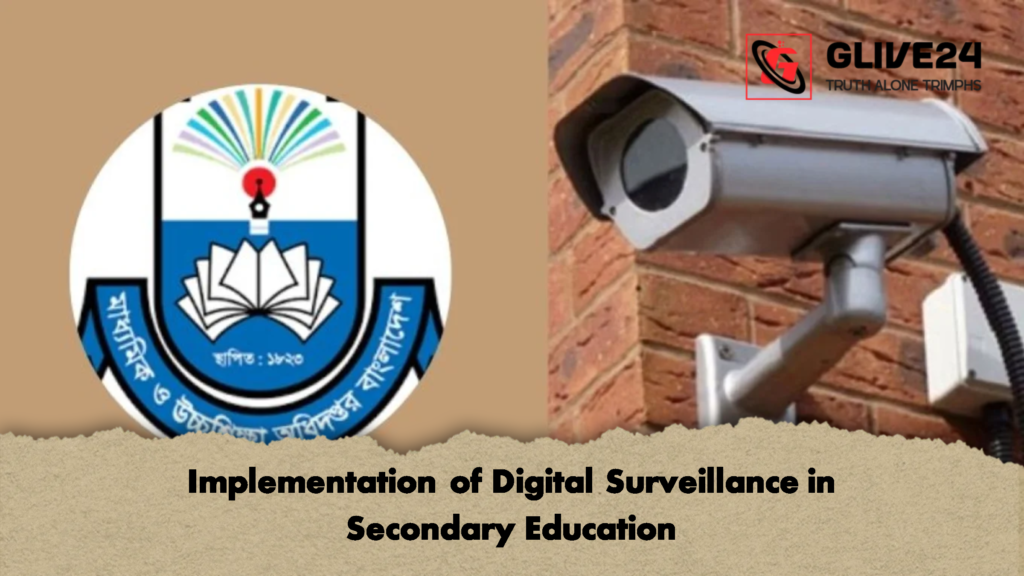
The Government of Bangladesh has formally initiated a comprehensive programme to deploy advanced high-definition closed-circuit television (CCTV) surveillance systems across 517 secondary educational institutions. This strategic endeavour is primarily designed to mitigate and eventually eradicate instances of bullying, “eve-teasing” (a colloquial term for street harassment), and “ragging” (hazing rituals). By establishing these technological safeguards, the state aims to cultivate a secure, digitally monitored environment that is fundamentally conducive to the academic and personal development of the student body.
This initiative is being executed on a pilot basis as a central component of the Learning Acceleration in Secondary Education (LAISE) project. Orchestrated by the Ministry of Education, the project specifically targets 362 secondary schools and 155 madrasas, ensuring a broad reach across different types of secondary education providers within the national framework.
Table of Contents
Official Mandate and Administrative Framework
On Wednesday, 29 April 2026, the Directorate of Secondary and Higher Education (DSHE) released an official circular providing the procedural details for the project’s commencement. This administrative step follows the Ministry of Education’s formal ratification of the “Educational Institution Selection Guidelines 2025” on 27 April. To ensure smooth local implementation, executive directives have been issued to District Commissioners (DCs) across the country, instructing them to facilitate the necessary logistical and administrative support.
The overarching philosophy of this programme is the creation of a “safe campus” through the deployment of visible technological deterrents. By establishing a robust digital surveillance infrastructure, the government intends to provide a persistent monitoring presence. This is expected to significantly reduce the frequency of harassment and misconduct, which historically has been a deterrent to female participation in education and a cause of psychological distress amongst adolescents.
Institutional Eligibility and Selection Rigour
The Ministry of Education has formulated a stringent set of criteria to govern the selection of institutions participating in this pilot phase. To ensure equitable distribution of resources, the programme aims to include one institution from every upazila (sub-district) and every metropolitan police station area in the country.
To qualify for the inclusion of these high-tech systems, institutions must satisfy the following prerequisites:
-
Institutional Status: Only government-operated facilities or private institutions listed under the Monthly Pay Order (MPO) scheme are eligible.
-
Existing Infrastructure: Preference is strictly given to those schools and madrasas that currently possess no CCTV surveillance capabilities.
-
Logistical Readiness: A prerequisite for participation is the availability of a stable and uninterrupted electricity supply to power the surveillance hardware.
-
Safety Risk Assessment: Institutions with a documented history of bullying or harassment, as well as those with compromised physical security (such as a lack of perimeter boundary walls), will be prioritised for selection.
Furthermore, the guidelines explicitly state that certain institutional categories are excluded from this specific initiative. Educational facilities managed by the Bangladesh Railway, City Corporations, or Cantonment Boards are not eligible for funding under this particular pilot phase of the LAISE project.
Technical Deployment and Oversight
Under the specified project regulations, each selected school or madrasa will receive a comprehensive installation consisting of 16 CCTV cameras. The distribution of these units is carefully balanced to provide total site coverage:
-
Classroom Monitoring: Ten cameras will be allocated for internal installation within classrooms to monitor teacher-student interactions and ensure a disciplined academic environment.
-
Campus Grounds: Six cameras will be positioned at strategic points throughout the school grounds, entrances, and common areas to oversee student safety during non-instructional periods.
The responsibility for identifying and nominating eligible institutions rests with specially formed selection committees. At the upazila level, a three-member committee led by the Upazila Nirbahi Officer (UNO) will oversee the process. In metropolitan regions, the task falls to a committee chaired by the Additional District Commissioner (Education). These bodies are required to submit their final recommendations to the project office imminently.
Fiscal Support and Future Projections
The LAISE project is financed through credit assistance provided by the World Bank, reflecting an international commitment to enhancing educational standards in Bangladesh. The current operational window for this project extends until September 2028.
Government representatives have clarified that this pilot phase serves as a critical proof-of-concept. Should the data indicate a measurable decrease in bullying and an improvement in overall campus security, the Ministry of Education intends to scale the programme. The long-term vision involves the incremental expansion of digital surveillance to all secondary institutions nationwide, aligning school management with the broader national agenda of digital transformation and the protection of student welfare.