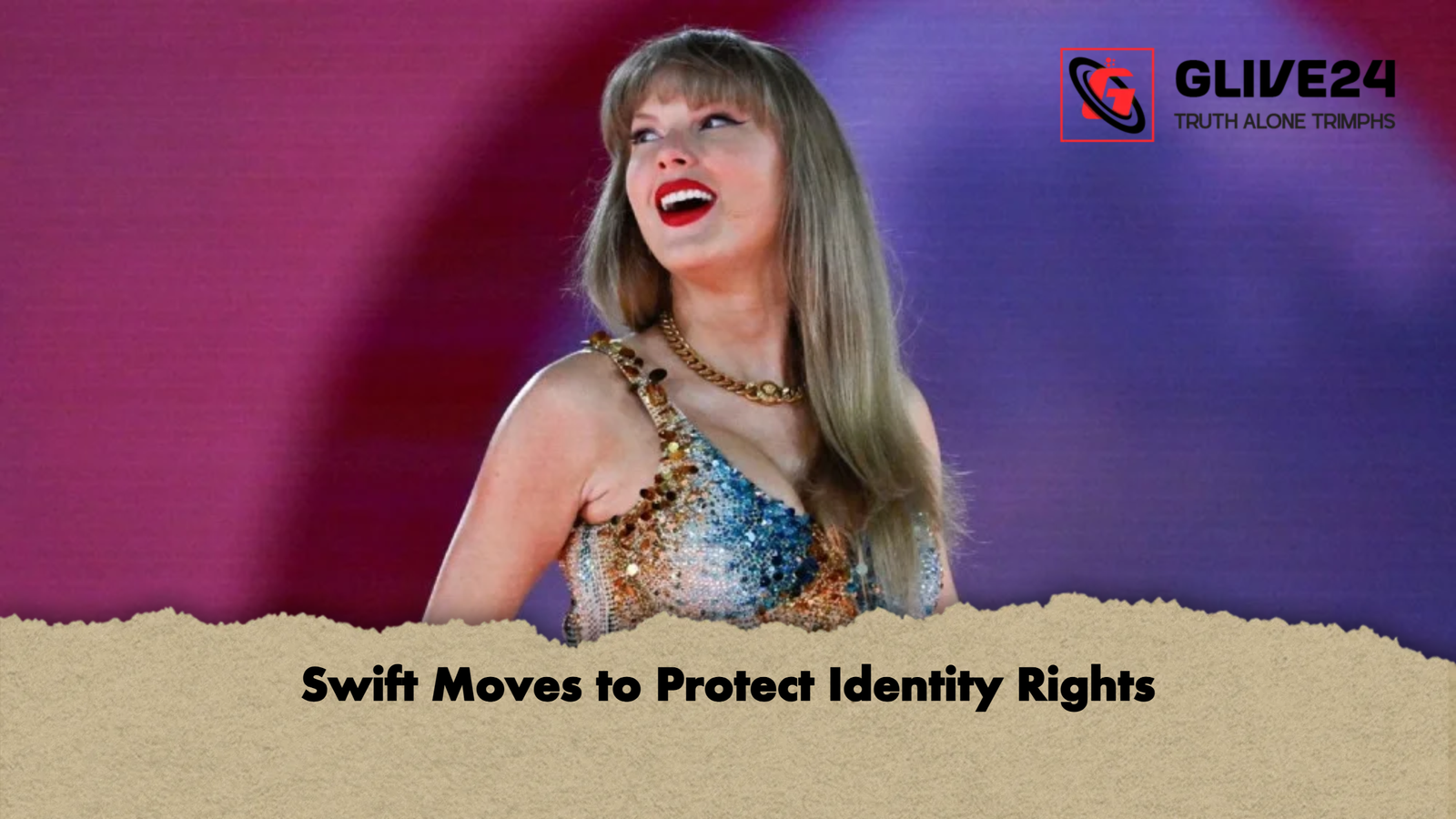
The misuse of artificial intelligence to generate unauthorised content using artists’ voices and physical likenesses has become an escalating concern across the global entertainment industry. In response to this growing challenge, American singer-songwriter Taylor Swift has taken formal legal steps to safeguard elements of her personal identity from commercial exploitation.
On Friday, 24 April, three separate trademark applications were submitted to the United States Patent and Trademark Office (USPTO) by representatives acting on Swift’s behalf. The filings aim to secure legal protection over her voice, physical likeness, and broader identity attributes, with the intention of preventing unauthorised commercial use, particularly in AI-generated content.
The initiative reflects increasing anxiety within the creative sector about the rapid advancement of generative AI systems, which are now capable of closely replicating human speech patterns and visual appearance with minimal input data. This technological capability has already contributed to a rise in deepfake content circulating on social media platforms, often without consent from the individuals being depicted.
Swift herself has previously been affected by such misuse, including the circulation of manipulated images and fabricated visual material that misrepresented her in misleading and, in some cases, explicit or politically charged contexts. These incidents have intensified calls within the industry for stronger legal frameworks to protect personal identity rights.
Legal experts suggest that, if approved, these trademarks could allow Swift to exercise stronger control over how her voice and image are used commercially. This would be comparable, in principle, to how studios protect fictional characters and branded creative assets.
A simplified overview of the applications is set out below:
| Application Area | Intended Purpose | Potential Protection Scope |
|---|---|---|
| Voice protection | Prevent AI voice cloning | Music, advertising, audio content |
| Physical likeness | Restrict misuse of appearance | Video, promotional material, digital media |
| Identity elements | Broader personal branding protection | Entertainment and commercial usage |
Comparable legal strategies have been used in the past within the entertainment industry. For instance, actor Matthew McConaughey trademarked his well-known phrase “Alright, alright, alright” to protect its commercial use. However, Swift’s case is significantly broader, as it encompasses her entire vocal identity and visual representation rather than a single catchphrase.
Alongside this initiative, Swift is also currently involved in separate legal proceedings. Artist Maren Wade has alleged that Swift’s 2025 album The Life of a Showgirl conflicts with an existing trademark held by her. While that dispute remains unresolved, the newly filed applications signal a more proactive approach to safeguarding Swift’s personal and professional identity.
Industry analysts note that as artificial intelligence continues to evolve, legal protection of voice and likeness may become an increasingly essential aspect of intellectual property law, particularly for high-profile public figures. Swift’s latest move is therefore being viewed as a potentially influential precedent in this emerging legal landscape.
> Deschamps Returns After Mother’s Funeral
> Farmer Fatally Stabbed in Kishoreganj Attack
> Benapole Smuggling Case Names Eleven Accused
> Journalist Assault Sparks Condemnation in Kalapara
> Second Arrest Over Dog River Killing
> Tk 90 Million Gazipur Road Collapses After Three Months
> Powerful Afghanistan Quake Shakes South and Central Asia
> Four Shot During Cape Verde Victory Celebrations
> Iran launches new strikes against Kurdish groups in Iraq
> Club Goal Rankings in World Cup History
> Anupam Roy Live Concert Announced Dhaka
> Footballer’s Family Missing After Venezuela Quake
> Oxford Authorities Contradict Claims by Hasnat, Sadik
> Two Arrested With Tapentadol
> The Psychology and Philosophy of Unwarranted Defamation
> Sanjoy Joins World Cup Album

সম্পাদক ও প্রকাশক: এ বি এম জাকিরুল হক টিটন
যোগাযোগের ঠিকানাঃ পশ্চিম কাফরুল, বেগম রোকেয়া সরণি, ঢাকা
© Copyright 2026 Khaborwala। All Rights Reserved




Comments