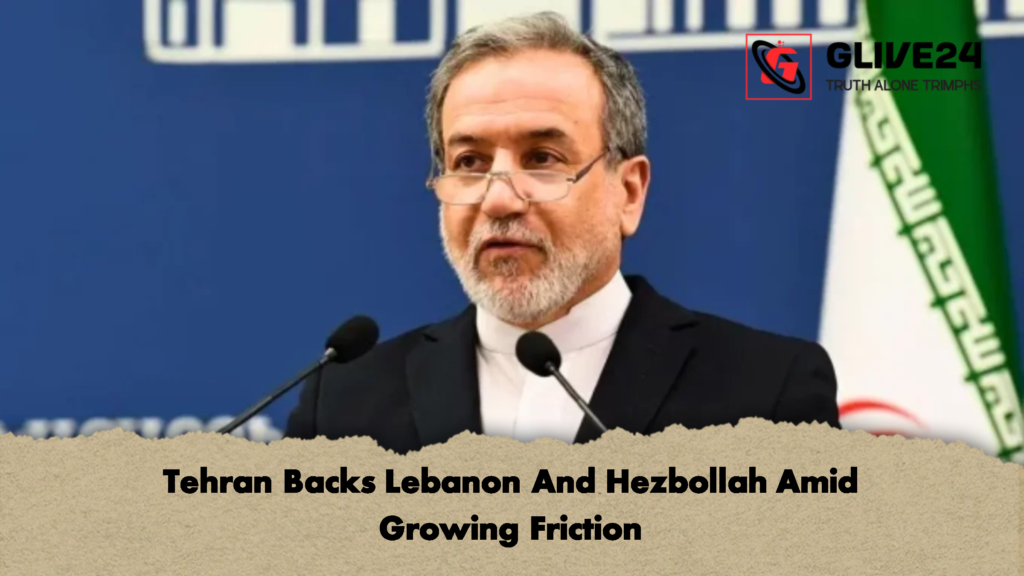
The Government of the Islamic Republic of Iran has formally reiterated its comprehensive diplomatic and strategic alignment with the state of Lebanon and the political-military movement Hezbollah. The Iranian Foreign Minister, Abbas Araghchi, transmitted dedicated diplomatic dispatches to the Lebanese political establishment, the civilian population, and leadership figures within Hezbollah. These high-level communications were intentionally timed to coincide with the observance of Lebanon’s traditional “Resistance and Liberation Day”, a national milestone that remains central to the country’s contemporary history.
According to verification provided by the Qatar-backed international news network Al Jazeera, Minister Araghchi initiated separate channels of communication to convey these statements. The correspondence was delivered directly to Nabih Berri, the long-serving Speaker of the Lebanese Parliament, as well as to Sheikh Naim Qassem, the Secretary-General of Hezbollah. Throughout these official exchanges, the Iranian envoy utilised highly precise language to underscore Tehran’s resolute and uninterrupted commitment to both the sovereign administration in Beirut and the operational capabilities of the internal Lebanese resistance networks.
Table of Contents
Commemoration of the Military Withdrawal of 2000
The core narrative of the diplomatic dispatches focused closely on the historical anniversary of the year 2000. This period marked the total withdrawal of Israeli military units from the occupied territories of southern Lebanon, concluding a multi-decade presence.
In his formalized text, Minister Araghchi explicitly stated that Iran would maintain a continuous and structured presence alongside the Lebanese state. He reaffirmed that Tehran remains structurally committed to upholding the independent status, national sovereignty, and physical territorial integrity of Lebanon when confronted with any external military operations or geopolitical aggression.
Escalating International Pressure and Washington’s Position
This overt display of diplomatic solidarity from the Iranian leadership has occurred during an exceptionally volatile phase of regional diplomacy. The statements from Tehran were issued immediately after a public address by the United States Secretary of State, Marco Rubio. In his briefing, Secretary Rubio pointedly condemned the executive leadership of Hezbollah for what Washington characterises as a persistent and systematic obstruction of peaceful negotiations designed to de-escalate hostilities across the UN-demarcated border.
In tandem with his sharp criticism of the organization’s regional posture, the American Secretary of State issued an explicit appeal directed toward the civilian population of Lebanon. Secretary Rubio urged ordinary Lebanese citizens to mobilize publicly within urban centres to voice their clear opposition to the entrenched political influence and autonomous paramilitary configurations maintained by Hezbollah inside the country.
Human Cost and Structural Ceasefire Ambiguity
Data verified by official regional public health agencies underscore the profound humanitarian impact of the ongoing conflict. Since the escalation of extensive aerial bombardments and localized ground operations in Lebanon on 2 March, documented fatalities have surpassed 3,111 individuals. Furthermore, hundreds of thousands of civilians have experienced internal displacement, forcing them to evacuate their primary residences to seek temporary refuge in overcrowded public shelters.
Amidst this expanding humanitarian crisis, considerable diplomatic ambiguity persists within the international community regarding current back-channel discussions between Washington and Tehran. It remains highly uncertain whether any prospective bilateral understandings between the United States and Iran will explicitly integrate a binding framework to bring about a definitive cessation of hostilities inside Lebanese territory.
On Saturday, official channels within Hezbollah confirmed that Secretary-General Naim Qassem had received and reviewed the formal communication from Minister Araghchi. The Iranian dispatch clarified that Tehran’s latest diplomatic proposal—which was relayed via designated Pakistani intermediaries—contained a strict prerequisite demanding the unconditional inclusion of the Lebanese theatre in any overarching regional ceasefire mechanism. Following the receipt of this documentation, Sheikh Qassem expressed an explicit expectation that any broader framework aimed at terminating hostilities between the United States and Iran must be finalized with the state of Lebanon included as an absolute stakeholder.
Coordinated Stance of the United States and Israel
Simultaneously, international observers note that the United States administration and the Israeli government are maintaining an unyielding, coordinated matrix of geopolitical and diplomatic leverage over the Beirut government. Israeli Prime Minister Benjamin Netanyahu recently confirmed that the newly elected United States President, Donald Trump, has re-emphasised Washington’s recognition of Israel’s fundamental right to self-defence against security threats emanating from all active fronts, explicitly including Lebanon.
| Key Diplomatic Position | United States / Israel Alignment | Iranian State Position |
| Hezbollah Status | Condemned as an obstruction to regional peace initiatives. | Endorsed as a core component of defensive operations. |
| Ceasefire Strategy | Pressure applied to diminish the group’s domestic leverage. | Demands explicit inclusion of Lebanon via Pakistani mediators. |
| Sovereignty Framework | Demands political restructuring away from armed factions. | Guarantees protection of territorial boundaries and state integrity. |
In direct and absolute opposition to this unified stance maintained by Washington and Israel, Iran has formally clarified its geopolitical position, stating that it will not under any circumstances allow Lebanon to be isolated. Tehran continues to provide explicit assurances to regional partners that it will firmly reinforce the position of the Lebanese government and Hezbollah throughout any complex negotiation processes aimed at establishing a definitive end to the war.