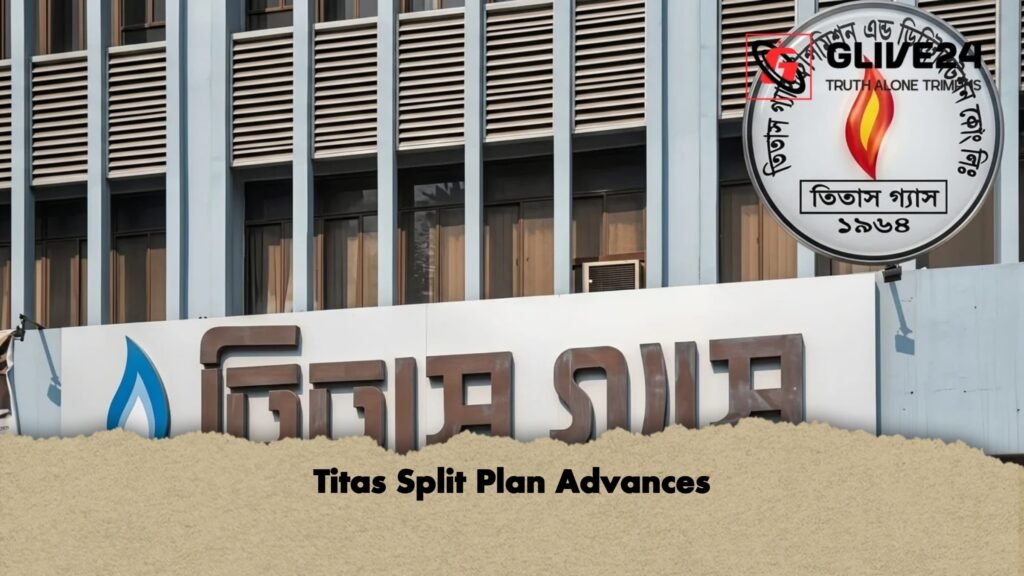
The Government of Bangladesh has moved forward with a proposal to divide the country’s largest state-owned gas distributor, Titas Gas Transmission and Distribution Company, into three administrative zones in an effort to improve service delivery and operational efficiency.
The initiative comes amid long-standing concerns over low gas pressure, illegal connections, pipeline leakage, administrative delays, and customer dissatisfaction affecting nearly 2.8 million consumers in and around Dhaka. Due to the scale of its operations, centralised management has increasingly been regarded as ineffective.
Administrative restructuring plan
A specialist committee formed by the Ministry of Power, Energy and Mineral Resources has recommended splitting Titas into three administrative regions. The proposal has already been forwarded to Petrobangla for implementation. However, delays in execution have drawn criticism, including reported dissatisfaction from the Energy Secretary during a review meeting on 28 April.
Petrobangla Chairman Md. Erfanul Haque stated that instructions have been issued to implement the committee’s recommendations and that work is currently underway within Titas.
Operational challenges
Titas currently manages gas distribution across Dhaka, Narayanganj, Gazipur, Mymensingh, Munshiganj, Narsingdi, and surrounding industrial zones. Despite controlling approximately 55% of the national gas distribution market, the company continues to face operational constraints, including insufficient manpower, limited monitoring capacity, and ageing infrastructure.
Customers frequently report pipeline leaks, unauthorised connections, and persistent low pressure. Industrial units in particular have experienced production disruptions due to supply shortages, while residential users report inconsistent availability during peak hours.
Previous decentralisation attempt
An earlier attempt during a previous government involved appointing three Deputy Managing Directors (DMDs) for different regions, including Gazipur, Narayanganj, and Mymensingh. However, this arrangement did not involve real administrative decentralisation, limiting its effectiveness.
Key operational and financial indicators
| Category | Details |
|---|---|
| Customer base | Approximately 2.8 million |
| Market share | Around 55% of national gas distribution |
| System loss (FY 2023–24) | 7.67% |
| Estimated financial loss from system loss | Tk 2,945 crore |
| Company loss (FY 2023–24) | Tk 744 crore |
| Pending applications | Over 700 new connections |
| Load increase requests | Around 300 applications |
The company’s system loss, driven largely by leakage and unauthorised usage, significantly exceeds the acceptable threshold set by the Bangladesh Energy Regulatory Commission. Officials estimate that inefficiencies have resulted in substantial annual financial losses.
Illegal connections and backlog
Illegal gas connections remain a major challenge within Titas’s distribution network, with reports of organised groups facilitating unauthorised access in residential and commercial areas. This has contributed to revenue losses and pressure imbalances affecting legitimate consumers.
According to company sources, more than 700 applications for new connections and around 300 requests for load increases remain pending. Officials also noted that decision-making authority over such approvals has largely been centralised under the Energy Division, limiting operational autonomy at company level.
Reform expectations
Energy analysts suggest that dividing Titas into three administrative zones could improve field-level supervision and decision-making efficiency. However, they stress that structural reform alone will be insufficient without technological upgrades, improved governance, and stronger enforcement mechanisms.
Experts further emphasise that reducing system loss, controlling illegal connections, and modernising infrastructure are essential for long-term stability within the gas distribution network.