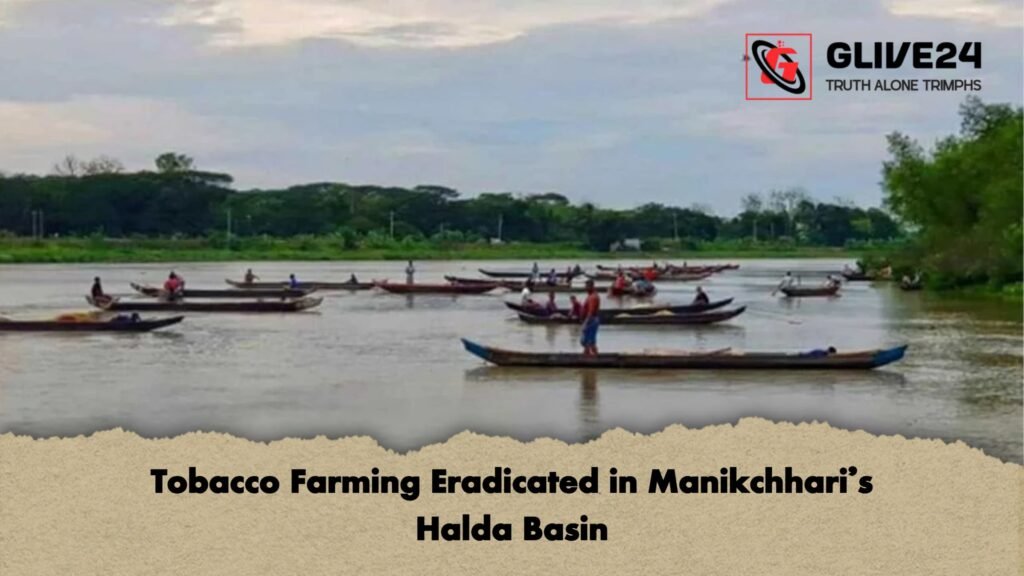
In a definitive stride towards environmental conservation, the Manikchhari section of the Halda River basin has seen a complete cessation of tobacco cultivation this year. This achievement follows a coordinated campaign by the Ministry of Fisheries and Livestock, local administration, and agricultural departments to protect one of Bangladesh’s most vital ecological assets.
Table of Contents
A Critical Victory for Biodiversity
The Halda River holds the prestigious status of being the country’s only natural breeding ground for indigenous carp species and has been declared a Fisheries Heritage site. For years, experts have warned that the proximity of tobacco plantations posed an existential threat to this ecosystem. The heavy use of chemical pesticides and the toxic runoff from tobacco curing processes were identified as primary pollutants, contaminating the water and disrupting the delicate spawning cycles of the carp.
According to a press release issued by the Ministry on Monday, 9 February 2026, the successful eradication of tobacco in the Manikchhari region marks a significant turning point. Last year, records indicated that 11 prominent farmers were cultivating tobacco across approximately 20 acres of land. Today, that figure has been reduced to zero.
Strategic Milestones in Conservation
| Date | Key Administrative Action |
| 5 November 2025 | Ministry amends the “Fisheries Heritage” gazette to strictly ban tobacco in the basin. |
| 21 December 2025 | Khagrachari Law and Order Committee resolves to halt tobacco and illegal sand mining. |
| Dec 2025 – Jan 2026 | Direct intervention by Manikchhari administration to prevent seedling transplantation. |
| 9 February 2026 | Formal confirmation of a 100% “Tobacco-Free” status in the targeted zone. |
Transitioning to Sustainable Agriculture
The timing of the intervention was strategic. Tobacco seedlings are typically transplanted between December and January; by engaging with farmers early, the Upazila Fisheries Office and local administration were able to dissuade them from planting, citing the new legal prohibitions.
To mitigate the economic impact on local growers, the Department of Agricultural Extension has actively encouraged a shift toward eco-friendly alternatives. Farmers are being provided with incentives and training to cultivate high-yield crops such as mustard, maize, and various seasonal vegetables. These alternatives not only safeguard the river’s water quality but also offer more sustainable long-term livelihoods for the rural community.
Future Monitoring and Oversight
Farida Akhhtar, Advisor to the Ministry of Fisheries and Livestock, has lauded the initiative but stressed that vigilance must remain high. She has issued directives for intensified monitoring to ensure that tobacco cultivation does not resurface in future seasons. By aligning legal enforcement with agricultural support, the government aims to restore the Halda River to its pristine state, ensuring the survival of its unique aquatic heritage for generations to come.