
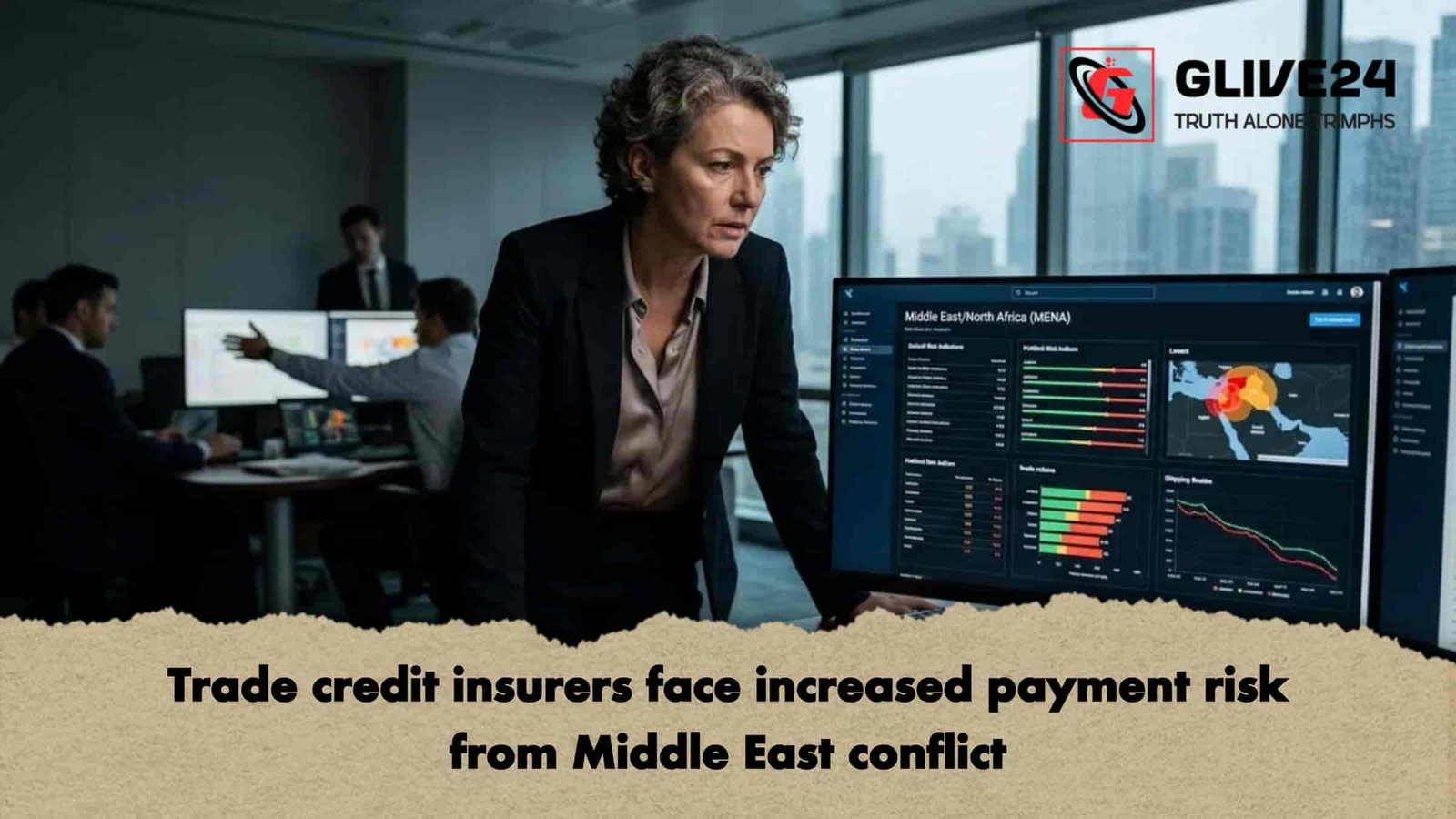
Trade credit insurers are facing increasing exposure to non-payment risks as the conflict in the Middle East reshapes global risk perceptions and weakens payment behaviour across international trade, according to the Allianz Trade Global Survey.
The survey, which covers 6,000 companies across 13 markets, indicates that global exporters remain broadly optimistic about trade prospects. Around 75% of exporters continue to expect positive export growth in 2026, suggesting that commercial confidence has not been significantly undermined despite geopolitical instability.
However, the risk landscape has shifted notably. Geopolitical and political risk is now identified as the leading concern by 65% of firms, surpassing supply chain disruption, which was the dominant concern in 2025. This change reflects the increasing weight of conflict-related uncertainty in corporate decision-making and cross-border trade planning.
The most immediate impact on credit markets is being observed in payment behaviour. The conflict has coincided with longer payment cycles and a measurable increase in late or non-payment cases, both of which directly affect trade credit insurers’ risk exposure.
Payment timelines have deteriorated. The proportion of companies receiving payments within 30 days has fallen from 10% to 7%. In contrast, the share of firms waiting more than 70 days for payment has risen from 15% to 24%, indicating a clear shift towards extended settlement periods in global transactions.
Looking forward, 43% of companies expect payment terms to worsen further, an increase of five percentage points compared with conditions prior to the conflict. In addition, 40% of firms now anticipate higher non-payment risk, representing a six percentage point rise. These expectations suggest that firms are preparing for continued pressure on liquidity and credit conditions.
For trade credit insurers, these developments translate into heightened monitoring requirements and greater scrutiny of insured counterparties’ creditworthiness. Longer payment cycles typically increase the probability of claims, while elevated default expectations can lead to tighter underwriting conditions.
Sectoral exposure is uneven. Pharmaceuticals, construction, and computers and telecommunications are identified as the most affected industries, reflecting their sensitivity to cross-border supply chains and extended payment structures. The survey also notes that larger companies are experiencing more pronounced payment delays, indicating that scale does not necessarily provide insulation from current payment pressures.
Survey Overview
| Indicator | Earlier Benchmark | Latest Figure | Movement |
|---|---|---|---|
| Exporters expecting growth (2026) | — | 75% | Stable optimism |
| Geopolitical/political risk as top concern | — | 65% | Now leading concern |
| Payments within 30 days | 10% | 7% | Decline |
| Payments over 70 days | 15% | 24% | Increase |
| Expect payment terms to worsen | — | 43% | +5 pp vs pre-conflict |
| Expect higher non-payment risk | — | 40% | +6 pp |
Overall, the findings highlight a dual trend: continued optimism in export growth alongside a clear deterioration in payment discipline and rising credit risk exposure linked to ongoing geopolitical conflict.