The successful transit of four Iranian oil tankers through the Strait of Hormuz, bypassing a United States naval blockade, highlights the persistent role of geography and tactical deception in international maritime conflict. To fully understand how this operations occurred, one must examine the unique geography of the channel, the operational details of the vessels involved, and the specific maritime tactics deployed to evade military containment.
The Chokepoint: Geographic Reality of the Strait
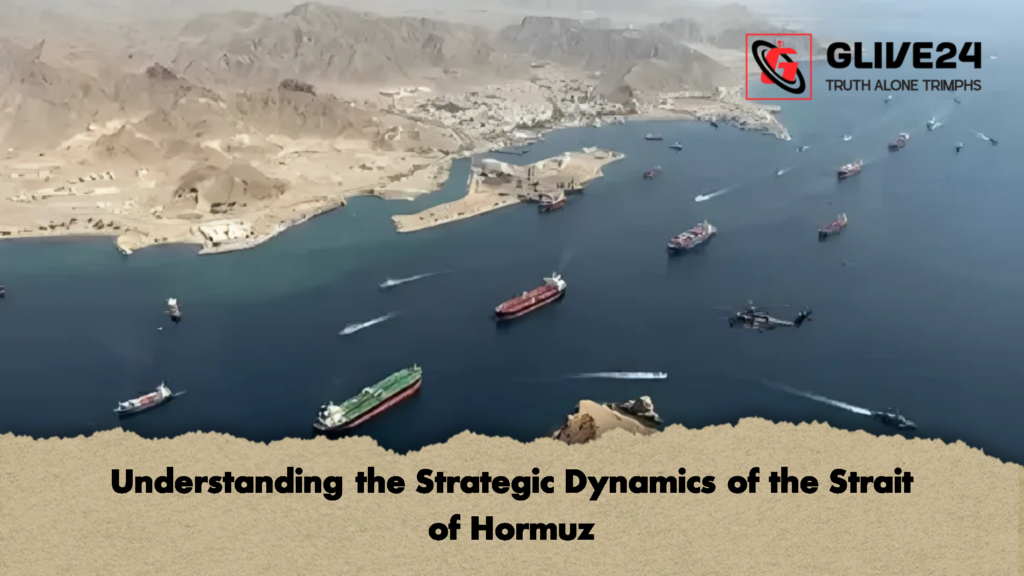
The Strait of Hormuz is widely considered the most critical maritime chokepoint in the global economy. Operating as the sole sea route from the Persian Gulf to the open ocean, its narrow dimensions make it an ideal location for a naval blockade, yet an equally viable arena for asymmetric grey-zone tactics.
-
Narrow Dimensions: At its narrowest point, the strait spans only 33 kilometres (21 miles). However, the actual width of the shipping lanes is far tighter.
-
Traffic Separation Scheme: To prevent maritime collisions, traffic is strictly restricted to a Traffic Separation Scheme (TSS). This scheme consists of a two-kilometre-wide (1.2-mile) inbound lane and a two-kilometre-wide outbound lane, separated by a two-kilometre-wide buffer zone.
-
Sovereign Waters: Because these shipping lanes pass entirely through the territorial waters of Iran and Oman, international merchant shipping relies on the legal doctrine of transit passage under international law. When a naval power imposes a blockade here, it forces commercial vessels to choose between literal military interception or operating in complete electronic silence near shallow waters.
Deep Dive: Cargo and Fleet Composition
The four tankers involved carried a substantial volume of crude oil, representing a significant financial breakthrough for Tehran under the current embargo.
| Vessel Name | Flag State | Estimated Capacity (Barrels) | Loading Location |
| Hilda One | Iran | ~1.75 Million | Kharg Island Terminal |
| The Amber | Iran | ~1.75 Million | Kharg Island Terminal |
| The Sylvia One | Iran | ~1.75 Million | Kharg Island Terminal |
| Happiness One | Iran | ~1.75 Million | Kharg Island Terminal |
Logistical Impact: The total payload of seven million barrels represents nearly 90 percent of the average collective export volume processed during a standard multi-ship transit from Kharg Island. Kharg Island itself is uniquely vulnerable, handling nearly all of Iran’s outbound maritime energy transfers.
The Mechanics of “Dark” Transits
The primary tactical maneuver used by the Iranian convoy to slip past the US Navy strike groups was initiating what maritime security agencies classify as a dark transit. This process relies on weaponising or disabling standard maritime safety systems to mask a ship’s real-world footprint.
When a vessel deactivates its Automatic Identification System (AIS), it disappears from standard commercial satellite tracking dashboards. While military-grade radar, thermal imaging, and airborne reconnaissance assets can still locate physical ships, dropping off the digital grid introduces critical operational friction.
By executing a simultaneous dark transit on all four hulls, the Iranian tankers forced the American blockading fleet to manually identify, track, and intercept targets across a heavily congested shipping channel filled with hundreds of neutral merchant vessels. This deliberate creation of radar clutter and identity confusion allowed the convoy to successfully clear the blockade lines without triggering active kinetic engagement.