
Table of Contents
Disproportionate Protection Gaps in Developing Countries
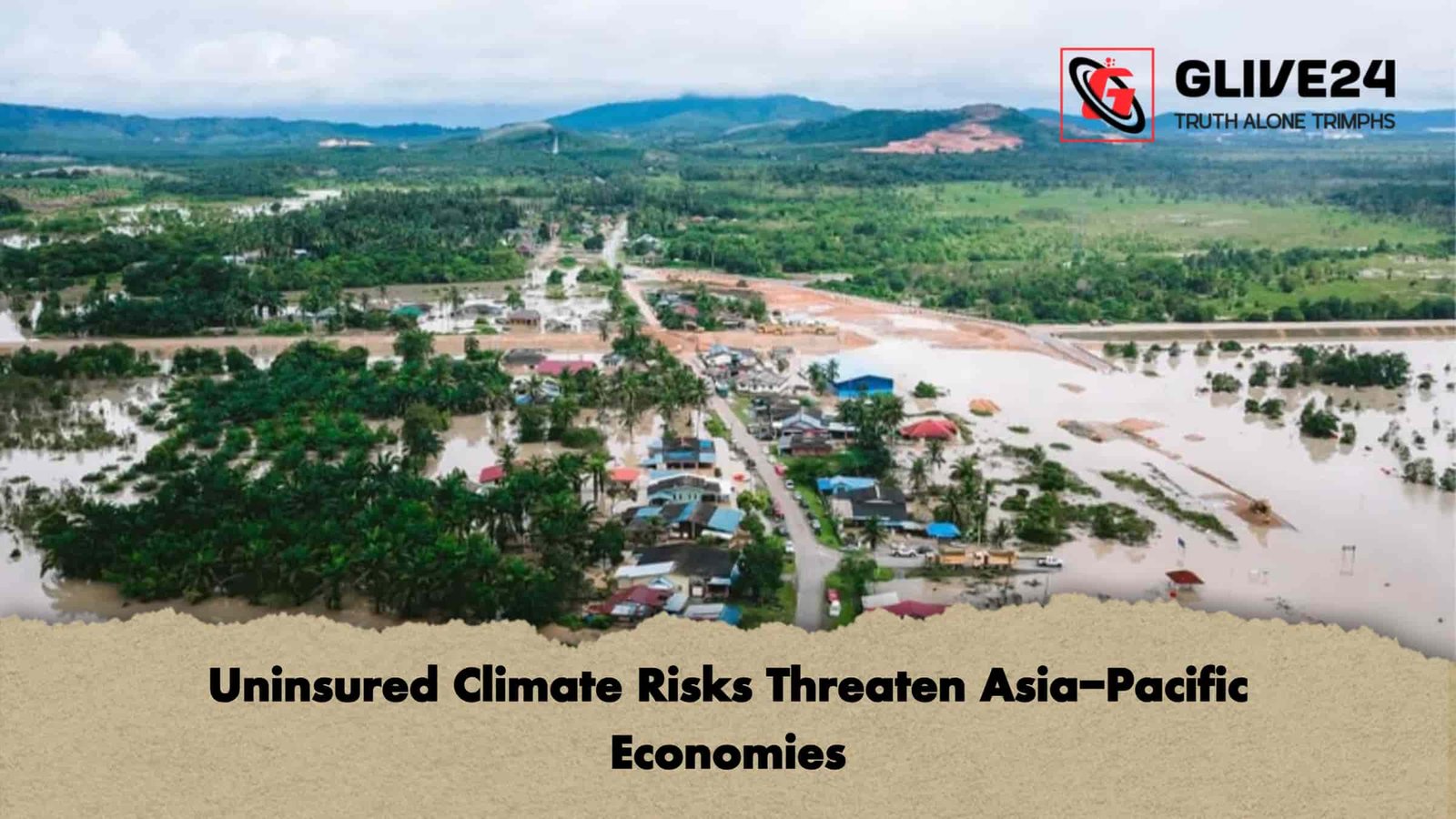
The escalating volume of natural catastrophes worldwide is generating significant financial damage, yet a critical shortfall in insurance coverage leaves much of the world unprotected. According to data published by the Swiss Re Institute, approximately 88 per cent of all economic losses resulting from natural disasters in the Asia-Pacific region are completely uninsured. Concurrently, the global insurance protection gap has expanded to 424 billion USD. This lack of financial coverage shifts the burden of recovery directly onto households, private enterprises, and state budgets, posing a severe threat to highly climate-vulnerable countries like Bangladesh.
Global Catastrophe Damage and Regional Insights
An analysis by the Swiss Re Institute for the year 2025 reveals that approximately 190 natural disasters occurred globally, causing an estimated 220 billion USD in total economic destruction. Out of this total, insured losses accounted for only 107 billion USD, meaning that over half of the financial damage worldwide lacked any insurance indemnity.
This protection deficit is most severe in developing and emerging markets, where between 80 and 90 per cent of all disaster-related losses remain entirely outside the scope of insurance coverage. Consequently, when a major disaster strikes, domestic populations and national governments must independently finance emergency relief and infrastructure reconstruction.
While Asia-Pacific faces a steep protection gap of 88 per cent—recovering a mere 12 USD for every 100 USD of economic damage incurred—North America recorded the highest volume of absolute financial losses. A high frequency of severe convective storms, wildfires, and weather anomalies across the United States caused extensive damage. Despite North America having higher insurance penetration than most regions, the sheer scale of these losses has made it a primary driver of global catastrophe risk.
A stark example of the regional protection gap occurred during the devastating 2025 earthquake in Myanmar. The disaster caused an estimated 11 billion USD in total economic damage and significant loss of life. However, the global insurance industry paid out just over 200 million USD in claims. As a result, the government of Myanmar, international aid agencies, and local citizens were left to absorb almost the entire cost of long-term reconstruction.
The Rising Impact of Secondary Perils
Climatological assessments confirm that climate change is fundamentally altering risk profiles. Rather than being driven solely by primary events like major cyclones, global economies are increasingly impacted by “secondary perils”—localized, high-frequency events such as flash floods, severe thunderstorms, hailstorms, torrential rainfall, and prolonged heatwaves. In 2025, these secondary perils accounted for an unprecedented 92 per cent of all global insured losses, marking the highest proportion ever recorded for these specific types of hazards.
| Catastrophe Metrics and Financial Indicators (2025) | Verified Value / Percentage |
| Global Economic Losses from Disasters | 220 billion USD |
| Global Insured Catastrophe Losses | 107 billion USD |
| Global Insurance Protection Gap | 424 billion USD |
| Asia-Pacific Insurance Protection Gap | ~88% of regional losses |
| Emerging Markets Protection Gap | 80% to 90% of local losses |
| Insured Losses Attributed to Secondary Perils | 92% of global insured losses |
| Myanmar Earthquake Total Damage | 11 billion USD |
| Myanmar Earthquake Total Insured Payout | ~200 million USD |
| Projected Global Insured Losses (By 2030) | 186 billion USD |
Domestic Risks and State Budgetary Pressures
Financial and climate analysts emphasize that these global trends serve as a direct warning for Bangladesh. The nation’s agricultural sector, dense river networks, low-income populations, and exposed coastal areas are facing heightened climate risks. While riverbank erosion, cyclones, tidal surges, lightning strikes, and floods cause extensive annual destruction, the domestic market for disaster-specific insurance products remains heavily limited.
This lack of market penetration places severe financial pressure on the Government of Bangladesh following major disasters. The state must rapidly allocate significant capital to repair damaged public infrastructure, including roads, bridges, electricity grids, and flood embankments.
Simultaneously, public funds must be directed toward emergency food distribution, medical response teams, and housing rehabilitation. To finance these unplanned emergency expenditures, governments are frequently forced to divert funds away from long-term national development projects, which can suppress broader economic growth over time.
Parametric Frameworks and Public-Private Collaboration
To address these expanding financial deficits, parametric insurance is emerging as a critical tool for risk management. Unlike traditional indemnity insurance policies that require lengthy, manual property inspections to verify claims, parametric insurance triggers automatic payouts based on predefined environmental metrics.
Disbursements can be tied directly to objective data, such as a cyclone’s wind speed, specific millimetres of localized rainfall, or river water heights during a flood. This structure ensures that affected populations and businesses receive emergency funding within days, significantly accelerating the recovery process.
Industry experts note that Bangladesh has substantial potential to implement parametric insurance models across its agricultural, flood, and coastal management sectors. However, scaling these financial mechanisms requires access to high-quality meteorological data, advanced digital risk mapping, and supportive regulatory policies.
Because the scale of climate risk exceeds the financial capacity of private underwriters acting alone, analysts argue that establishing public-private partnerships (PPPs) is vital. By linking state agencies, local insurance providers, international development organizations, and global reinsurance groups, these partnerships can lower premium costs, share high-level risks, and deploy the technology needed to build systemic climate resilience. According to projections by Swiss Re, if current trends persist without enhanced mitigation and wider insurance adoption, global insured losses alone could reach 186 billion USD by 2030.