
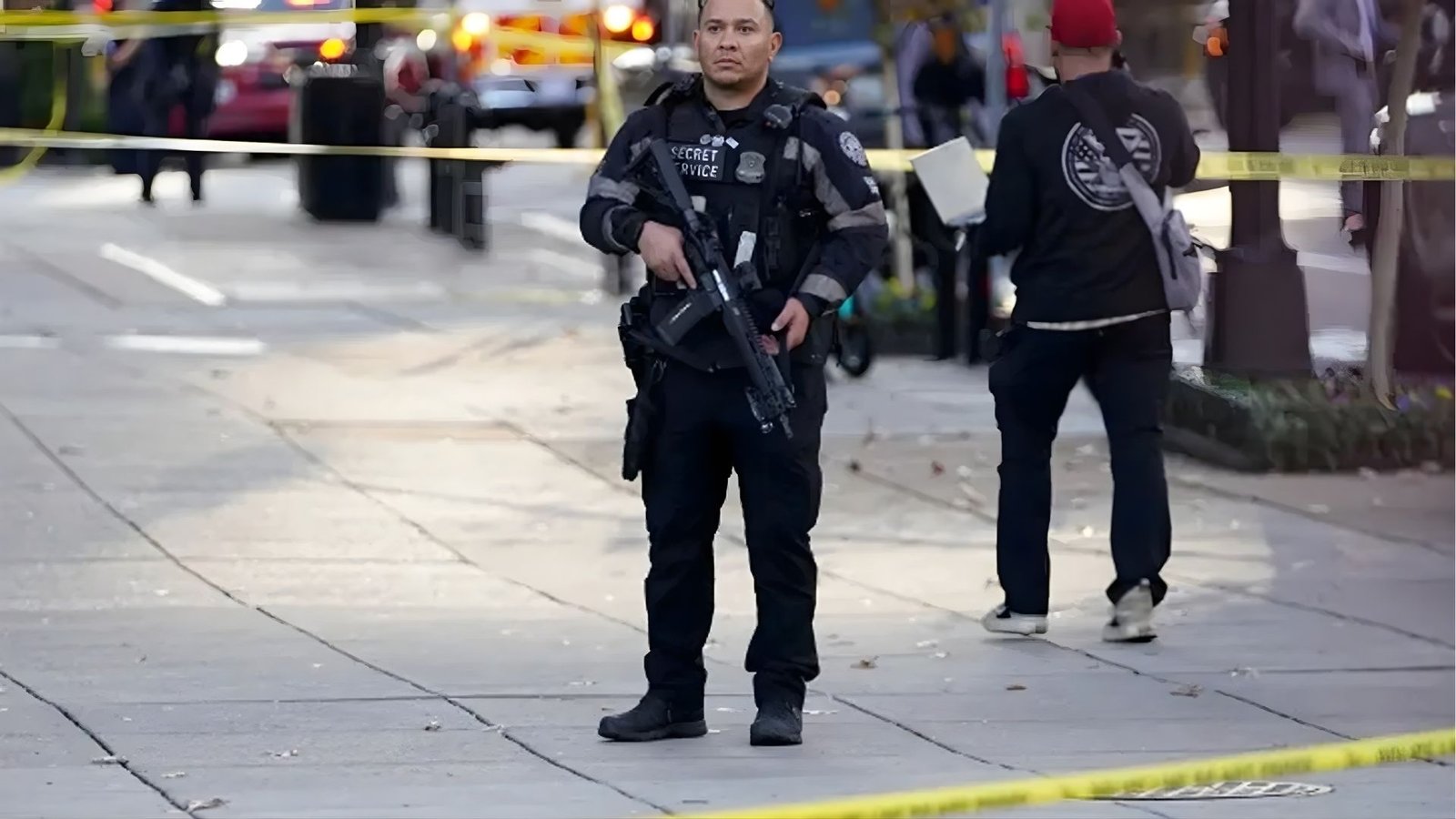
Two National Guard soldiers were seriously injured in a shooting near the White House in Washington DC on Wednesday afternoon. Both victims, members of the West Virginia National Guard, are in a critical condition following the attack, which US officials say was clearly targeted.
Police report that a single assailant approached three National Guard members at Farragut Square around 1:30 pm local time and opened fire without warning. One guard was hit immediately, followed by another, while the third returned fire, wounding the attacker. The suspect was subsequently hospitalised and remains in police custody. Assistant Police Chief Jeffrey Carroll described the incident as “a sudden and deliberate attack on armed personnel performing their duties.”
The suspect has been identified as 29-year-old Rahmanullah Lakanwal, an Afghan national who arrived in the United States in September 2021 under the Operation Allies Welcome programme. This programme was launched after the Taliban regained power in Afghanistan, relocating thousands of Afghans who had worked with US forces in roles such as interpreters, drivers, and support staff. According to Congress, around 76,000 Afghans were resettled under this scheme.
President Donald Trump condemned the attack, describing it as “vile, hate-driven and terrorist in nature,” and called for a reassessment of all Afghan arrivals. US Citizenship and Immigration Services has suspended processing all Afghan applications pending the security review. In addition, Defence Secretary Pete Hegseth announced the deployment of 500 extra National Guard members to Washington DC to reinforce security measures.
At the time of the shooting, President Trump was in Florida. Washington DC had already been heavily fortified, with more than 2,200 National Guard members deployed in anticipation of potential threats. The incident, occurring near a crowded public transport hub, underscores the vulnerability of high-profile locations and raises concerns about both public safety and the vetting of foreign nationals entering the United States.
This event serves as a stark reminder of the ongoing security challenges faced by the US capital and the delicate balance between national safety and humanitarian obligations.