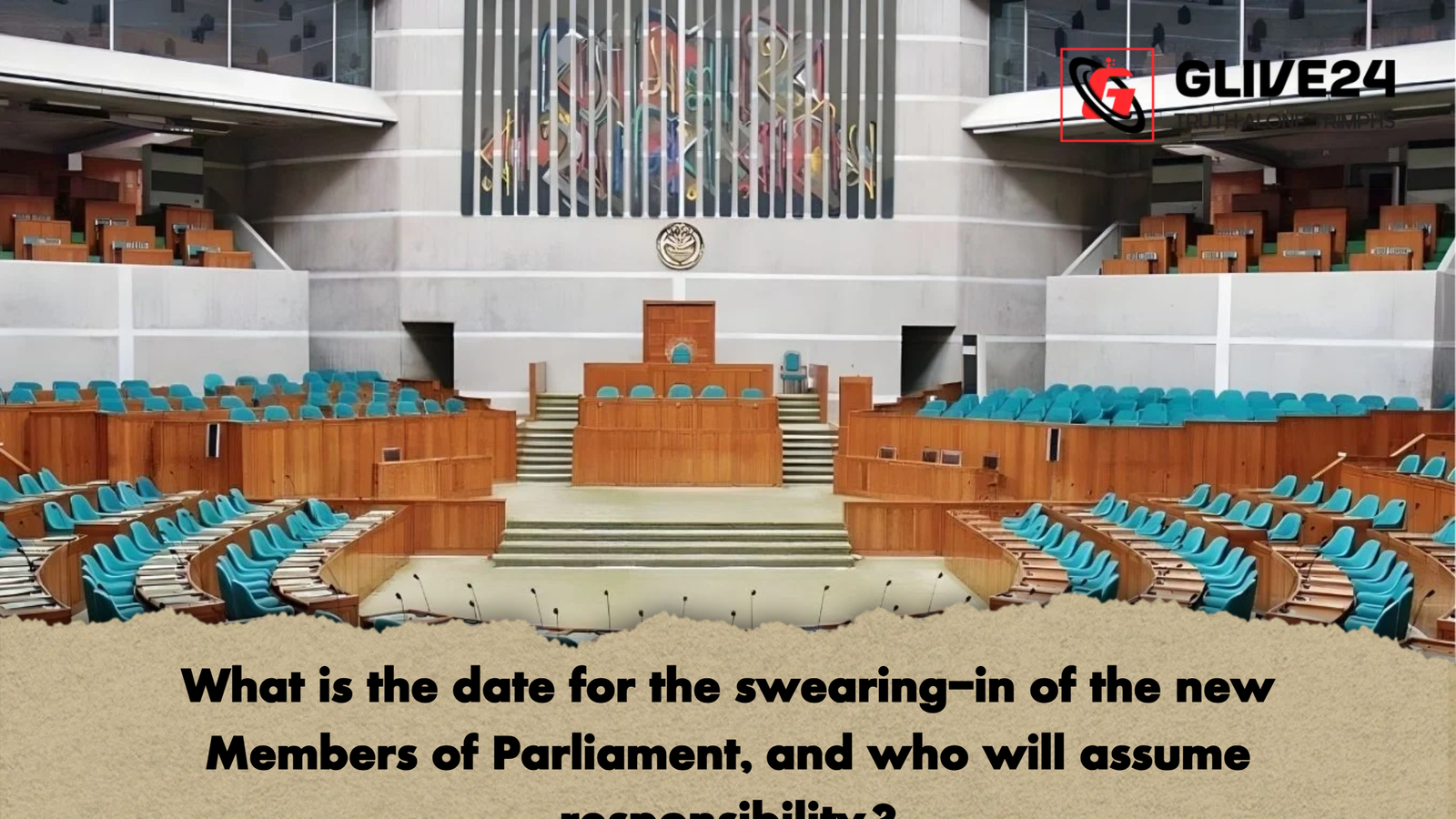
Following the recent general elections, questions surrounding the formation of the new government and the formal swearing-in of Members of Parliament (MPs) have come to the forefront. While it is widely understood that the party or coalition winning a majority of parliamentary seats will form the government, the exact timeline and procedure for transferring power have raised significant queries.
According to unofficial results released by the Election Commission, the Bangladesh Nationalist Party (BNP) has secured a clear majority, obtaining more than 150 seats — the threshold needed to form the government. Despite this clarity on the election outcome, the practical process of government formation, beginning with MPs taking their oath, remains somewhat uncertain.
Table of Contents
Timeline for Oath-Taking
Typically, newly elected MPs take their oath within three days of the official announcement of election results. However, it is important to distinguish between unofficial and formal results. Unofficial counts may be available within a day or two, but these do not carry legal status. The Constitution, under Article 148, requires that election results must first be published in the official government gazette. Only then does the three-day countdown for oath-taking begin. This means there may be a short delay between unofficial results and the formal swearing-in.
The Press Secretary to the Chief Adviser has indicated that MPs are expected to take their oath no later than 18 February. In a briefing on 5 February, the Press Secretary said that the power transfer could take place as quickly as within three days — potentially on 15 or 16 February — provided all procedural requirements are met. This suggests that the process of forming a new government could commence within six days of the election.
Who Will Administer the Oath?
Traditionally, the Speaker of the National Parliament administers the oath to new MPs. However, following the student-led uprising on 24 February, the Parliament currently has no sitting Speaker, and the Deputy Speaker is detained. In such circumstances, Article 148 of the Constitution provides two alternatives:
The President may nominate an individual to administer the oath.
If the President’s nominee is unable to do so within three days, the Chief Election Commissioner will administer the oath within the subsequent three-day period.
The Interim Government’s legal advisor, Asif Nazrul, stated that the administration aims to expedite the process and avoid unnecessary delays. Potential nominees could include the Chief Justice, or, failing that, the Chief Election Commissioner would step in.
Transfer of Power
Once the oath is administered, the process of government formation formally begins. The President invites the leader of the majority party or coalition — in this case, BNP — to form the government. The leader, as the majority party’s trusted representative, is appointed Prime Minister upon taking the oath. Cabinet members simultaneously take their oaths, thereby assuming office immediately. According to Article 56 of the Constitution, the Prime Minister and ministers acquire full executive powers upon swearing-in, completing the transition from the outgoing administration.
Summary Table: Key Dates and Procedures
| Event | Constitutional Reference | Expected Date/Timeframe | Notes |
|---|---|---|---|
| Official result publication in gazette | Article 148 | Within few days after unofficial results | Triggers three-day oath countdown |
| Oath-taking of MPs | Article 148 | 15–18 February | Administered by President nominee or Chief Election Commissioner |
| Government formation | Article 56 | Immediately after oath | Leader of majority party invited by President |
| Prime Minister & Cabinet assume office | Articles 56 & 148 | Upon oath-taking | Transfer of executive powers completed |
In conclusion, while the BNP has already secured a majority, the constitutional process ensures that the transfer of power is conducted formally and lawfully, beginning with the swearing-in of MPs and culminating in the appointment of the new government.