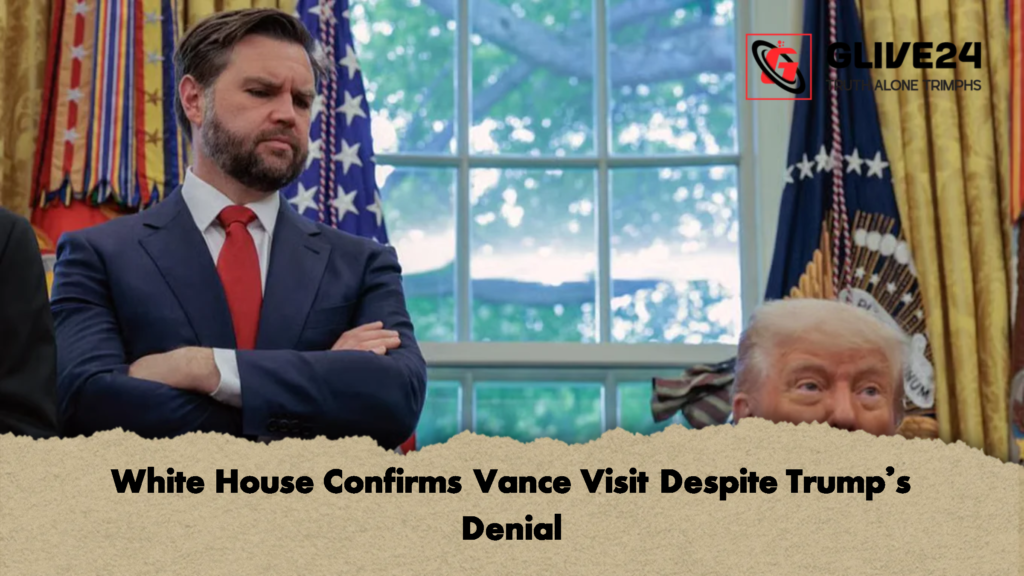
A significant diplomatic rift emerged within the Trump administration on Sunday, 19 April 2026, as conflicting reports surfaced regarding Vice President JD Vance’s participation in high-stakes negotiations in Islamabad. While President Donald Trump initially suggested that his second-in-command would avoid the Pakistani capital due to escalating security concerns, the White House has since issued a formal clarification, confirming that the Vice President will indeed lead the American delegation for the second round of talks with Iranian officials.
Table of Contents
A Public Display of Diplomatic Confusion
The day began with a characteristically blunt statement from President Donald Trump. Speaking to reporters on Sunday morning, the President announced that a high-level US delegation was being dispatched to Islamabad to broker a solution to the ongoing conflicts in the Middle East. However, when questioned about the leadership of this team, Trump indicated that JD Vance would be absent from the trip, seemingly contradicting previous itinerary briefings.
In an interview with ABC News, the President cited “significant security anxieties” as the primary reason for keeping the Vice President on American soil. Trump remarked:
“This is purely based on security considerations. JD is a magnificent person, but given the current climate and the intelligence we are receiving, he will not be heading to Pakistan on this occasion.”
This statement appeared to catch the diplomatic corps off guard, as Vance had been the central figure in the previous round of successful discussions held on 11 and 12 April.
The White House Counter-Statement
Within hours of the President’s remarks, the White House appeared to pivot, contradicting the Commander-in-Chief’s assessment in a rare display of public administrative friction. An official, speaking to the Agence France-Presse (AFP) under the condition of anonymity, confirmed that the delegation’s composition remained unchanged despite the President’s earlier comments.
The official stated that Vice President JD Vance, alongside Special Envoy Steve Witkoff and the President’s son-in-law, Jared Kushner, would all be arriving in Islamabad on the evening of Monday, 20 April. This trio represents the administration’s primary diplomatic apparatus for Middle Eastern affairs, and their presence is viewed as essential for the continuity of the dialogue with Tehran’s representatives.
Regional Tensions and the Looming Deadline
The backdrop to these negotiations is fraught with extreme military tension. On Saturday, 18 April, a significant attack occurred in the Strait of Hormuz, which President Trump has categorised as a “total violation” of the standing two-week ceasefire by Tehran. The current truce between the United States and Iran is set to expire on 22 April, leaving the delegation with an incredibly narrow window to prevent a full-scale regional escalation.
Trump has adopted a characteristically aggressive posture ahead of the talks, threatening to “obliterate Iran’s power stations and bridges” should the Islamabad summit fail to produce a binding agreement. This bellicose rhetoric has added a layer of immense pressure on the departing delegates.
Diplomatic Delegation and Conflict Timeline
The following table outlines the key figures involved in the negotiations and the critical deadlines currently facing the administration:
| Category | Details |
| Delegation Leader | Vice President JD Vance |
| Key Members | Steve Witkoff & Jared Kushner |
| Host City | Islamabad, Pakistan |
| Arrival Date | Monday, 20 April 2026 |
| Ceasefire Expiry | Wednesday, 22 April 2026 |
| Primary Aggravation | Strait of Hormuz Incident (18 April) |
| Negotiation Objective | Renewal of Truce and Conflict De-escalation |
Analysis of the Security Environment
The confusion between the President and the White House reflects the volatile and unpredictable security situation in Pakistan. While Islamabad has historically served as a neutral ground for both covert and overt diplomacy, the recent increase in regional hostilities has made high-profile visits a logistical and security nightmare for the Secret Service.
Political analysts suggest that Trump’s initial comments may have been a tactical manoeuvre—perhaps intended to keep adversaries guessing or to lower the profile of the visit—or a genuine reaction to a classified security briefing that the White House staff later mitigated through diplomatic channels. Regardless of the internal friction, the mission remains critical. The involvement of Jared Kushner, who was instrumental in the Abraham Accords, suggests that the administration is seeking a comprehensive regional settlement rather than a mere temporary extension of the ceasefire.
Implications of Potential Failure
If the Islamabad talks collapse, the consequences could be catastrophic for global energy markets and regional stability. With the ceasefire ending in less than 72 hours, the US Navy remains on high alert in the Persian Gulf. The international community is watching with bated breath, hoping that the Vance-led delegation can navigate Iran’s complex demands while managing the volatile rhetoric emanating from the Oval Office.
The outcome of the Monday evening meeting in Islamabad will likely determine whether the Middle East moves toward a fragile, negotiated peace or descends into a direct, devastating confrontation between Washington and Tehran. For now, despite the President’s earlier public hesitation, the Vice President is en route to what may be the most defining diplomatic challenge of his political career.