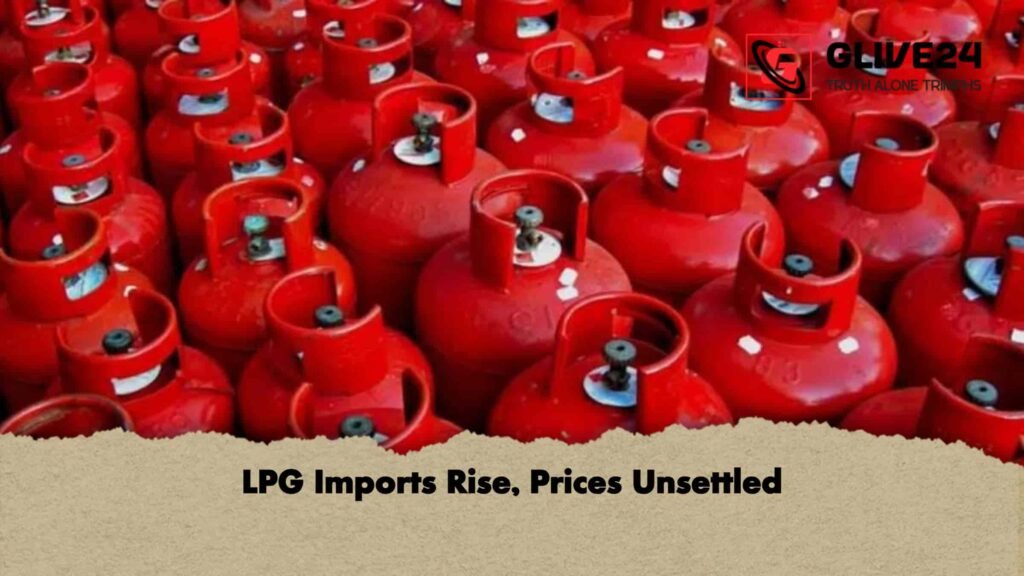
Despite a marked increase in liquefied petroleum gas (LPG) imports this month, the anticipated relief in the retail market has yet to materialise. Consumers in the capital and several regional centres continue to pay well above the government’s fixed price for LPG cylinders, underscoring persistent distortions in distribution and pricing.
Industry stakeholders attribute the lingering volatility to recent instability in parts of the Middle East, which disrupted supply chains and freight schedules. Although import volumes have recovered significantly, the aftershocks of earlier shortages appear to be reverberating through the domestic market.
According to official data, a total of 91,000 tonnes of LPG were imported through the ports of Chattogram and Mongla by 21 February. During the corresponding period in January, imports stood at 63,000 tonnes—representing an increase of approximately 44 per cent within a single month. In addition, private jetties in Sitakunda typically handle a further 20,000 to 22,000 tonnes each month.
With average daily demand estimated at around 5,000 tonnes, the improved import figures suggest that supply conditions should be stabilising. However, traders and analysts caution that logistical bottlenecks, inventory rebuilding, and uneven distribution have delayed the pass-through of benefits to end consumers.
Recent Import Overview
| Description | Volume |
|---|---|
| Imports (February, up to 21st) | 91,000 tonnes |
| Imports (January, same period) | 63,000 tonnes |
| Rate of increase | Almost 44% |
| Average daily demand | 5,000 tonnes |
| Total imports (last fiscal year) | 1,754,000 tonnes |
The government has set the retail price of a 12-kg LPG cylinder at 1,356 taka. Yet in Dhaka and other urban centres, consumers report paying between 1,600 and 1,700 taka. During the acute supply crunch in January, prices surged to between 2,000 and 2,500 taka per cylinder.
Importers insist they are releasing products at the regulated rate, suggesting that excess margins are being added at the retail stage. Market observers argue that without stricter oversight and enforcement, official price adjustments will continue to have limited practical impact.
The roots of the current instability can be traced to November, when imports fell by roughly 44 per cent, triggering supply concerns. Delays in approval processes during December and January prevented several large operators from scaling up shipments in a timely manner. The resulting deficit intensified market pressure. Subsequent policy adjustments accelerated import approvals, enabling a gradual improvement in supply flows.
At present, 28 companies operate within the LPG sector, of which 23 hold import authorisations. Sixteen firms have actively imported LPG in the current fiscal year, while nine companies account for approximately 92 per cent of total supply. Larger operators have reportedly sought alternative sourcing arrangements to cushion the market from external shocks.
Industry representatives maintain that if the present pace of imports is sustained, supply conditions should normalise in the coming weeks, with prices returning to a more stable range. Nevertheless, they emphasise that effective retail monitoring will be essential to ensure consumers fully benefit from improved availability.