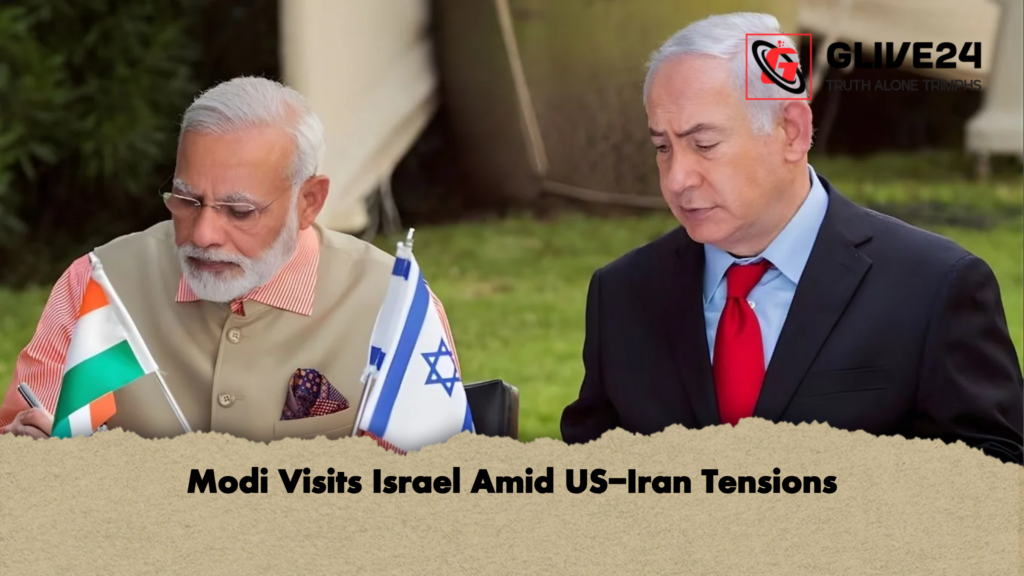
Amid escalating tensions between the United States and Iran, which have raised regional security concerns, Indian Prime Minister Narendra Modi arrived in Israel on Wednesday for a two-day state visit. Both nations view the trip as an opportunity to further deepen bilateral ties across multiple sectors.
This marks Modi’s second visit to Israel as Prime Minister; his first historic trip was in 2017, when he became the first Indian leader to set foot in the country. The following year, Israeli Prime Minister Benjamin Netanyahu reciprocated with a visit to India. Since then, relations between the two nations have strengthened significantly, with notable cooperation in technology, agriculture, security, and other sectors.
Last week, Netanyahu highlighted the upcoming visit, stating, “We are working to reinforce our alliances. Next week, my close friend, Indian Prime Minister Narendra Modi, will visit Israel.” The Israeli government hopes the visit will pave the way for new partnerships and collaborations.
An Israeli foreign ministry official commented, “This visit will open avenues for fresh partnerships and collaboration across various domains.” Modi is scheduled to address the Knesset and lay a floral wreath at Yad Vashem, the official Holocaust memorial.
However, Modi’s trip comes amid heightened geopolitical tension in the Middle East. The United States has deployed a significant naval presence off Iran’s coast, including an aircraft carrier in the Mediterranean, raising concerns about potential conflict. Tehran’s nuclear programme remains a contentious issue, and any military action could provoke retaliation targeting US military installations in Israel and the Gulf, where millions of Indians live and work, sending billions in remittances to India annually.
Indian analysts have underscored the delicate balance India must maintain. Observer Research Foundation’s Kabir Taneja remarked, “New Delhi does not wish to see conflict in the region. Past diplomatic messaging has been clear, and the same signals will likely be conveyed during this visit.” Israeli officials also anticipate discussions on regional security, with Netanyahu describing India as a future “axis” partner.
While India has shown interest in acquiring Israeli defence equipment, Taneja noted that India’s longstanding non-aligned stance makes it unlikely to formally join any military alliance.
Key Details of Modi’s Israel Visit
| Aspect | Details |
|---|---|
| Duration | 2 days |
| Purpose | Strengthen bilateral relations in technology, agriculture, and security |
| Key Engagements | Address to Knesset, visit to Yad Vashem |
| Historical Context | Modi first visited Israel in 2017; Netanyahu visited India in 2018 |
| Geopolitical Context | Rising US-Iran tensions; potential regional instability |
| Strategic Significance | Discussion of regional security, defence collaboration, and economic partnerships |
The visit, therefore, not only symbolises the deepening friendship between India and Israel but also occurs at a sensitive moment in international affairs, highlighting India’s careful diplomatic approach in a volatile region.