The establishment of the Islamic Republic of Iran in 1979 marked a pivotal moment in Middle Eastern history. Under the leadership of Ayatollah Ruhollah Khomeini, the US-backed Pahlavi monarchy was overthrown, and the nation was formally renamed the Islamic Republic of Iran. Since then, Iran has been governed by a conservative, revolutionary Islamic regime, navigating internal unrest, regional conflicts, and enduring international sanctions.
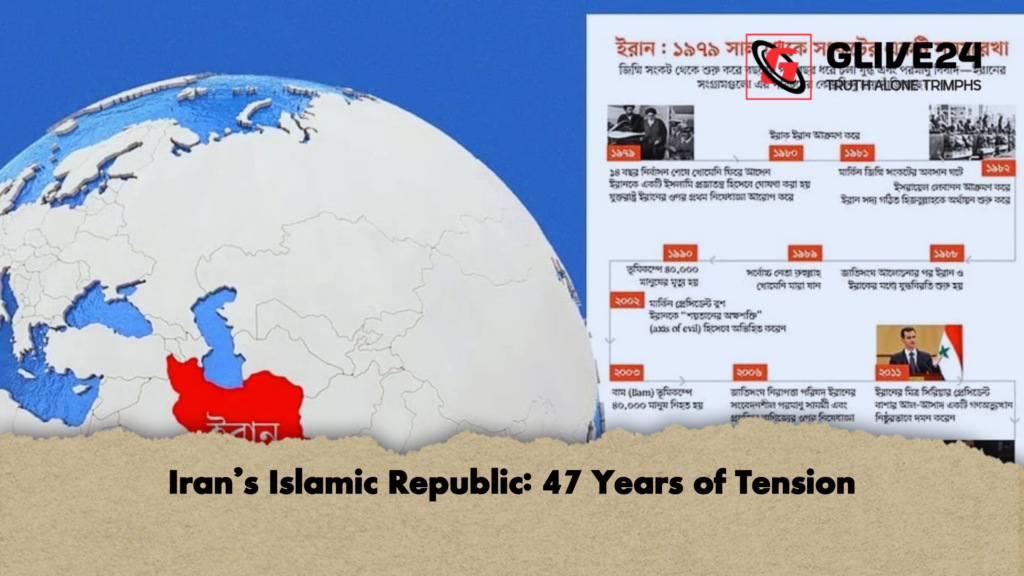
The 47-year trajectory of Iran’s Islamic Republic has been defined by war, political upheaval, and confrontations with the United States and its allies. The most significant events are summarised in the following table:
| Year | Event | Details |
|---|---|---|
| 1979 Feb | Islamic Republic Established | Khomeini returns from exile in France; monarchy abolished via referendum |
| 1979 Nov | US Embassy Hostage Crisis | 52 diplomats held for 444 days; first US sanctions imposed |
| 1980–88 | Iran–Iraq War | Saddam Hussein invades; ~1 million killed; chemical weapons used |
| 1982 | Hezbollah Formation | Iran supports Shia groups in Lebanon; Hezbollah emerges |
| 1989 | Khomeini’s Death | Ali Khamenei becomes Supreme Leader; Rafsanjani begins reconstruction |
| 1990 | Northern Earthquake | ~40,000 dead; disaster management criticised |
| 1995 | US Oil & Trade Sanctions | Accusations of weapons proliferation and support for militias |
| 1998 | Afghan Border Crisis | Taliban kills 8 Iranian diplomats; military mobilisation occurs |
| 2003 | US Invasion of Iraq | Iran supports Shia militias; nuclear enrichment temporarily suspended |
| 2006–10 | Nuclear Sanctions & Cyberattacks | UN imposes successive sanctions; Stuxnet cyberattack reported |
| 2011 | Syrian Conflict | Iran backs Assad via Revolutionary Guards and allied militias |
| 2012 | EU Oil Embargo | Rial loses ~80% of its value; Parchin inspection disputes |
| 2015 | JCPOA Nuclear Deal | Iran limits enrichment in exchange for sanctions relief |
| 2018 | US Withdrawal | Trump exits JCPOA; sanctions reinstated |
| 2020 | Soleimani Assassinated | US drone strike kills IRGC Quds Force chief; Iran retaliates |
| 2024 | Regional Incidents | Embassy attack, presidential death, Hamas leader killed in Tehran |
| 2025 | 12-Day Conflict | Israel-Iran clashes; casualties escalate regional tensions |
| 2026 | Operation Epic Fury | Joint US-Israel military campaign; Supreme Leader Khamenei killed; missile and drone strikes ensue |
From the 1979 revolution, through the devastating eight-year war with Iraq, to recent high-intensity military confrontations, Iran has faced immense challenges. Natural disasters, economic sanctions, and political assassinations have repeatedly tested the resilience of the state and its people.
Internationally, Iran has maintained influence via proxy groups like Hezbollah, support for Shia militias in Iraq and Syria, and its strategic nuclear programme. Domestically, repeated protests, economic hardship, and currency devaluation have strained society.
The recent Operation Epic Fury in 2026, culminating in the death of Supreme Leader Ali Khamenei, has introduced unprecedented uncertainty, not only in Iran but across the Middle East. Missile and drone retaliations have spread the impact of the conflict to neighbouring countries, signalling that the geopolitical ripple effects of Iran’s revolutionary governance continue to reverberate globally.
Over nearly five decades, Iran’s Islamic Republic has navigated a complex interplay of internal governance, regional influence, and international confrontation, solidifying its role as a central actor in Middle Eastern geopolitics.