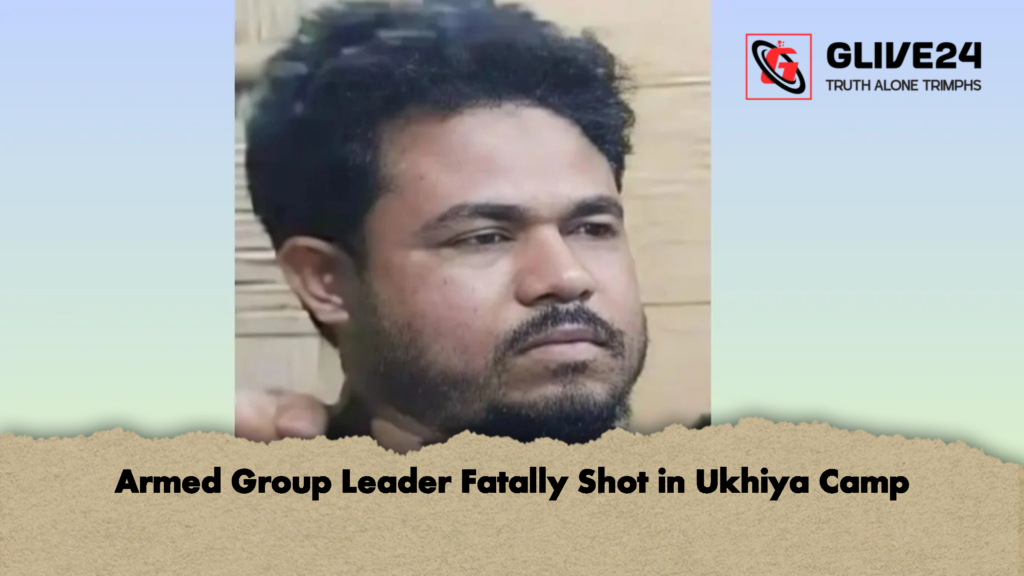
In an escalation of factional violence within the refugee settlements of Cox’s Bazar, the leader of an armed group was assassinated on the evening of Tuesday, 5 May 2026. Abdul Halim, the head of the eponymous “Halim Group,” was killed during a targeted shooting in the Ukhiya sub-district. The incident, which took place within the Kutupalong Refugee Camp, is believed to be the result of a protracted dispute over territorial dominance and illicit activities between rival factions.
The attack occurred at approximately 8:00 pm in the Lal Bridge (Red Bridge) area, located within Block 8-East. According to law enforcement and camp sources, the assassination marks a significant development in the ongoing friction between armed elements operating within the camp infrastructure.
Table of Contents
Execution of the Ambush and Casualties
The fatal encounter unfolded when a group of armed assailants, allegedly belonging to a rival criminal organisation, intercepted Abdul Halim. Witnesses reported that the attackers opened fire indiscriminately upon his group, though it was clear that Halim was the primary target. The gunmen utilised the ensuing panic to flee the scene before security detachments could respond.
Abdul Halim sustained multiple high-velocity gunshot wounds and was left in a critical state. Local residents and volunteers facilitated his immediate transport to a nearby healthcare facility. However, the medical officer on duty declared him dead upon arrival. Furthermore, unconfirmed reports suggest that at least one of Halim’s associates was also wounded by gunfire during the exchange. The specific identity and medical prognosis of the injured associate have not yet been formally verified by official channels.
Law Enforcement Response and Security Measures
Siraj Amin, the Commanding Officer of the 14th Armed Police Battalion (APBN)—the specialised unit responsible for the security of the Rohingya camps—officially confirmed the fatality. He stated that law enforcement agencies have been placed on high alert to prevent further outbreaks of retaliatory violence.
Commenting on the investigative progress, Commander Amin remarked:
“Police and security forces remain vigilant in maintaining law and order within the camps. An operation is currently underway to identify and apprehend those responsible for this incident.”
Following the assassination, a state of heightened anxiety has been observed among the residents of Block 8-East. In response, the APBN has intensified its presence, establishing checkpoints and increasing foot patrols around the Lal Bridge sector and other strategic locations. Forensic teams have also conducted a preliminary sweep of the site to collect ballistics evidence.
Criminal Profile and Factional Dynamics
The deceased, Abdul Halim, was a prominent figure in the camp’s informal and often violent hierarchy. Prior to his death, Halim was named as a defendant in several active criminal cases, with charges ranging from assault to other serious offences. The “Halim Group” has long been identified by security analysts as a faction involved in persistent struggles for control over camp resources and influence.
Internal conflicts within these settlements are frequently motivated by:
-
Territorial Influence: The desire to control specific blocks or sectors to extort “taxes” or levies from shopkeepers and residents.
-
Contraband Control: Competition over the movement of illicit goods across the regional borders.
-
Leadership Rivalries: Inter-group squabbles intended to eliminate opposing leadership to consolidate power.
Broader Security Implications
This targeted killing underscores the complex security challenges faced by the Bangladesh government in managing a population of over one million refugees. Despite the installation of perimeter fencing and the deployment of the APBN, the presence of armed groups continues to pose a threat to both the refugee population and local law enforcement.
As of Wednesday morning, 6 May 2026, Abdul Halim’s remains have been transferred to a hospital morgue for a formal autopsy. While the investigation remains active, no suspects have been taken into custody. Police officials have urged camp inhabitants to provide any relevant information, although the pervasive fear of retribution from rival armed groups remains a significant barrier to witness cooperation.