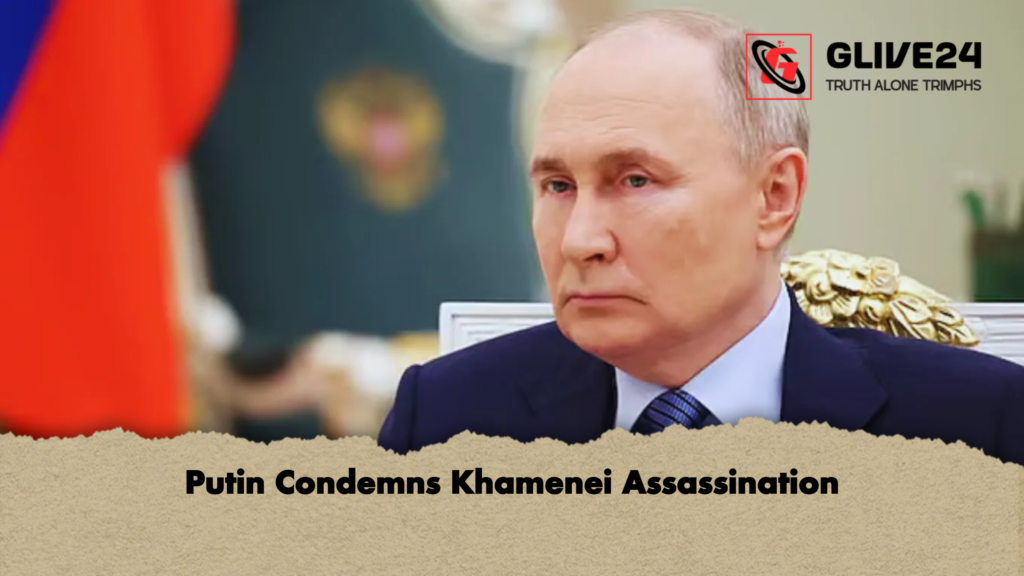
The reported killing of Iran’s Supreme Leader, Ayatollah Ali Khamenei, has triggered strong international reactions, with Russian President Vladimir Putin condemning the incident in the strongest terms. He described the assassination as a “cruel violation” of humanitarian ethics and the fundamental principles of international law, warning that such actions risk undermining global stability.
According to official statements from the Kremlin, Putin expressed profound condolences to Iran’s leadership and people, including President Masoud Pezeshkian, as well as to Khamenei’s family. The remarks were confirmed by Kremlin spokesperson Dmitry Peskov on Sunday, who emphasised that Moscow views the incident as both unlawful and deeply destabilising.
The attack reportedly occurred on Saturday morning, when coordinated missile strikes targeted multiple locations across Iran. One of the primary targets was the capital, Tehran, where Khamenei was killed inside his office. The strikes have been attributed to joint actions by the United States and Israel, although no comprehensive independent verification has yet been publicly disclosed.
Ayatollah Ali Khamenei had served as Iran’s Supreme Leader for more than three decades, making him one of the longest-serving and most influential figures in the modern Middle East. During his tenure, he played a decisive role in shaping Iran’s domestic governance and foreign policy, particularly in navigating tensions with Western powers and strengthening alliances with countries such as Russia.
In his statement, Putin noted that Khamenei would be remembered in Russia as an “outstanding statesman” who contributed significantly to the development of friendly relations between Moscow and Tehran. Analysts suggest that this sentiment reflects the strategic partnership that has evolved between the two nations in recent years, particularly in areas such as energy cooperation, regional security, and geopolitical alignment.
The assassination has raised serious concerns among international observers regarding the potential escalation of conflict in the Middle East. Experts warn that the killing of such a high-ranking leader could provoke retaliatory measures, heighten regional tensions, and complicate diplomatic efforts aimed at maintaining stability.
Key Facts at a Glance
| Category | Details |
|---|---|
| Deceased | Ayatollah Ali Khamenei |
| Position | Supreme Leader of Iran |
| Location of Incident | Tehran, Iran |
| Nature of Attack | Coordinated missile strikes |
| Alleged Perpetrators | United States and Israel (reported) |
| Russian Response | Strong condemnation and condolences |
| Kremlin Spokesperson | Dmitry Peskov |
| Years in Power | Over three decades |
Beyond its immediate political consequences, the incident also raises broader legal and ethical questions. Under international law, targeted killings of state leaders—particularly outside a declared war framework—are widely considered violations of sovereignty and legal norms. Putin’s remarks reflect this interpretation, positioning Russia as a vocal critic of the operation and signalling possible diplomatic repercussions.
As the situation continues to unfold, global powers are closely monitoring developments. The long-term implications of Khamenei’s death remain uncertain, but it is clear that the event marks a critical turning point in regional and international politics.