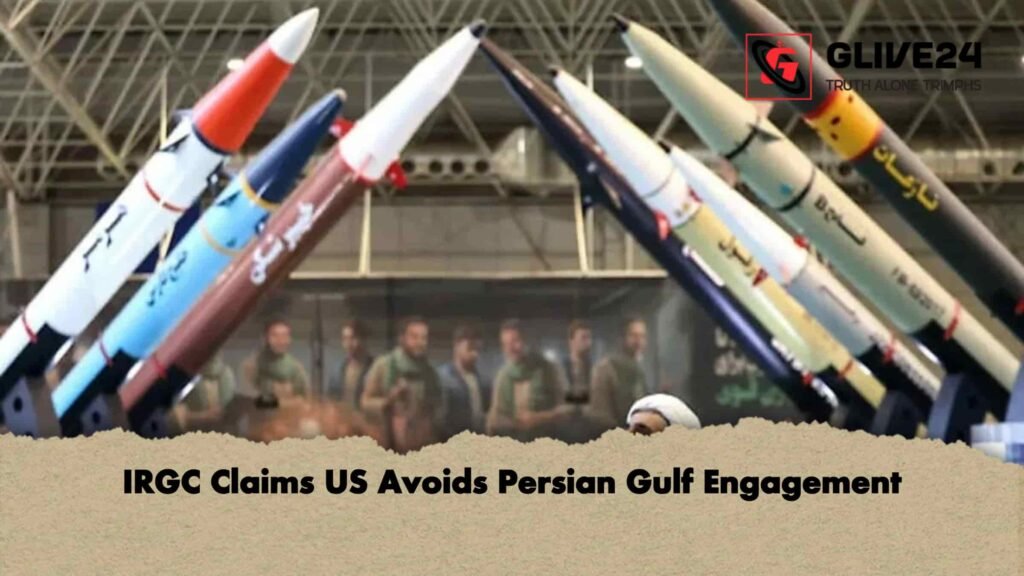
Iran’s Islamic Revolutionary Guard Corps (IRGC) has issued a strong warning to the United States, claiming that Washington currently lacks the courage to enter the Persian Gulf and is instead seeking avenues to bring the ongoing conflict to a conclusion. The IRGC further stated that the majority of missiles used against US and Israeli targets to date were developed nearly a decade ago, while more advanced weaponry remains in reserve.
Brigadier General Ali Mohammad Naeini, spokesperson for the IRGC, provided these details in an interview with Iranian state media. He reported that since the conflict began on 28 February, approximately 700 missiles and 3,600 drone strikes have been carried out as part of what the IRGC has named “Operation True Promise 4.”
“The missiles currently deployed were manufactured nearly ten years ago,” Naeini said. “More sophisticated missiles, produced over the past twelve days and during preparations for Ramadan operations, have yet to be used.”
Naval Control and Persian Gulf Tensions
Naeini issued a direct warning to the United States, stating that US naval forces have not dared approach the Persian Gulf, which he claims is entirely under Iranian control. He added that, following cruise missile attacks by the IRGC Navy and the Iranian military, American warships were forced to retreat 300–400 miles to the far end of the Gulf of Oman. The spokesperson claimed that several vessels suffered significant damage, necessitating repairs and preventing further participation in military operations.
According to the IRGC, electronic warfare has been used to target enemy radar systems, defensive installations, munitions depots, and military aircraft, further limiting adversary capabilities.
Misjudgements and Strategic Shifts
Naeini also suggested that the United States had miscalculated Iran’s stability, asserting that American intelligence anticipated a collapse following reports of Supreme Leader Ayatollah Ali Khamenei’s death on 28 February.
“The US assumed that his death would trigger political chaos and social unrest,” he said. “Instead, it is now the adversary that faces confusion, doubt, and frustration.”
The IRGC spokesperson added that Washington is now effectively acknowledging setbacks and exploring diplomatic options to end the conflict. He claimed that initial US statements, including public declarations from former President Donald Trump promising rapid resolution, have shifted behind the scenes to discussions on how to negotiate with Iran.
“Iran will continue its military response until aggressors recognise our defensive and societal resilience. Only then will the conflict conclude,” Naeini stated.
Key Reported Operations
| Operation | Missiles Launched | Drone Strikes | Notes |
|---|---|---|---|
| Operation True Promise 4 (since 28 Feb) | ~700 | ~3,600 | Missiles mostly ten years old; advanced stock reserved |
| Persian Gulf / Gulf of Oman | N/A | N/A | US warships reportedly forced to retreat 300–400 miles |
| Electronic Warfare Campaign | N/A | N/A | Targets included radar, defensive installations, munitions depots, aircraft |
The IRGC’s statements reflect Tehran’s continued emphasis on strategic control of the Persian Gulf and its position that the United States is seeking a way to de-escalate without direct confrontation in the region.