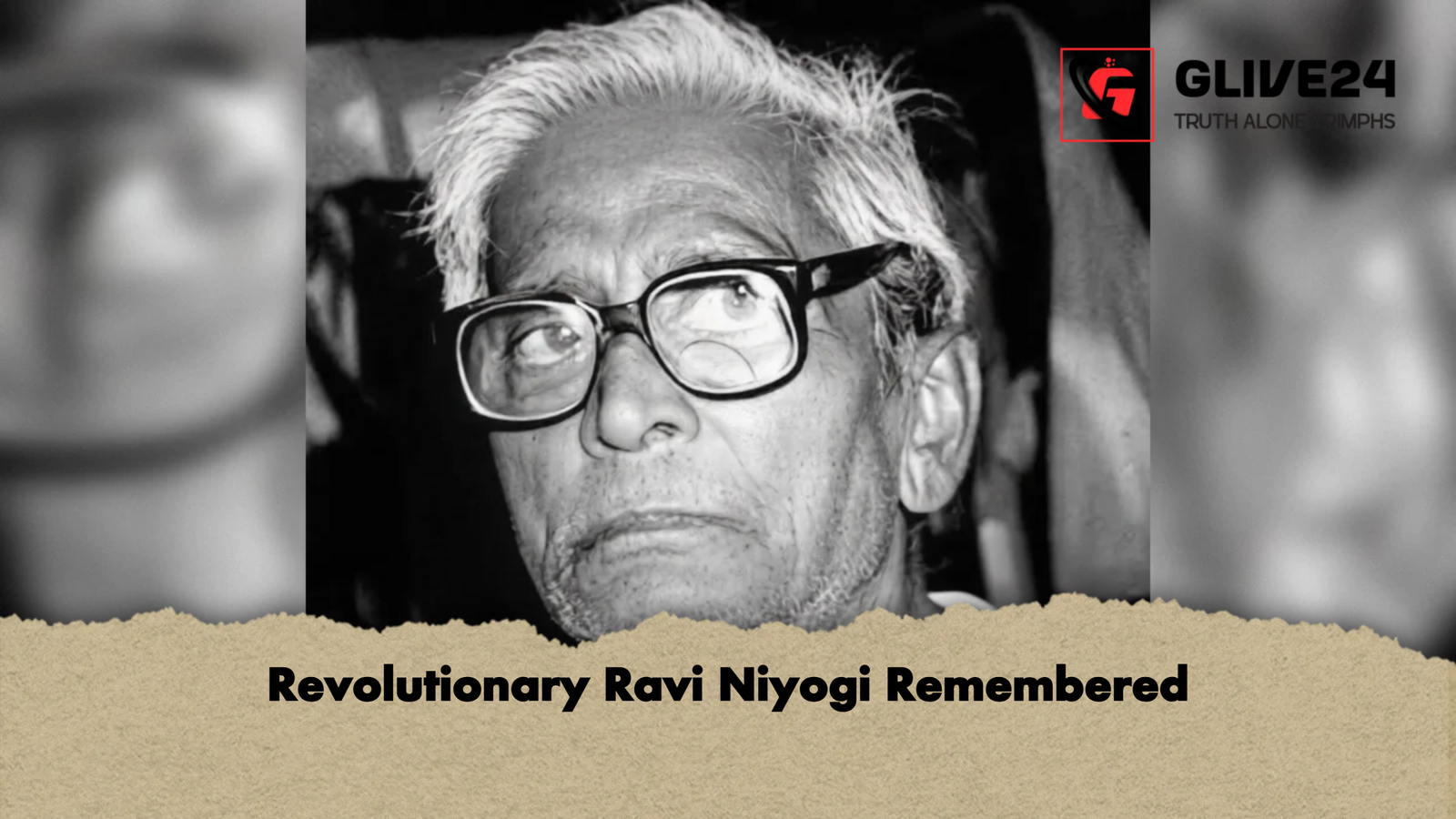
Ravi Niyogi remains a distinguished figure in the history of Bengal’s anti-colonial struggle, remembered for his unwavering commitment to political ideals, social justice, and organised resistance. His life reflects the trajectory of a generation shaped by colonial repression and revolutionary nationalism in early twentieth-century India.
Born on 29 April 1909 in the village of Gridanarayanpur in Sherpur district, then part of greater Mymensingh, he came from a respected zamindar (landowning) family. His father, Ramesh Chandra Niyogi, and mother, Surabala Niyogi, were both associated with contemporary Congress politics. This early exposure to political thought played a formative role in shaping his ideological outlook.
After passing matriculation from Gobinda Kumar Peace Memorial High School in 1926, Niyogi enrolled at Ananda Mohan College. However, his political involvement led to his expulsion, after which he joined Vidyasagar College in Calcutta. It was here that he became closely associated with the revolutionary Yugantar group, marking a decisive turning point in his political journey.
His activism soon brought him into direct confrontation with the colonial administration. In 1930, he was arrested for participating in the Congress-led Civil Disobedience Movement. Later that same year, following the Chittagong Armoury Raid, he was again detained due to his involvement with Yugantar activities in Mymensingh.
In 1931, his participation in the Salda zamindar house operation led to a seven-year prison sentence. He was initially confined in Rajshahi Jail and later transferred to the Cellular Jail in the Andaman Islands as a “dangerous prisoner”, where he endured severe conditions and reported mistreatment. Despite this, he remained steadfast in his ideological convictions.
Released in 1937, Niyogi joined the Communist Party of India and redirected his efforts towards the rights of peasants and workers. He played a key organisational role in the 1943 provincial peasant conference in Nalitabari and the 1945 All-India Peasant Conference in Netrokona.
After the Partition, he continued his political engagement through the East Pakistan Communist Party and later the Communist Party of Bangladesh, remaining active in leftist politics for decades.
He passed away on 10 May 2002 in Sherpur, concluding a life defined by resistance, imprisonment, and ideological commitment.
| Year | Event |
|---|---|
| 1909 | Born in Gridanarayanpur, Sherpur |
| 1926 | Passed matriculation; enrolled in college |
| Late 1920s | Joined Yugantar revolutionary group |
| 1930 | Arrested during Civil Disobedience Movement |
| 1931 | Sentenced to seven years’ imprisonment |
| 1937 | Released and joined Communist Party |
| 1943 | Organised provincial peasant conference |
| 1945 | Key organiser of All-India Peasant Conference |
| 2002 | Passed away in Sherpur |
Ravi Niyogi’s life stands as a testament to ideological resilience, political courage, and lifelong dedication to collective struggle.
> Women’s World Cup Dream Crumbles After Defeat Against Australia
> Bangladeshi Housewife Found Dead With Hands Bound in Tangail
> Terror Plot Foiled in Mumbai After Mastermind Targets Religious Procession
> Rangnick Dismisses World Cup Match-Fixing Claims After Dramatic Draw
> Notorious Patali Gang Apprehended by Elite Security Forces in Dhaka
> Final Shipment of Indian Import Rice Arrives at Mongla Port
> Israeli Defence Hardware Acquired by Saudi Arabia and Qatar
> Technical Faults and Stormy Weather Trigger Severe Bangladesh Blackouts
> World Cup Power Cuts Spark Protests and Violence in Bangladesh
> Iran launches new strikes against Kurdish groups in Iraq
> Club Goal Rankings in World Cup History
> Footballer’s Family Missing After Venezuela Quake
> Anupam Roy Live Concert Announced Dhaka
> Two Arrested With Tapentadol
> Oxford Authorities Contradict Claims by Hasnat, Sadik
> Simrin Lubaba Begins New Life After Marriage Shift
> The Psychology and Philosophy of Unwarranted Defamation

সম্পাদক ও প্রকাশক: এ বি এম জাকিরুল হক টিটন
যোগাযোগের ঠিকানাঃ পশ্চিম কাফরুল, বেগম রোকেয়া সরণি, ঢাকা
© Copyright 2026 Khaborwala। All Rights Reserved



Comments