
Khabor Wala Desk
Published: 30th April 2026, 4:30 PM
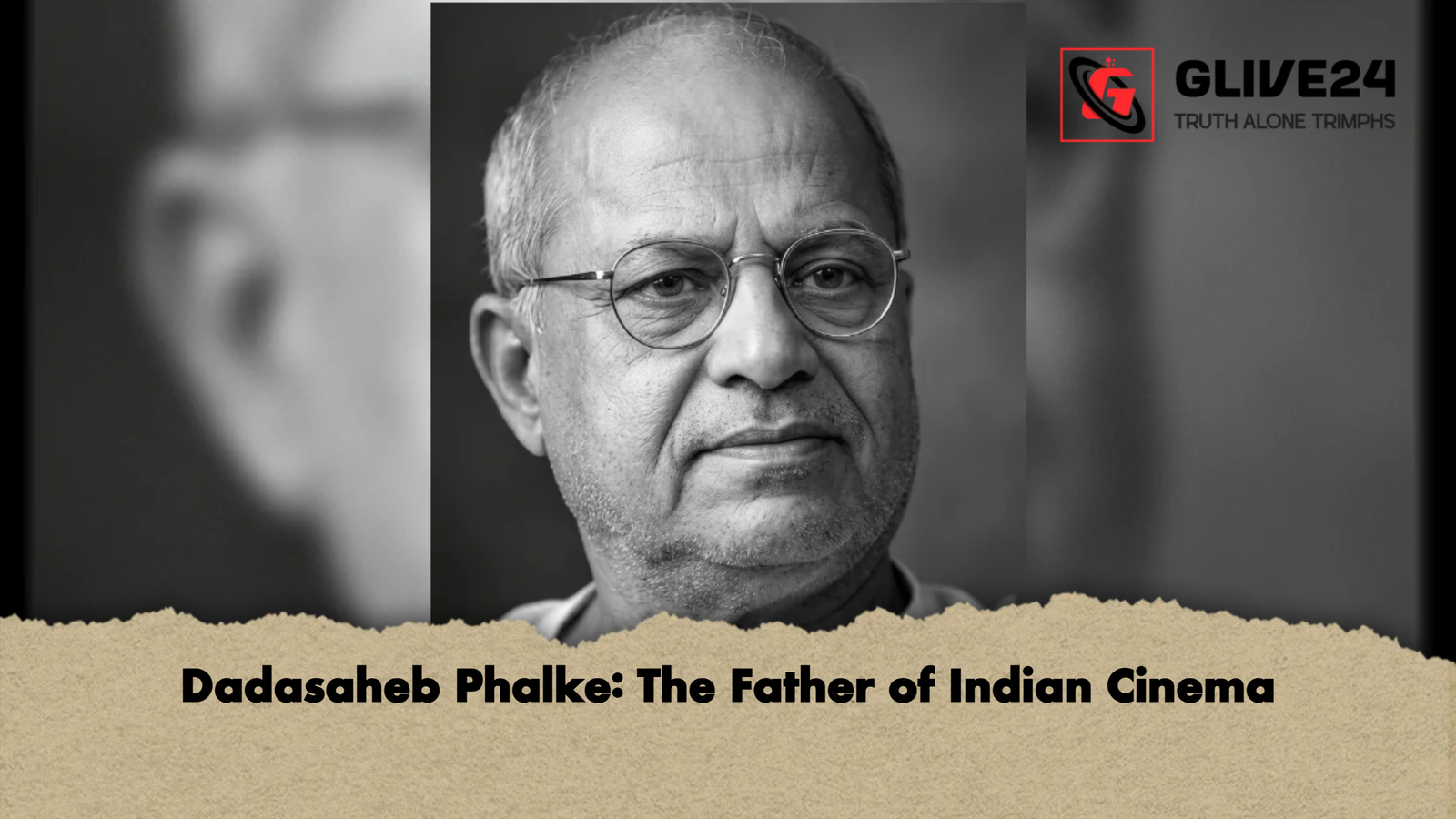
Dhundiraj Govind Phalke, immortalised in history as Dadasaheb Phalke, remains the definitive pioneer of the Indian film industry. He was not merely a filmmaker but a visionary polymath whose technical ingenuity and artistic perseverance established the foundation for what has become one of the world’s largest cinematic landscapes.
Table of Contents
Born on 30 April 1870 in Trimbakeshwar, Maharashtra, into a Marathi Brahmin family, Phalke displayed a profound interest in the creative arts from a young age. His academic journey was distinguished by a pursuit of diverse disciplines. He studied at the prestigious Sir J.J. School of Art in Mumbai and subsequently at the Kala Bhavan in Baroda.
During these formative years, he acquired expertise in:
Painting and Drawing
Sculpture
Photography and Lithography
Printing Technology
Phalke’s professional career prior to cinema included a period as a professional photographer and a draughtsman for the Archaeological Survey of India. He also operated a printing press, where he gained practical experience in design and mechanical processes—skills that would later prove vital in his cinematic endeavours.
A pivotal moment occurred in 1911 when Phalke attended a screening of the foreign silent film The Life of Christ. This experience sparked a conviction that Indian mythology and folklore could be effectively adapted for the screen. To master this new medium, he travelled to London, where he studied advanced filming techniques and acquired the necessary cinematographic equipment.
Upon returning to India, he faced significant financial hurdles. He famously sold his household items and his wife, Saraswati Phalke, sold her jewellery to fund his ambition. Saraswati Phalke also played a critical role behind the scenes, assisting with film processing, editing, and managing the logistics of the production crew.
In 1913, Phalke released Raja Harishchandra, the first indigenous full-length Indian feature film. Its success demonstrated the commercial and cultural viability of cinema in India. Over a creative career spanning nearly 24 years, Phalke produced a prolific body of work, comprising 95 feature films and 26 short films.
| Year | Title | Category | Significance |
| 1913 | Raja Harishchandra | Silent Feature | India’s first full-length feature film. |
| 1913 | Mohini Bhasmasur | Silent Feature | Introduced the first female actresses in Indian cinema. |
| 1914 | Satyavan Savitri | Silent Feature | Adapted from the Mahabharata. |
| 1917 | Lanka Dahan | Silent Feature | Achieved massive commercial success. |
| 1918 | Shri Krishna Janma | Silent Feature | Focused on the birth of Lord Krishna. |
| 1919 | Kaliya Mardan | Silent Feature | Notable for advanced visual effects for the era. |
| 1932 | Setu Bandhan | Silent Feature | One of his final silent era epics. |
| 1937 | Gangavataran | Sound Film | Phalke’s first and only “talkie” film. |
Dadasaheb Phalke passed away on 16 February 1944 in Nashik. In recognition of his monumental contributions, the Government of India instituted the Dadasaheb Phalke Award in 1969. It remains the highest official recognition in Indian cinema, presented annually to individuals for their lifelong dedication and outstanding contribution to the growth and development of the film industry. His life serves as a testament to the fact that technical mastery and cultural pride can forge an entirely new industry.



Comments