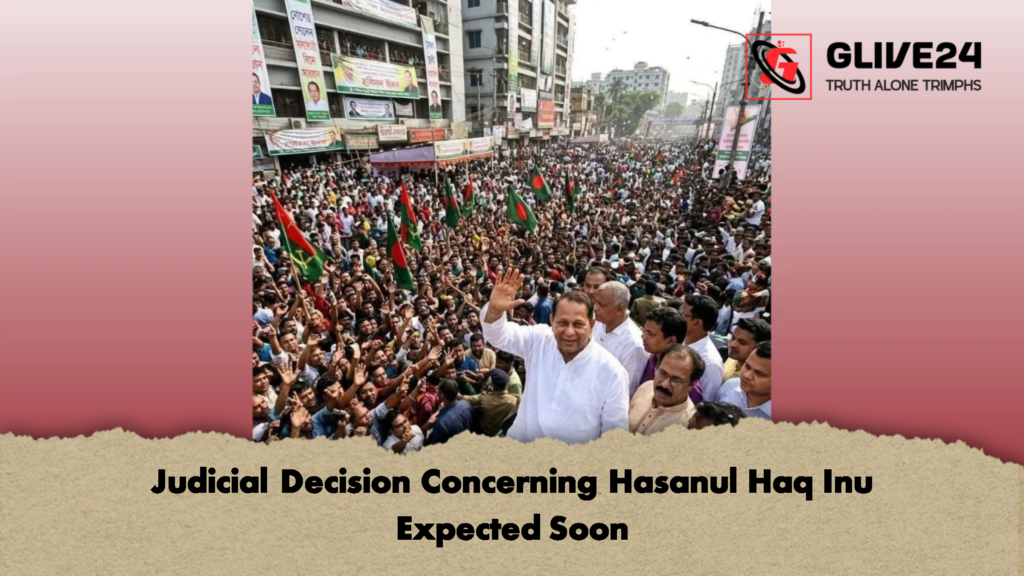
A significant judicial verdict concerning the prominent political figure and veteran 1971 freedom fighter Hasanul Haq Inu is scheduled to be officially announced on 30 June. This upcoming court judgment has generated widespread discussions and notable concern within the domestic political arena, as well as among citizens who uphold the core principles, constitutional values, and legal legacy of the 1971 Liberation War.
Historical Significance of the Liberation War
The Great Liberation War of Bangladesh was fundamentally more than a standard military conflict; it represented an existential struggle for the preservation of a nation, a battle to secure sovereign independence, and the historical foundation for establishing Bengali national self-respect. Inextricably linked with this historical narrative are countless freedom fighters, organisers, political activists, and courageous individuals whose immense sacrifices directly enabled the creation of an independent nation-state.
Throughout his extended political career, Hasanul Haq Inu has been recognised by his supporters and segments of the populace for playing an active role in favour of progressive politics, secular principles, and the core ideology of the Liberation War. His specific contributions during the wartime period of 1971, combined with his subsequent post-independence political activities, have established him as a widely known political personality within the contemporary political history of Bangladesh.
Principles of Justice and Constitutional Rights
From the perspective of descendants of freedom fighters and proponents of constitutional governance, ensuring absolute justice, operational transparency, and the equal application of the law remains critically important for every citizen, including individuals directly associated with the liberation struggle. The primary expectation within a democratic state framework is that all judicial proceedings must remain strictly impartial, entirely evidence-based, and legally sound.
There is a collective consensus that no glorious chapter of the nation’s history should be brought into question, nor should the contributions, sacrifices, and struggles of the Liberation War be undervalued or diminished in any manner. Simultaneously, it is maintained that the precise establishment of justice serves to bring forth the truth more clearly, thereby strengthening public confidence in the institutional mechanisms of the state.
Societal Obligations and Factual Record
At a time when many brave soldiers, key organisers, and direct participants of the 1971 struggle are no longer alive, the responsibility of the state and society towards surviving freedom fighters and wartime organisers has increased substantially. Documenting their history accurately and treating their contributions with appropriate dignity is regarded as a fundamental institutional duty.
The Liberation War does not constitute the exclusive property of any single political entity; rather, it represents the collective achievement of the entire nation. Consequently, when addressing the history of the war, the honour of its participants, and the preservation of justice, all state and civilian positions must remain clear and highly responsible. The verified parameters, key dates, and core civic expectations related to this upcoming judicial event are systematically outlined in the analytical reference table below:
| Judicial and Historical Parameter | Verified Fact and Operational Clause |
| Primary Subject of Case | Hasanul Haq Inu (Political Personality and Freedom Fighter) |
| Scheduled Verdict Date | 30 June |
| Core National Expectation | Implementation of impartial, evidence-based, and transparent justice |
| Wartime Context | 1971 Liberation War of Bangladesh |
| Subject Legacy | Active participation in progressive and secular political movements |
| State Objective | Maintaining public trust through uncompromised rule of law |
The future trajectory of the republic relies upon the values of justice, humanity, democracy, and the foundational ideals of the Liberation War. It remains a firm expectation that any forthcoming judicial decision will be formulated strictly on the basis of existing laws, concrete evidence, and the universal principles of equity, thereby ensuring that fairness is delivered to history, the state, and the general populace alike.