
Khabor Wala Desk
Published: 4th May 2026, 12:34 AM
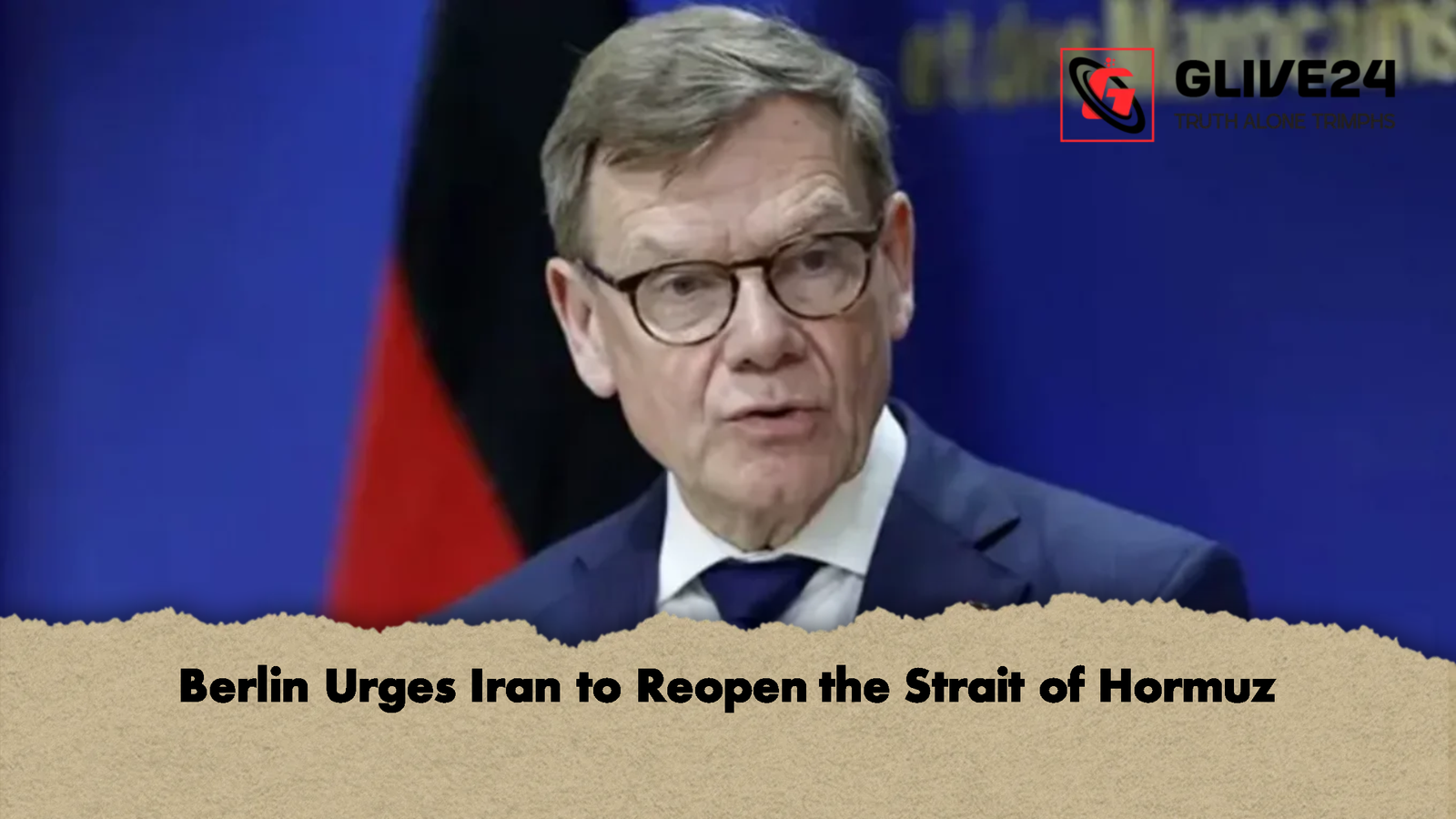
The German Federal Minister for Foreign Affairs, Johann Wadephul, has issued a formal appeal to the Islamic Republic of Iran to restore unrestricted access to the Strait of Hormuz. This diplomatic intervention arrives amidst intensifying friction between Washington and Tehran, a situation that has introduced significant instability into international maritime security and global energy markets. Alongside the demand for the reopening of this vital waterway, the German Foreign Office has reiterated the absolute necessity for Iran to terminate its nuclear enrichment programmes.
Table of Contents
In a policy statement published on the social media platform X, Minister Wadephul clarified that Germany’s strategic objectives in the Persian Gulf are currently congruent with those of the United States. He explicitly cited the positions held by US officials, such as Marco Rubio, noting that Berlin maintains a parallel stance regarding the preservation of regional stability. Wadephul asserted that Iran must irrevocably abandon its pursuit of nuclear weaponry and ensure that the Strait of Hormuz—a chokepoint through which approximately 20% of the world’s oil passes—remains open to international commerce.
During a diplomatic visit to Islamabad, the Foreign Minister further urged the Iranian leadership to pursue constructive dialogue with the United States. He maintained that dialogue is the only effective path toward de-escalation and advised Tehran to consider American proposals in the interest of the Iranian people.
The geopolitical landscape has been complicated by public disagreements between Washington and several European capitals. President Donald Trump recently expressed significant dissatisfaction with the stance adopted by European nations regarding the broader Iran-Israel tensions. The President directed specific criticism at several prominent European leaders, including the German Chancellor Friedrich Merz, Spanish Prime Minister Pedro Sánchez, and British Prime Minister Sir Keir Starmer.
This criticism follows observations made by Chancellor Merz on 27 April, in which he questioned the strategic clarity of American foreign policy. Speaking to students in North Rhine-Westphalia, Merz remarked that the United States appeared to lack a definitive “exit strategy” for the ongoing crisis with Iran. He observed that Washington’s current approach does not clearly define a path toward resolution, adding that the Iranian government is handling negotiations with notable skill and holds a stronger geopolitical position than many had anticipated.
Despite calling for Iranian compliance, the German government has set firm boundaries regarding its involvement in the conflict. Following joint military operations by the United States and Israel against Iranian targets, Berlin has made it clear that it will not participate in the hostilities.
Minister Wadephul emphasized that Germany does not support external efforts to achieve “regime change” through military force. While he acknowledged that Berlin hopes for a democratic future in Iran and maintains contact with opposition groups, he insisted that any political shift must be driven internally by the Iranian citizenry. Furthermore, while Germany continues to oppose the domestic suppression of the Iranian population, it remains steadfastly against foreign intervention in the country’s sovereign political affairs.
The potential involvement of the North Atlantic Treaty Organisation (NATO) in the region remains a contentious issue. In March, Minister Wadephul stated that Germany does not foresee a formal role for the alliance in protecting the Strait of Hormuz. This was a direct response to President Trump’s calls for NATO to engage more directly with the Iran issue.
The President had previously suggested that the United States might withdraw from NATO if the alliance failed to provide adequate support regarding Iran. Germany’s rejection of a NATO-led mission reflects a broader European preference for maintaining a distinction between European maritime interests and the US-led “Maximum Pressure” campaign. Consequently, Germany’s current policy remains a measured balancing act: upholding the demand for a non-nuclear Iran and open trade routes, while simultaneously distancing itself from American military maneuvers and the threat of a full-scale regional conflict.

Comments