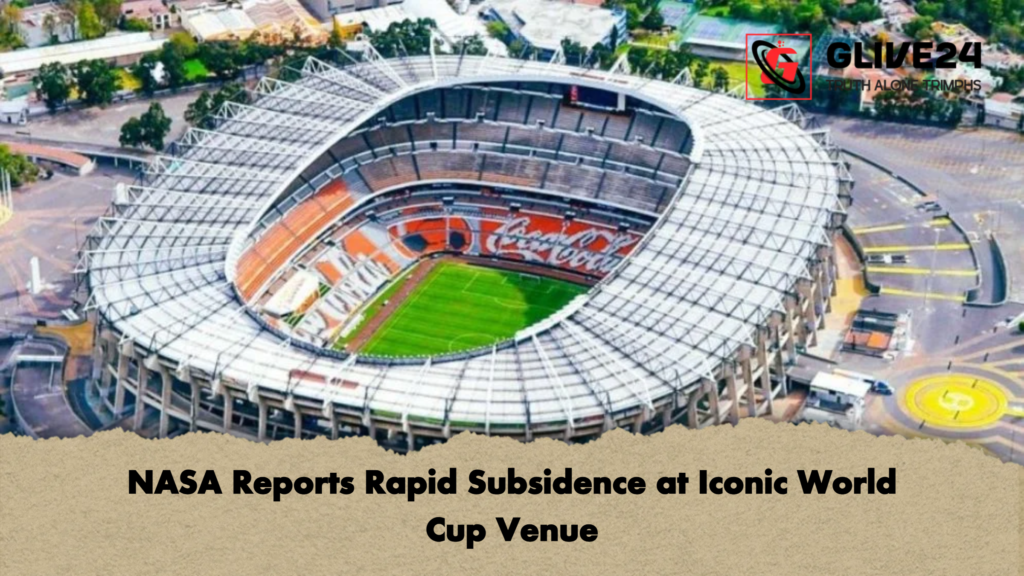
A recent report by the National Aeronautics and Space Administration (NASA) has highlighted a significant geological concern regarding the Estadio Azteca in Mexico City. The stadium, scheduled to host the opening match of the 2026 FIFA World Cup, is reportedly sinking into the ground at a rate of up to 10 inches (25 cm) per year. This disclosure, arriving just weeks before the tournament’s commencement, has prompted discussions regarding the structural integrity of the venue and the environmental challenges facing the region.
Geological Context and NASA Observations
The subsidence is not isolated to the stadium alone; it is a systemic issue affecting much of Mexico City. According to NASA’s observations, conducted via sophisticated satellite radar systems, the city’s terrain is sinking at an average rate of approximately 0.5 inches per month.
The primary driver behind this phenomenon is the depletion of underground aquifers. Mexico City was originally built on the soft clay of a drained lakebed. As water is extracted from these aquifers to meet the needs of the growing metropolitan population, the soil layers lose their internal pressure and collapse inward—a process known as compaction. Marin Govorcin, a scientist at NASA’s Jet Propulsion Laboratory (JPL), explained that the groundwater being removed can no longer support the immense weight of the urban infrastructure above, leading to the observed vertical decline.
Impact on the 2026 World Cup
The 2026 FIFA World Cup is a joint venture hosted by the United States, Mexico, and Canada. The Estadio Azteca, with a seating capacity of 87,500, is one of the most storied venues in football history. It is the site where Diego Maradona scored the legendary “Hand of God” goal and is designated to host five matches during the 2026 tournament.
The opening match, scheduled for 11 June, will feature a contest between Mexico and South Africa. Reports indicate that large sections of the stadium’s concrete structure are showing signs of settling into the ground. While the tournament’s schedule remains unchanged, the data has raised questions for football officials and supporters regarding the long-term sustainability of the site.
Key Technical and Event Data
| Category | Details |
| Primary Venue | Estadio Azteca, Mexico City |
| Seating Capacity | 87,500 |
| Annual Subsidence Rate | Up to 10 inches (25 cm) |
| Primary Cause | Groundwater extraction & aquifer compaction |
| Monitoring Agency | NASA Jet Propulsion Laboratory (JPL) |
| Opening Match Date | 11 June 2026 |
| Opening Match Fixture | Mexico vs South Africa |
| Total Matches at Venue | 5 |
Historical and Structural Significance
The Estadio Azteca holds the distinction of being the first stadium to host two FIFA World Cup finals (1970 and 1986). Its elevation—over 7,200 feet above sea level—and its massive concrete design make it a challenging environment for both athletes and engineers.
Despite the alarming rate of subsidence recorded by NASA, it remains unclear whether the Mexican authorities or FIFA will implement immediate large-scale engineering interventions to slow the rate of sinking. Experts suggest that unless groundwater extraction is significantly reduced or alternative water management strategies are employed, the topographical changes in the area will continue to pose a threat to the stadium’s foundation and the surrounding urban landscape.
The upcoming matches represent a critical moment for the venue, as the world’s attention turns to Mexico City. The structural performance of the Estadio Azteca under the pressure of maximum capacity crowds will be a focal point for engineers and geologists alike.