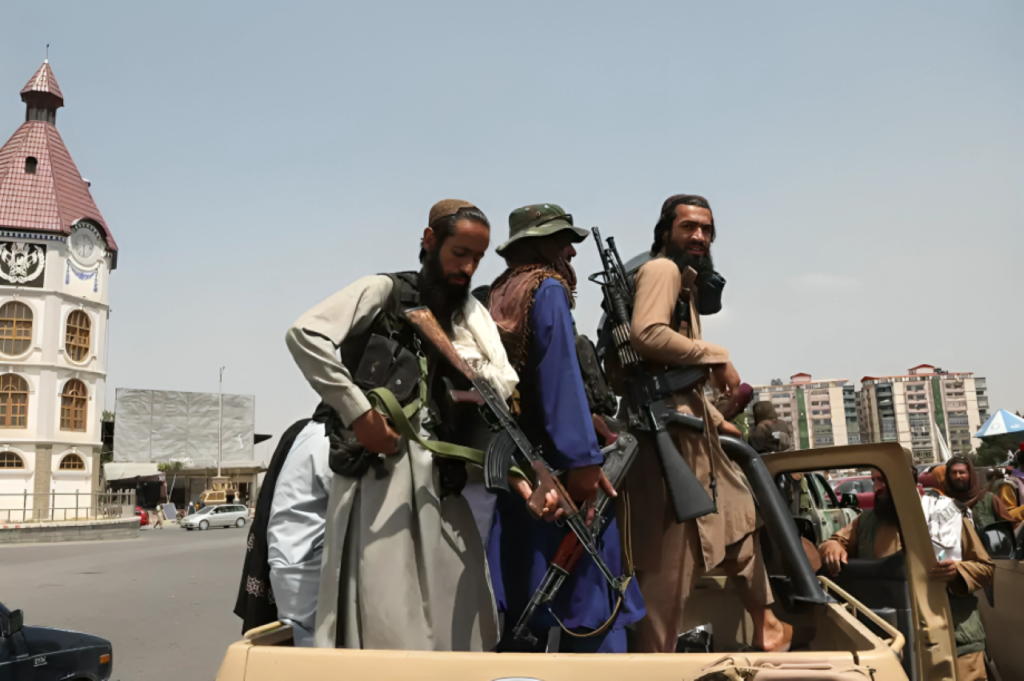
As the Taliban consolidate control over Afghanistan, fear among the population now extends far beyond immediate physical threats. Thousands of Afghans are increasingly anxious about an invisible danger: the vast digital and biometric records accumulated over the past two decades, which could now be weaponised against them.
The United Nations Secretary-General, António Guterres, has warned of a “chilling” pattern of human rights abuses, particularly against women and girls. Amnesty International has echoed these concerns, stating that thousands of Afghans face serious risks of reprisals. Human rights activists caution that years of efforts to digitise state records—including biometric voter registration, national identity cards, and security databases—may now expose vulnerable groups to targeted persecution.
Human Rights First, a US-based advocacy organisation, issued a warning that Taliban forces are likely gaining access to extensive biometric data, including fingerprints, iris scans, and potentially facial recognition systems. These databases were originally developed to improve governance, election integrity, and security, but now pose grave risks under a radically different political authority.
“This technology is likely to include access to databases containing fingerprints and iris scans, alongside facial recognition tools,” the organisation said in a statement.
Recognising the urgency, Human Rights First rapidly released a Farsi-language digital safety guide, adapted from a manual previously created for activists in Hong Kong. The guidance includes instructions on deleting digital histories and practical—if limited—ways to evade facial recognition, such as avoiding eye contact with cameras, obscuring facial features, or using heavy makeup. However, experts note that fingerprint and iris scans are extremely difficult, if not impossible, to evade once collected.
“With this data, it becomes far harder to hide or obscure your own identity or that of your family,” explained Welton Chang, Chief Technology Officer at Human Rights First. “These systems can also be used to map social networks, contacts, and associations.”
Chang warned that biometric data could enable a new form of digital discrimination. Job applicants, for example, could be screened against databases and excluded due to perceived links to the former government, security forces, international NGOs, or human rights work. Such technology could systematically marginalise entire segments of society.
Key Risks from Biometric Data
| Data Type | Potential Misuse |
|---|---|
| Fingerprints | Identification of former security personnel |
| Iris scans | Verification during checkpoints or raids |
| Facial recognition | Surveillance and tracking |
| Digital ID (Tazkira) | Ethnic or political profiling |
| Telecom metadata | Location tracking and network mapping |
Door-to-Door Searches
Reports suggest that the Taliban have used biometric systems for years to identify members of Afghan security forces. On the day Kabul fell, militants were reportedly checking fingerprints against existing databases within hours. Social media accounts and eyewitnesses described door-to-door searches targeting government employees, journalists, former soldiers, and staff of international organisations.
A Kabul resident told reporters that Taliban fighters were conducting house inspections using a “biometrics machine”. Although the Taliban issued public assurances that they would protect lives, homes, and property, these statements have done little to ease widespread fear.
Digital rights groups say they are receiving a surge of urgent requests from civil society organisations seeking advice on securing or erasing digital records. Raman Jit Singh Chima, Asia-Pacific policy director at Access Now, expressed alarm at the lack of clarity surrounding whether any mitigation measures are being taken to protect sensitive data held by aid agencies, NGOs, and telecom providers.
“The digital identity card system, known as tazkira, can reveal ethnic identity,” Chima noted. “Meanwhile, telecom companies hold vast amounts of location and communication data that could easily be exploited.”
While the United States and its allies were heavily involved in designing and implementing many of these systems, Chang stressed that responsibility for safeguarding them ultimately lay with the Afghan state. “There appears to have been insufficient planning around long-term risk, misuse, and worst-case scenarios,” he said.
In the meantime, ordinary Afghans are taking desperate measures. BBC journalist Sana Safi reported that men and boys were urgently deleting messages, photographs, and music from their phones—anything that might be perceived as un-Islamic or politically suspicious.
For many Afghans, survival now depends not only on where they go or who they know, but on what data they leave behind.