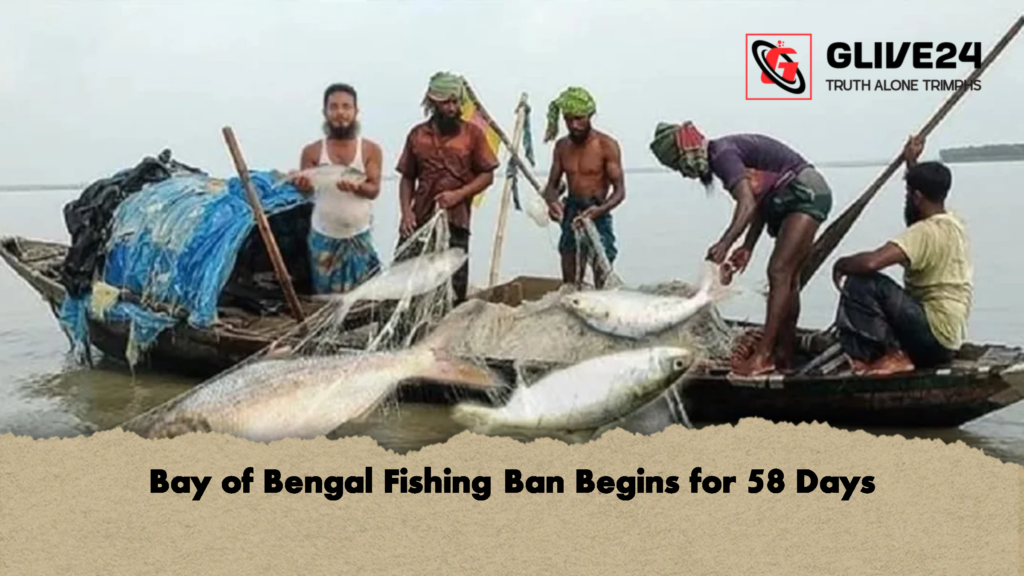
A 58-day government-imposed ban on all fishing activities in the Bay of Bengal has come into force from midnight on Tuesday (14 April), as Bangladesh intensifies efforts to protect marine biodiversity and ensure the sustainable breeding of fish stocks during their peak spawning season.
The annual restriction, which will remain effective until 11 June, is expected to temporarily halt the livelihoods of an estimated 64,000 registered marine fishermen in Bhola district alone, raising serious concerns over household incomes, debt repayments, and day-to-day survival in coastal communities.
Table of Contents
Fishing Fleet Returns to Shore Ahead of Ban
In anticipation of the enforcement, hundreds of deep-sea fishing trawlers have already begun returning to coastal landing stations. By Tuesday night, vessels were seen anchoring at major ghats including Patar Khal in Daulatkhan, Samraj in Char Fasson, Nurabad, as well as Ramnewaj and Hajirhat in Monpura.
The return of the fleet has triggered a flurry of activity along the coast, with fishermen rushing to unload catches, repair damaged nets, and conduct urgent maintenance on boats and engines before the enforced suspension takes hold.
Many trawler crews described the timing as predictable but financially disruptive, noting that preparations for the ban are now a routine yet difficult part of their annual cycle.
Mounting Economic Pressure on Coastal Families
While conservation experts widely support seasonal fishing bans as essential for maintaining marine ecosystems, the economic burden on fishing communities remains severe.
Fishermen in Bhola have expressed growing anxiety over how they will manage basic household expenses over the coming two months, particularly in the face of outstanding loans from microfinance institutions and informal moneylenders.
There is also concern that prolonged inactivity could deepen existing cycles of debt among low-income households, many of which depend entirely on seasonal catches for survival.
Local fishermen have further alleged that government relief distribution is sometimes affected by administrative inefficiencies and local influence, resulting in genuine beneficiaries being left out of assistance programmes.
Government Relief Programme for Fishermen
According to the District Fisheries Office, Bhola has 63,954 registered marine fishermen eligible for state support during the ban period. Each registered fisherman is set to receive a total of 77 kilograms of rice, distributed in two phases.
Government Assistance Overview
| Category | Details |
|---|---|
| Fishing Ban Period | 14 April – 11 June (58 days) |
| Registered Fishermen (Bhola) | 63,954 |
| Relief Support | 77 kg rice per fisherman |
| Distribution Method | Government food assistance programme |
Despite this support mechanism, many fishermen argue that in-kind food aid does not adequately address urgent cash needs such as loan repayments, medical costs, and daily expenses. They have called for a shift towards direct cash transfers via mobile financial services, which they believe would improve transparency and reduce the scope for irregularities.
Fisheries Authorities Defend Policy
Bhola District Fisheries Officer Md Iqbal Hossain defended the seasonal ban, stating that it is a scientifically guided measure aimed at boosting fish reproduction and ensuring long-term sustainability of marine resources in the Bay of Bengal.
He confirmed that all registered fishermen would be covered under the relief programme and assured that strict monitoring would be enforced in coastal and offshore waters throughout the ban period.
“Law enforcement agencies will remain vigilant in the maritime zone,” he said. “Any individual or vessel found violating the ban will face legal action under existing fisheries regulations.”
Conservation Goals vs Livelihood Concerns
The 58-day restriction forms part of Bangladesh’s broader marine conservation strategy, designed to protect spawning fish during critical breeding cycles and prevent long-term depletion of coastal fish stocks.
However, for fishing communities, the policy continues to represent a difficult balance between ecological necessity and immediate economic hardship.
As the ban begins, attention is now focused on the effectiveness of relief distribution and whether support measures will be sufficient to cushion the financial shock faced by tens of thousands of coastal families across Bhola and other fishing-dependent regions.